



In the sultry haze of Caracas on a late August day in 1975, President Carlos Andrés Pérez leaned over a polished mahogany desk in the Miraflores Palace, his pen hovering like a conductor’s baton before the final crescendo. With a flourish, he signed the Organic Law Reserving to the State the Industry and Commerce of Hydrocarbons, a mouthful of a title that masked its revolutionary punch. Effective January 1, 1976, Venezuela would reclaim its black gold from the grasp of foreign titans, chief among them American behemoths like Exxon, Gulf, and Mobil. This was not the fiery expropriation of Fidel Castro’s Cuba or the chaotic grabs seen elsewhere in the Middle East. It was billed by the press of the day as the “most gentlemanly nationalization in history,” a velvet-gloved transfer of power that left the world wondering whether it was a masterful assertion of sovereignty or a sophisticated theft disguised as diplomacy. Half a century later, amid fresh geopolitical saber-rattling and renewed talk of Venezuelan “theft” of U.S. assets, the ghosts of 1976 resurface, demanding a reckoning. Did Venezuela steal American oil assets? Were U.S. companies fairly compensated? To answer, we must rewind to the disco era, sift through yellowed New York Times clippings and declassified State Department cables, and dissect a saga where billions flowed like crude, egos clashed like tectonic plates, and the line between national pride and corporate plunder blurred into the Orinoco’s muddy waters.
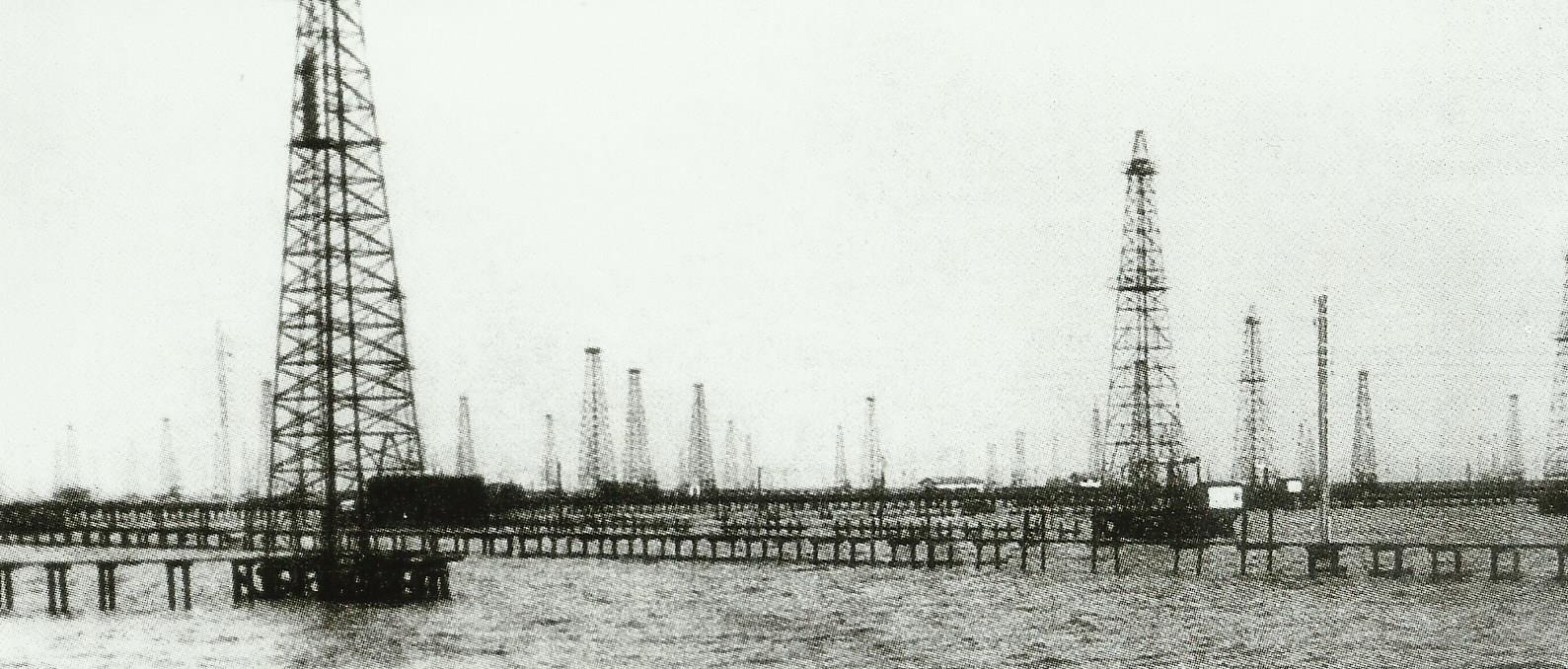
Picture the scene. Venezuela in the early 1970s was a nation awash in petrodollars yet simmering with resentment. Oil had been the country’s lifeblood since 1914, when the first gushers erupted near Lake Maracaibo, courtesy of Royal Dutch Shell’s exploratory zeal. By the 1920s, American firms piled in. Exxon, then operating as Creole Petroleum, along with Gulf and Mobil, transformed scrubland into sprawling oil fields that pumped out fortunes. Production skyrocketed to 300,000 barrels a day by 1928 and surpassed one million barrels a day by the late 1940s, fueling Allied tanks in World War II and powering postwar economic booms. But the deals were lopsided. Early concessions granted foreigners near-total control, while the state scraped by on meager royalties. A 1943 law raised royalties to 16.67 percent, and by 1948 a 50–50 profit split emerged. Though hailed as progressive, it still left many Venezuelans feeling like tenants in their own backyard. The real rupture came in 1959, when U.S. President Dwight Eisenhower imposed oil import quotas favoring Canada and Mexico, sharply reducing Venezuelan exports and igniting fury in Caracas. “We supplied you in your hours of need,” Venezuelan officials seethed, pointing to wartime aid during Suez and Korea. This perceived betrayal helped midwife the formation of OPEC in 1960, with Venezuela as a founding firebrand pushing for higher prices and greater control.
Fast-forward to 1973. The Yom Kippur War triggered the Arab oil embargo, prices quadrupled, and nationalizations swept the globe, from Libya and Iraq to Saudi Arabia. Venezuela, under the charismatic Pérez, a former guerrilla turned social democrat, sensed its moment. “The oil is ours,” he declared, echoing a nationalist chorus that had been building since the 1940s. Concessions were already set to expire in 1983, at which point assets would revert to the state without compensation. Pérez accelerated the timeline, arguing that waiting would mean forfeiting revenue in a volatile market. The August 1975 law was no sudden rupture. It was the culmination of years of tightening control, including unilateral pricing in 1970, gas reservations in 1971, and a steady ratcheting up of taxes that pushed the government’s take to levels approaching 90 percent in some cases by the mid-1970s.
The nationalization itself was a masterclass in choreography. Rather than seizing facilities at gunpoint, Venezuela created Petróleos de Venezuela, S.A. (PDVSA), a state holding company to oversee the industry. Assets including rigs, refineries, and pipelines transferred seamlessly, with 21 foreign firms, mostly U.S. subsidiaries controlling roughly 70 percent of production, folded into PDVSA subsidiaries. Employees kept their jobs, save for top executives, while technical assistance contracts ensured that expertise continued to flow uninterrupted. Production hummed along at about 2.3 million barrels a day, and exports, largely destined for the United States, barely skipped a beat. By 1977, PDVSA reported $8.84 billion in sales, with the government’s share ballooning to $6.77 billion, an increase over pre-nationalization levels that demonstrated the industry could function without foreign ownership.
The billion-dollar question remains whether this amounted to theft. The word “expropriation” appears frequently in State Department memos, yet the process was anything but predatory. Negotiations stretched on for months and involved three commissions covering compensation, technology, and marketing. U.S. Ambassador Laurence “Larry” Shlaudeman delivered formal démarches to Pérez, pressing for fair treatment and non-discrimination. Pérez, ever the pragmatist, conceded on key points. Compensation was structured with tax-free bonds to improve marketability, profit incentives were embedded in contracts, and case-by-case reviews were granted for smaller firms such as Amoco and Sun Oil, which raised concerns over drainage deductions and amortization penalties. By October 28, 1975, all but two U.S. companies had accepted the offer. Congress ratified the agreement in December, and the handover proceeded without incident.
Compensation totaled roughly $1.03 billion, paid half in cash and half in five-year bonds carrying 6 percent interest, for an industry valued at approximately $5 billion. Calculated on net book value, meaning original cost minus depreciation, the payout was hardly a windfall. Critics argued it undervalued market realities by ignoring future profits and untapped reserves, including the heavy crude deposits of the Orinoco Belt. Yet the companies accepted the deal. Context explains why. These firms had reaped enormous profits over decades, with Exxon’s Creole operation alone serving as a major cash generator. They also knew their concessions would expire in 1983, leaving them with nothing. Post-nationalization perks further sweetened the arrangement. Two-year technical assistance contracts paid roughly 1.7 percent of sales, amounting to about $160 million in 1976 alone, while marketing agreements ensured continued commercial relationships. As one Venezuelan oil executive remarked in 1977, “Everything is normal. We’re not going to make any changes until we’re sure of what we want.”
By the standards of the 1970s, the process was widely regarded as fair. Time magazine labeled it “gentlemanly.” The New York Times predicted no “big battle.” Even U.S. energy czar Frank Zarb dismissed concerns, stating that it would not affect American customers. Unlike Chile’s abrupt copper nationalization earlier in the decade, which provoked sharp U.S. retaliation and contributed to Salvador Allende’s downfall, Venezuela’s approach was negotiated rather than demagogic. No lawsuits followed. Companies remained engaged, supplying expertise and purchasing Venezuelan crude. If some executives in Houston boardrooms viewed the outcome as a raw deal, they ultimately accepted it. Their profits had been immense, and the alternative was to wait for free reversion in 1983 amid OPEC’s increasingly volatile price wars.
Hindsight inevitably alters the picture. Hugo Chávez’s 2007 re-nationalization of Orinoco projects, which seized Exxon and Conoco assets with minimal compensation, led to bitter international arbitration. Exxon ultimately won a $1.6 billion award in 2014 after initially seeking $10 billion. That episode, not the events of 1976, underpins most modern claims of Venezuelan “theft.” Contemporary rhetoric, including statements echoing assertions of U.S. “claims” on Venezuelan oil fields, often conflates these distinct eras, sometimes conveniently, amid renewed regional tensions such as border disputes with Guyana over the oil-rich Essequibo region. In the bell-bottom days of the 1970s, however, Venezuela’s actions were widely viewed as an assertion of sovereignty rather than an act of larceny.
In the end, Venezuela’s 1976 nationalization was not theft. It was a calculated reclamation, accompanied by compensation sufficient to preserve diplomatic and commercial peace. American firms departed with checks, contracts, and a grudging respect for Pérez’s political acumen. If there was a true heist, it may have been the decades of foreign dominance that preceded nationalization, siphoning wealth from a country determined, at last, to chart its own petroleum-fueled destiny. As the rigs continue to pump and history is repurposed for modern political battles, the question lingers. In the long drama of resource control, who really stole from whom?
Sources
Al Jazeera. (2014, October 10). Venezuela ordered to pay $1.6bn to Exxon. Al Jazeera. https://www.aljazeera.com/economy/2014/10/10/venezuela-ordered-to-pay-1-6bn-to-exxon
Al Jazeera. (2025, December 18). Does the US have any real claim on Venezuelan oil as Stephen Miller says? Al Jazeera. https://www.aljazeera.com/news/2025/12/18/does-the-us-have-any-real-claim-on-venezuelan-oil-as-stephen-miller-says
BBC News. (2014, October 10). Exxon owed $1.6bn by Venezuela for 2007 nationalisation. BBC. https://www.bbc.com/news/business-29561345
Central Intelligence Agency. (n.d.). Venezuelan internationalism: Oil and influence [PDF]. CIA Reading Room. https://www.cia.gov/readingroom/docs/CIA-RDP79B00457A000400030001-6.pdf
Council on Foreign Relations. (n.d.). Venezuela: The rise and fall of a petrostate. CFR. https://www.cfr.org/backgrounder/venezuela-crisis
Ellsworth, B. (2014, October 10). Venezuela ordered to pay Exxon $1.6 billion for nationalization. Reuters. https://www.reuters.com/article/business/venezuela-ordered-to-pay-exxon-16-billion-for-nationalization-idUSKCN0HY206/
Gilderhus, M. T. (1977). The nationalization of oil in Venezuela: Re-defined dependence and legitimization of imperialism. Journal of Latin American Studies, 9(2), 265-287. https://www.jstor.org/stable/422789
Gregson, J. (2003, August 30). The economics, culture, and politics of oil in Venezuela. Venezuelanalysis. https://venezuelanalysis.com/analysis/74/
Lopez Maya, M. (2007). “Full sovereignty over oil”: A discussion of Venezuelan oil policy and possible effects of review of the oil contracts [PDF]. SMU Scholar. https://scholar.smu.edu/cgi/viewcontent.cgi?article=1336&context=lbra
Oxford Institute for Energy Studies. (n.d.). Venezuelan oil politics at the crossroads. OIES. https://www.oxfordenergy.org/publications/venezuelan-oil-politics-at-the-crossroads/
Special to The New York Times. (1976, January 2). Venezuela’s oil industry is formally nationalized. The New York Times. https://www.nytimes.com/1976/01/02/archives/venezuelas-oil-industry-is-formally-nationalized-venezuelan-oil-is.html
Special to The New York Times. (1977, January 29). Oil nationalization in Venezuela quiet. The New York Times. https://www.nytimes.com/1977/01/29/archives/oil-nationalization-in-venezuela-quiet-companies-taken-over.html
The Associated Press. (2025, December 17). Trump ties call for ‘blockade’ to seized US oil assets. AP News. https://apnews.com/article/trump-venezuela-maduro-oil-tanker-sanctions-dea3b339a818de8687e3d883fb832df0
The Hill Staff. (2025, December 18). Trump: Venezuela must pay for seized US oil assets. The Hill. https://thehill.com/policy/international/5654700-trump-venezuela-seized-oil-assets/
The New York Times. (2025, December 17). Trump’s claim that Venezuela ‘stole’ U.S. oil fields touches nerve in Latin America. The New York Times. https://www.nytimes.com/2025/12/17/world/americas/trump-venezuela-oil-fields-stolen-claims.html
U.S. Department of State. (n.d.). Historical documents: Foreign Relations of the United States, 1969–1976, Volume E–11, Part 2. Office of the Historian. https://history.state.gov/historicaldocuments/frus1969-76ve11p2/d392
Venezuelanalysis. (2010, June 15). Venezuela obtains a win in ExxonMobil lawsuit. Venezuelanalysis. https://venezuelanalysis.com/news/5426/