In this article
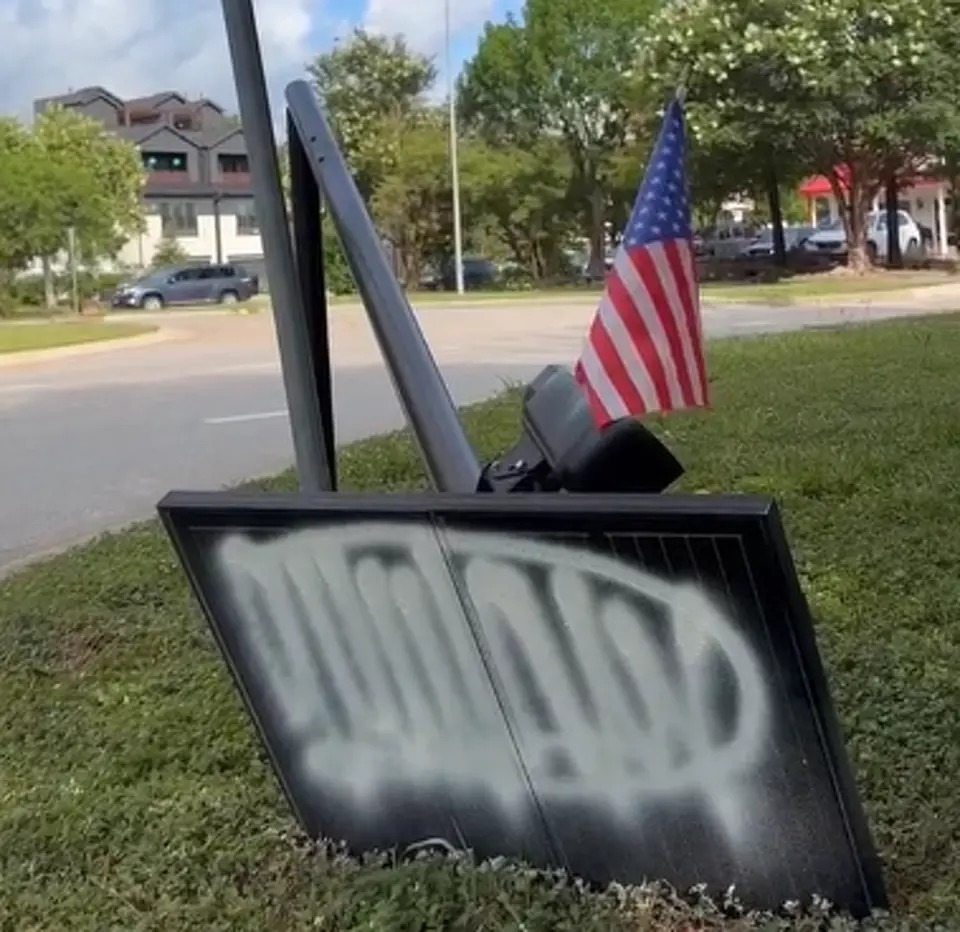
Photo by Jarrod Wardwell
At 2:17 on a Tuesday afternoon, two men burst from a jewelry store carrying a canvas bag and two handguns.
Behind them, a glass display case lies shattered. A clerk is on the floor, pressing a hand against his bleeding forehead. Outside, witnesses watch a dark sedan lurch backward, strike the curb, and accelerate toward the highway.
One person remembers three characters from the license plate. Another notices a dent above the rear wheel. A third identifies the make of the vehicle. The dispatcher broadcasts the description, but descriptions are perishable things. Dark sedans are everywhere. Witnesses transpose letters. Details blur. Cars disappear into traffic.
A generation ago, this was the moment when the investigation began to lose ground.
The robbers would have five minutes to change roads, twenty minutes to cross a county line, and an hour to abandon the vehicle. Before nightfall, the guns might be separated from the suspects, the jewelry separated from the guns, and the witnesses left trying to reconstruct a few seconds of violence under fluorescent lights.
Today, an investigator enters the partial plate, vehicle color, make, and distinguishing damage into a network of automated license-plate readers. A roadside camera records a possible match. Another camera several miles away captures the same sedan traveling east. The timestamps establish its direction and approximate speed. An alert moves through the real-time crime center to patrol officers ahead of the vehicle.
At 2:41, the sedan is stopped.
The weapons are inside. The stolen jewelry is in the trunk. The two men who were anonymous twenty-four minutes earlier are suddenly standing in the blue light of a patrol car.
This scene is a composite, but the investigative sequence is increasingly routine. Automated license-plate readers do not solve crimes by themselves. They do something more basic and, in many cases, more valuable: They prevent time from erasing the connection between a vehicle, a place, and a crime.
That ability has made Flock Safety one of the fastest-growing and most bitterly contested companies in American policing. Its cameras have helped officers recover stolen vehicles, locate missing people, identify violent suspects, and apprehend fugitives and accused killers. At the same time, the technology has ignited a national debate about government power, technological scale, and whether a series of observations made in public can eventually be assembled into something more revealing than any single observation would be on its own.
The debate is necessary. The hysteria is not.
When the Camera Became the Enemy
In the early hours of July 4, 2026, as Houston prepared to celebrate independence with flags, fireworks, and speeches about liberty, someone carried that symbolism to a far more literal and destructive conclusion.
By morning, two Flock Safety license-plate readers at the intersection of Washington Avenue and Westcott Street had been attacked. The metal poles supporting the cameras had been cut in half. The camera housings and solar-power assemblies were covered in white spray paint, blinding their lenses and leaving the equipment nearly unrecognizable.
Amid the wreckage, someone had planted an American flag in one of the ruined devices.
The scene was designed to communicate more than vandalism. It was a political tableau: the fallen surveillance camera, the blinded lens, and the flag rising from the debris. Photographs and video spread rapidly online, where some users treated the destruction not as an attack on public-safety equipment but as an act of resistance against an expanding surveillance state. The timing, on Independence Day, sharpened the intended message.
Houston police opened an investigation. Flock Safety condemned the attack, arguing that destroying public-safety infrastructure is illegal and places the surrounding community at risk.
The damaged cameras, after all, were not merely symbols. They were part of a working investigative network used to locate stolen vehicles, identify wanted suspects, and reconstruct the movements of cars connected to serious crimes.
Nor did the incident appear to stand alone. Additional Flock cameras in the Houston area were reportedly damaged during the same period, contributing to a brief local surge in attacks on the devices. The episode reflected a broader escalation in 2026, as opposition to automated license-plate readers moved beyond public-records requests, city-council protests, and online camera-mapping projects into physical sabotage.
A camera on a pole had become something more than a camera. To its supporters, it was a tool that could help locate a kidnapped child or intercept a fleeing gunman. To its opponents, it had become a visible emblem of government overreach.
On that Houston corner, the argument was no longer being conducted through policy papers or public hearings. It had been carried out with a saw, a can of paint, and an American flag.
When Officers Cross the Line
The anger directed at Flock is not manufactured from nothing. Powerful tools attract people willing to misuse them, and during a five-week period in Georgia, concerns about license-plate surveillance stopped being theoretical.
The reckoning began in Cherokee County. On June 12, 2026, an internal audit led investigators to former Deputy Cynthia Jodesty, who was accused of entering the license plate of a fellow sheriff’s-office employee into the agency’s automated reader system without a legitimate law-enforcement purpose. She was fired, arrested, and charged with violating her oath of office and unlawfully retaining license-plate data.
Ten days later, the audit widened. Lieutenant Chris Bryant and Sergeant Mike Creeden were also terminated and jailed on similar charges after investigators said their accounts revealed additional searches unrelated to legitimate police work.
Officials did not publicly disclose the personal motives behind every alleged search, but the implication was disturbing. Officers entrusted with a powerful investigative system had allegedly turned public authority toward purposes the public never authorized.
Then came Albany. On July 6, the Georgia Bureau of Investigation arrested five former Albany police officers after a departmental audit allegedly uncovered repeated searches of retained Flock data for non-law-enforcement purposes.
Tytianna Davis was charged with five counts of misusing license-plate data. Jade Jackson faced two. Brittney Smith faced one, Issac Whitus faced two, and Nicholas Richardson faced eleven. Each was also charged with felony violation of oath of office. All five were fired and booked into the Dougherty County Jail.
What had begun as concern about one officer was beginning to look broader: a technology spreading faster than some agencies’ cultures of supervision, restraint, and accountability.
The arrests continued. A Greene County deputy was accused of repeatedly searching at least one license plate over a three-month period without an authorized reason. Henry County officer Patrick Isbell was fired and charged after an audit allegedly found that he had used retained plate information for non-law-enforcement purposes. In DeKalb County, former sheriff’s Sergeant Kabiru Salawu, a nearly seventeen-year veteran, was arrested on allegations that he misused license-plate information and violated his oath of office.
Three Fayetteville officers were also fired after auditors reportedly discovered searches involving their own plates or vehicles associated with relatives and acquaintances. The Georgia Bureau of Investigation opened an inquiry into those searches as well.
By mid-July, at least eleven Georgia law-enforcement officers had been arrested or criminally charged in the recent wave, with three others terminated and under investigation.
These cases expose the strongest argument against systems such as Flock.
A database built to find a stolen car, a fleeing gunman, or a missing child can also be used to search for a coworker, former partner, neighbor, critic, acquaintance, or romantic interest. Give thousands of people access to any powerful database, and some will eventually attempt to use public authority as a private instrument.
A badge does not cure jealousy, curiosity, obsession, resentment, or corruption. It can, however, give those impulses more dangerous tools.
But the Georgia cases also reveal something largely missing from the slogans about an unstoppable surveillance machine: the officers were caught because their searches left records.
The scandal did not emerge because someone discovered an invisible camera hidden behind a bedroom wall. It emerged from audits of a system that recorded who conducted a search, which plate was entered, and whether the inquiry could be connected to legitimate police work.
Flock introduced an audit-assistance feature in 2026 designed to flag unusual activity, including searches made while officers were off duty or patterns inconsistent with ordinary agency use. Departments examined their records. Anomalies surfaced. Officers were identified. Arrests followed.
The feature was not universally enabled, and its recent introduction raises an uncomfortable question about how much previous misuse may have escaped detection. Still, the same technology accused of enabling abuse also preserved evidence that helped expose it.
That does not excuse the alleged misconduct. It clarifies the proper response.
Every Flock search should require a case number or call number, and documented investigative purpose. Every account should be individually assigned and protected by strong authentication. Supervisors should receive automatic alerts when the system detects suspicious activity. Audits should be mandatory, frequent, and independently reviewable rather than optional features an agency may neglect to activate.
Officials who use the system to follow acquaintances, coworkers, romantic interests, or anyone else without a lawful purpose should lose access immediately, face termination, and, when supported by the evidence, be prosecuted.
Georgia has shown us that accountability is built into the system, actively exercised, and backed by consequences.
No officer should ever be able to search a surveillance database without leaving fingerprints.
These cases are serious warnings, but warnings are not verdicts against the technology itself. Misuse demonstrates the need for enforceable restrictions, audit trails, oversight, discipline, and prosecution. It does not establish that the underlying system has no legitimate purpose.
Police officers have abused criminal-history databases, driver-record systems, evidence files, body-camera footage, and department computers. We do not respond by destroying every computer terminal in the country. We restrict access, document activity, investigate violations, and punish those who cross the line.
With Flock, however, the public conversation often abandons that middle ground. The camera is portrayed either as a mechanical guardian incapable of error or as an electronic tyrant that must be torn from the soil.
Neither view is serious enough for the power involved.
The Vanishing Interval
Every criminal investigation is a race against what might be called the vanishing interval: the period between the crime and the disappearance of its useful connections.
A witness remembers the car but not the plate.
A stolen vehicle crosses into another jurisdiction.
A suspect discards a weapon.
An abducted child is carried farther from the last place anyone knew to look.
Evidence does not merely grow old. It separates.
The suspect separates from the vehicle. The weapon separates from the suspect. The stolen property separates from the weapon. The witnesses’ memories separate from what actually happened.
American policing has always struggled with mobility. Criminals do not respect city limits or county lines, but police departments, dispatch centers, radio systems, databases, and investigative authorities are organized around them. A detective may know everything about the crime committed in his jurisdiction and nothing about the traffic stop involving the same vehicle two counties away.
Networked license-plate readers narrow that gap.
Flock cameras generally capture a still image of a vehicle, its publicly displayed license plate, observable characteristics, the time of passage, and the camera’s location. The company says its default retention period is 30 days, after which the information is deleted unless another period is required or specifically authorized.
Those controls are not substitutes for independent oversight. They are, however, materially different from an unrestricted archive that records neither who accessed it nor why.
Flock’s 2025 Impact Census, based on responses from nearly 700 agencies, reported that its technology supported more than one million investigations, contributed to approximately 20 percent of cleared cases in participating jurisdictions, and helped locate more than 10,000 missing people.
Those figures were produced by the company rather than an independent randomized study and should be treated accordingly. Even so, their scale is difficult to dismiss as mere advertising.
A separate 2024 evaluation reported an association between Flock camera density and improved crime-clearance rates. It estimated that adding one Flock device per sworn officer was associated with a 9.1 percent increase in clearance rates. Two of the study’s four authors were affiliated with Flock, and the analysis was observational. It demonstrated correlation, not definitive proof that the cameras alone caused the improvement.
The responsible conclusion is not that the study settles the matter. It is that the results are substantial enough to justify rigorous independent research rather than ideological dismissal.
Having worked inside 911 centers, real-time crime centers, and the inner sanctums where major criminal investigations take shape, I have seen firsthand how Flock is transforming modern policing.
The technology is rapidly closing the mobility gap that violent offenders have exploited for generations. It allows law enforcement to identify, track, and intercept dangerous suspects before they can cross additional jurisdictions, destroy evidence, or victimize someone else.
I am convinced that the number of felons, fugitives, kidnappers, and violent offenders interdicted with the help of this technology is vastly underreported. Most of these cases are known primarily to the dispatchers, analysts, investigators, and patrol officers who watch them unfold in real time. The public may hear about a traffic stop or an arrest. It rarely sees the chain of technological and investigative events that placed the right officer in front of the right vehicle at precisely the right moment.
Police officers do not need a white paper to understand why timely vehicle information matters.
A murder suspect who remains unidentified for three weeks has three weeks to destroy evidence, pressure witnesses, construct an alibi, and flee.
A child taken by a noncustodial parent may cross several states before a conventional investigation catches up.
A robbery crew operating along an interstate corridor can exploit delays between agencies almost as effectively as it exploits the highway itself.
The camera changes the arithmetic. It turns a partial description into a possible vehicle. It turns a vehicle into a direction of travel. It turns direction into location. It turns location into an opportunity to intervene while the suspect, vehicle, weapon, and evidence are still together.
The technology’s greatest operational value is not omniscience. It is speed.
What the Pole Actually Sees
The strongest defense of automated license-plate readers begins with a distinction that much of the public debate refuses to make.
A license plate is not a private diary. It is a government-issued identifier that must be displayed on a vehicle operating in public. A roadside camera does not open the trunk, read text messages, record conversations inside the passenger compartment, identify every occupant, or see through the walls of a home. It records that a particular vehicle passed a particular public location at a particular time.
Courts have generally been reluctant to treat an individual observation of a publicly displayed license plate as a Fourth Amendment search. In January 2026, a federal judge upheld Norfolk, Virginia’s use of a network containing more than 170 Flock cameras, concluding that the system before the court did not violate a reasonable expectation of privacy. A Virginia appellate court had reached a similar conclusion regarding access to the city’s ALPR records.
That ruling is being appealed, and it should not be exaggerated into a declaration that every possible plate-reader network, regardless of scale, retention, or purpose, will always be constitutional.
Scale matters. Duration matters. Sharing matters.
One photograph of a car passing through a public intersection is plainly different from a permanent database capable of reconstructing months or years of someone’s movements. Supreme Court decisions involving GPS tracking and historical cellphone-location information warn that technology can aggregate individually ordinary observations into a revealing account of private life.
A system that records occasional public passages and deletes them after 30 days presents a different question from a permanent national archive available without meaningful restriction.
That distinction should guide policy. It should not be used to pretend that the first camera already represents the final dystopia. Nor should it permit police agencies or private vendors to construct that dystopia one contract at a time while insisting that every individual camera is harmless.
The defensible position is neither unconditional acceptance nor abolition. It is constrained use.
Real-time alerts involving stolen vehicles, wanted violent offenders, missing people, and narrowly defined investigations should remain available. Pattern-of-life analysis, broad retrospective searches, and inquiries involving constitutionally protected activity should require heightened approval and, when appropriate, judicial authorization.
Every query should identify the user, the investigative purpose, the associated case or call number, and the records accessed. Agencies should conduct recurring audits, publish aggregate usage information, restrict unnecessary sharing, and treat deliberate misuse as grounds for termination and prosecution.
Officers must also understand that an ALPR alert is a lead, not probable cause delivered by an infallible machine.
Plates can be misread. Databases can contain outdated information. Vehicles can be sold, borrowed, or driven by someone other than their registered owner. Before initiating a high-risk stop, officers should visually verify the plate, compare the vehicle, confirm the alert, and determine whether the totality of the circumstances justifies the tactics being considered.
Those safeguards do not weaken the technology. They preserve its legitimacy.
A system that cannot discipline its abusers will eventually lose public confidence, regardless of how many crimes it helps solve. The greatest threat to Flock may therefore be neither the activist determined to destroy it nor the salesperson determined to defend every use.
It may be the public official who assumes that people will tolerate a powerful system indefinitely without visible accountability.
The House That Watches Back
Now leave the highway. Drive home. Close the garage. Lock the front door. Draw the curtains.
The home has always occupied a special place in American law and imagination. It is where public observation is supposed to end. It is where people change clothes, argue with their spouses, discipline their children, receive medical news, count money, pray, grieve, and sleep.
It is also becoming the most densely instrumented environment many Americans will ever occupy.
The average American internet household now contains roughly 17 connected devices, according to Parks Associates. These include televisions, speakers, cameras, doorbells, thermostats, locks, appliances, lighting systems, routers, game consoles, and other products that generate information as a condition of being useful.
Imagine a living room after midnight. A father sits on the sofa reviewing photographs from a family trip. The images appear on the television through a laptop connected by HDMI. His daughter walks across the room in pajamas and asks a smart speaker to set an alarm. An indoor camera sits on a bookshelf facing the doorway, installed months earlier so the family could check on the dog.
Nothing about the room feels exposed. The curtains are closed. The street is silent. No police camera can see through the walls. But the television may be analyzing what appears on its screen.
Automatic content-recognition technology works by sampling or fingerprinting displayed material and comparing it with reference databases. Researchers examining Samsung and LG televisions found that ACR tracking could operate not only during broadcast and streaming programs but also when the television was being used as an external display through HDMI.
The researchers also found that using available opt-out controls stopped the observed ACR network traffic. The feature is therefore controllable, but many consumers may never understand that it is operating or know where to disable it.
The Federal Trade Commission’s 2017 case against Vizio demonstrated the commercial value of this information. Regulators alleged that Vizio collected viewing data from 11 million televisions without adequately informing consumers or obtaining meaningful consent. The company’s software tracked what viewers watched and transmitted that information to its servers, including content delivered through external inputs.
The television does not need to understand the sentimental meaning of a family photograph. It merely needs to transform what appears in the room into a machine-readable event that can be associated with a device, household, or advertising profile.
Across the room, the smart speaker’s microphones remain powered so the device can detect its wake word. Most pre-activation processing is designed to occur locally, and the speaker is not supposed to transmit every sound it hears. But wake-word systems can activate accidentally, and recordings they do capture may be retained or used in ways consumers do not anticipate.
In 2023, the Federal Trade Commission and Department of Justice accused Amazon of keeping some children’s Alexa voice recordings indefinitely, failing to honor certain deletion requests, and continuing to use retained voice and geolocation information to improve its algorithms. Amazon agreed to a $25 million penalty and changes to its deletion practices.
Then there is the indoor camera. Its lens is not observing a government-issued identifier traveling along a public road. It sees faces, bodies, possessions, routines, visitors, relationships, and the physical geography of the home.
It may reveal when residents wake, when children are alone, which medications sit on the counter, who visits, and which rooms are occupied.
The danger is not theoretical. The FTC alleged that Ring once gave employees and contractors excessive access to customers’ private videos. In one especially disturbing episode described by regulators, an employee viewed thousands of recordings belonging to female customers whose cameras covered intimate spaces, including bedrooms and bathrooms.
Regulators also alleged that inadequate security allowed hackers to gain control of some customer accounts, cameras, and recordings. Ring later settled the case, implemented additional safeguards, and paid millions of dollars that the FTC distributed to affected consumers.
Pause over the difference.
A roadside camera records that a Honda passed an intersection at 8:14 p.m.
An indoor camera may record who removed her clothes in a bedroom at 8:14 p.m.
A plate reader may preserve a public observation for 30 days.
A voice platform was accused of retaining some children’s recordings indefinitely.
A law-enforcement search may create an audit entry connected to a named employee, an account, and a stated purpose.
Commercial data collection is often authorized by clicking “accept” beneath thousands of words written to provide legal protection rather than human understanding.
Yet only one of these systems has become America’s preferred symbol of surveillance.
Consent as Theater
The commercial surveillance economy survives through a remarkable social fiction: that consumers have meaningfully consented to it.
They have not negotiated the terms. They have not read them. In many cases, they cannot use the product’s central features without accepting them.
Guests, children, babysitters, cleaners, relatives, and delivery workers may be recorded by devices whose agreements they never saw and whose owners barely understood.
The homeowner becomes a private surveillance administrator for everyone who crosses the threshold.
Research on smart homes repeatedly finds that convenience outweighs abstract privacy concerns. Consumers frequently trust manufacturers without verifying how information is collected, secured, retained, or shared. Other research has highlighted the distinct risks imposed on household members and visitors who did not purchase the devices and possess little practical control over them.
Once information leaves the home, it enters an ecosystem that is almost invisible to the ordinary person.
The Federal Trade Commission has brought a succession of cases against data brokers accused of selling or sharing sensitive location information without adequate consent or safeguards. Regulators alleged that X-Mode and Outlogic sold information capable of revealing visits to reproductive-health clinics, houses of worship, and domestic-abuse shelters.
The FTC accused Mobilewalla of selling sensitive location information that could identify people’s homes and brought actions against Gravy Analytics and Venntel over similarly revealing location products.
A data broker does not need a camera in every room. It needs fragments.
The television supplies viewing behavior.
The phone supplies location.
The shopping account supplies purchases.
The thermostat supplies occupancy patterns.
The doorbell supplies visitors.
The advertising identifier connects one database to another.
Individually, each stream may seem mundane. Together, they can describe a household with an intimacy that would have astonished the architects of the twentieth-century surveillance state.
This is surveillance without the menacing architecture.
There is no pole to photograph, no government seal to oppose, and no city contract to protest. It arrives during a holiday sale. It is marketed as convenience, personalization, safety, efficiency, and entertainment.
The customer pays for the microphone. The customer mounts the camera. The customer connects the television.
Then the customer becomes furious about the machine outside that can read the same license plate visible to every driver waiting at the traffic light.
Why the Pole Feels More Dangerous
There is an obvious objection to this comparison. The government can arrest you. Samsung cannot.
That distinction matters. State surveillance carries the coercive power of detention, prosecution, force, and imprisonment. A police database, even one containing less intimate information than a commercial profile, can produce more immediate consequences when it is wrong or abused. A citizen cannot simply cancel the government’s subscription.
This is the strongest argument made by Flock’s critics, and supporters should not evade it.
But government power is a reason for stronger controls. It is not a reason to pretend that vehicle information has no legitimate investigative value.
Nor is it a reason to ignore commercial surveillance. The boundary between corporate and government information is porous. Data can be shared, sold, purchased, subpoenaed, breached, or repurposed. A private company’s lack of arrest authority does not make its collection harmless, particularly when it creates an intimate archive that other actors may later seek.
The roadside pole feels threatening because it is visible. It belongs to an institution many people already distrust. Its purpose is explicit: to identify vehicles relevant to law enforcement.
The television feels benign because it is familiar. Its surveillance function is concealed inside entertainment.
The speaker answers questions.
The camera watches the dog.
The doorbell catches porch thieves.
Each product offers an immediate benefit, while its privacy cost is delayed, dispersed, and described in language designed to suppress resistance.
Flock’s public-relations mistake may be that its cameras look exactly like what they are.
The commercial surveillance industry has learned to hide the sensor inside the gift.
The Surveillance Debate America Should Be Having
A society serious about both liberty and safety would stop judging surveillance primarily by how sinister the hardware appears.
It would ask five questions:
-
What is being collected?
-
Where is it being collected?
-
How long is it retained?
-
Who can access it?
-
What happens when someone misuses it?
Under that framework, a limited plate read on a public highway is less intrusive than video recorded inside a bedroom. But a permanent nationwide archive of vehicle movements could eventually become more dangerous than either.
A smart speaker that processes a wake word locally presents a smaller risk than a platform that retains recordings indefinitely.
A doorbell aimed at a public walkway is different from a cloud-connected camera aimed at a bed.
Context is not a loophole. It is the substance of privacy.
For Flock and similar systems, responsible governance should include short retention periods, narrow investigative purposes, human confirmation of alerts, controlled interstate sharing, permanent query logs, recurring audits, public reporting, and severe consequences for personal or political misuse.
Searches involving prolonged movement analysis should receive greater scrutiny than a real-time alert on a stolen vehicle. Agencies should not be permitted to transform technology purchased for violent crime and missing persons into an unrestricted system for tracking lawful political, religious, medical, or personal activity.
Consumer surveillance should face protections at least as demanding.
Automatic content recognition should be genuinely opt-in and explained in plain language. Cameras and microphones should process as much information locally as possible. Recording and transmission should be apparent to everyone in the room. Deletion controls should actually delete information rather than merely hide it from the account holder. Manufacturers should not be permitted to sell sensitive behavioral data simply because a consumer clicked through an agreement while setting up a television.
Most important, lawmakers should regulate the information, not merely the device collecting it.
The same data should not become ethically acceptable simply because it was collected by a thermostat rather than a detective. Nor should every observation made in public become unconstitutional merely because software made it searchable.
The rules should follow sensitivity, aggregation, retention, purpose, and potential harm.
The camera on the pole deserves scrutiny. It possesses real power, and people entrusted with that power have already demonstrated that some will abuse it.
But the answer is not to blind law enforcement while leaving the commercial surveillance economy untouched.
It is not to celebrate the destruction of a device that might help locate a kidnapped child while a television fingerprints what appears on the screen inside that child’s home.
It is not to treat a publicly displayed license plate as sacred while intimate audio, video, location, and behavioral data flow quietly into corporate databases.
The responsible bargain is harder and less theatrical.
Keep the camera that can identify the getaway car. Restrict what it stores. Record every person who searches it. Require officers to verify what the machine reports. Audit its use. Punish misconduct. Limit unnecessary sharing. Let the public see the rules.
Then walk back into the house and apply the same suspicion to everything glowing, listening, recording, and communicating behind the locked door.
The deepest surveillance does not always arrive under color of law.
Sometimes it arrives in a cardboard box, joins the Wi-Fi, and asks for permission to improve your experience.