



In this article
Flock cameras can be abused, and the people who abuse them should be held accountable. But before we dismantle a technology in a fit of moral panic, we ought to remember what else those cameras do, what happens when they are not there, and whose life may depend on one tomorrow.
I spent the better part of two decades working in law-enforcement intelligence, first as a practitioner and later as an instructor training analysts from agencies across the country. I have worked alongside the people who sit behind the screens, build timelines, connect seemingly unrelated pieces of information, chase obscure leads, and spend long hours trying to answer questions that matter enormously to someone experiencing the worst day of his or her life. By and large, these are honorable, dedicated professionals who toil every day to find missing people, identify violent offenders, recover stolen property, and deliver some measure of justice to victims of crime.
That perspective matters in the current debate over Flock cameras because a scandal has a way of narrowing our field of vision. After another story about an employee who allegedly misused access, it is easy to see only the potential for abuse and forget why these systems exist in the first place. You may not feel like it at this particular moment, but you want to live in a society where investigators have tools like Flock available when somebody you love disappears, when a child is abducted, or when a murderer flees in a car.
Imagine watching your car disappear down the road with your 14-month-old baby still strapped inside. A mother in Colorado experienced exactly that nightmare in December 2025 after someone stole her idling vehicle. Aurora’s license-plate readers detected the stolen car shortly after it entered the city, alerting the department’s Real Time Information Center and helping officers track its movement. The vehicle was found abandoned with the baby still safely strapped into the car seat, and police said fewer than ten minutes elapsed between receiving the critical information and notifying Denver officers that the child was safe. Deputy Chief Phillip Rathbun said the report of a toddler inside the stolen vehicle sent RTIC personnel immediately to the department’s technology to help locate it. Aurora Police later summarized the stakes plainly: “Without this technology, this outcome could have looked very different.”
Chief Todd Chamberlain made the larger point afterward in a public post crediting Aurora officers, the Real Time Information Center, license-plate readers, and camera technology with helping locate the car. His challenge to critics was simpler than any policy paper: “Ask the mother if these tools matter.”
That story belongs near the beginning of every serious discussion about Flock because so much of the current conversation begins somewhere else. It begins with the latest case of misuse, the latest description of a “nationwide surveillance network,” or the latest video of someone cutting a camera from its pole and being celebrated online. Those stories matter. Some law-enforcement employees have abused ALPR systems in disgraceful ways, and some agencies have failed badly at supervising access. But misconduct is not proof that a technology is beyond redemption, any more than a technology’s usefulness excuses misconduct. A free society ought to be sophisticated enough to hold both propositions at once.
Five families on the worst day of their lives
The Colorado baby was not an isolated vendor anecdote. Across the country, Flock cameras have repeatedly been used in precisely the circumstances in which every parent, spouse, or child would desperately want police to have the fastest possible answer to a simple question: Which way did the car go?
In Lavonia, Georgia, that question became urgent on March 25, 2026. Police said a father without custodial rights took his toddler during a domestic dispute and interfered when the mother tried to call 911. Officers issued a lookout and used Flock cameras to determine the vehicle’s direction of travel as it left the city. Hart County deputies found the Jeep in Bowersville, stopped it, and safely recovered the child about thirty minutes after the original call; the driver was subsequently charged with DUI and child endangerment, among other offenses.
Put yourself in that mother’s place for those thirty minutes. Your child is gone, you do not know where the car is headed, and you do not know what condition the driver is in. In the pre-ALPR world, officers could broadcast a description, position patrol cars along likely routes, call neighboring counties, and hope somebody happened to see the right Jeep. In this case, a camera had already seen it. The technology did not replace good police work; it gave good police work somewhere to go.
In Lucas County, Ohio, a deputy was looking for a teenage girl reported missing from another part of the state. Deputy David Noonan entered the vehicle’s plate into Flock and immediately found a pattern of recent sightings. While moving toward the area where the car had been appearing, he received another alert showing it northbound, found the vehicle at a traffic light, and stopped it. The missing girl was inside with an 18-year-old man who, according to the deputy, had a loaded 9mm handgun tucked into his waistband. The Flock-assisted search was over in minutes, not hours, days, months, or years. And the outcome was good. It could very well have ended badly.
“License-plate data” sounds bloodless when discussed at a city council meeting. “Searchable location records” sounds ominous when written on a protest sign. A parent whose missing daughter is sitting in a car with an armed adult experiences that database rather differently. To that family, the relevant feature is not that government possessed information; it is that a deputy could turn a license plate into a direction of travel while there was still time to intervene.
In Boulder, Colorado, police received a report in September 2025 that a 16-year-old girl had been threatened and forced into a vehicle. Detectives worked through the night, combining interviews, public tips, emergency alerts, and Flock data. Boulder Police said the system helped investigators retrace the vehicle’s movements on public roads, identify some of its last known locations, develop additional witnesses, and ultimately find the girl safe in Thornton.
Notice what Flock did not do in that case. It did not predict a kidnapping, identify the suspect through some mysterious artificial-intelligence oracle, or replace witnesses and detectives. It provided breadcrumbs: a vehicle had been here, then there, then somewhere else. Human investigators followed those breadcrumbs until they found a child. That is considerably less sinister than the popular caricature and considerably more useful than a photograph sitting unseen on a convenience-store DVR.
The stakes are not limited to children. In Roanoke, Virginia, a 75-year-old man with dementia left home in his car shortly before noon on April 16, 2026. His family did not report him missing until nearly four hours later, by which time he could have been almost anywhere. Roanoke’s Real Time Crime Center entered the vehicle into Flock, a crime analyst identified a recent location, and officers found him in his car after he had run out of gas and become disoriented.
Anyone who has watched an aging parent or grandparent struggle with cognitive decline understands what that story might have become. An elderly driver can travel fifty miles in the wrong direction, wander into dangerous weather, crash, or spend a night stranded before traditional search methods catch up. Here the camera was not being used to hunt a criminal at all. It was being used to find somebody’s elderly father.
Then return to the 14-month-old baby in Colorado, because that case strips away the abstraction entirely. The vehicle was disappearing, the child was inside, and the clock was running while police were still preparing the broader alert. A plate-reader network supplied an actionable location before the traditional process had even finished spinning up. That is what these systems are capable of doing when the right vehicle passes the right camera at the right moment.
These cases do not prove that every camera is indispensable or every Flock search is justified. They prove something more modest and much harder to dismiss: real people are home with their families today after police rapidly located vehicles connected to life-threatening situations. Before we decide that the moral response to misuse is dismantling the technology, we should reckon honestly with the people who would have paid the price if the cameras had not been there.
Now consider the cases where we wish the evidence existed
There is another side to this argument that is harder to quantify because it concerns the cases that remain unsolved. We can point to a child recovered by Flock and know exactly what happened. We can never know with certainty which cold case would have been solved if a network of plate readers had existed at the right time and place. But some investigations make painfully clear what detectives are missing.
Consider Nancy Guthrie, the 84-year-old mother of Today host Savannah Guthrie, who authorities say was abducted from her Tucson-area home in the early morning hours of February 1, 2026. A masked, armed man was captured by her doorbell camera tampering with the device before it went offline, and investigators later developed evidence suggesting the same masked person may have approached the home on an earlier occasion. More than six months later, Nancy remains missing, no suspect has been publicly identified, and her family continues to plead for someone to provide the information that breaks the case.
Look closely at what investigators have spent months trying to reconstruct. Authorities asked residents around the Catalina Foothills to search private surveillance systems for every vehicle, pedestrian, and unusual event recorded during the relevant period. One homeowner 2.5 miles from Guthrie’s house later discovered that a street-facing Ring camera had captured twelve vehicles moving along a possible route out of the area during the critical early-morning hours, including a vehicle around 2:30 a.m., near the time investigators believe the abduction occurred. Whether any of those cars is connected to the crime remains unknown.
There were Flock cameras elsewhere in the Tucson area, and South Tucson even shared its Flock data with the Pima County Sheriff’s Department during the Guthrie investigation. What investigators plainly did not have, however, was a complete, immediately searchable ALPR record covering every relevant route into and out of Guthrie’s Catalina Foothills neighborhood.
Imagine if they had. Investigators might have been able to ask which unfamiliar vehicles entered the neighborhood before the masked man appeared, which left after Nancy disappeared, whether the same vehicle appeared near the house on the earlier occasion when the suspect may have been casing it, and where that vehicle was next observed. A blurry doorbell image of “a car” could potentially have become a plate, then a registered vehicle, then a route, then a person investigators could identify and either eliminate or pursue.
None of us can honestly say that Flock would have solved the Nancy Guthrie case. Flock’s CEO has gone much further and publicly claimed that it would have, but that is a vendor talking about his own product, and certainty is cheap when the counterfactual can never be tested. The more defensible point is powerful enough: the Guthrie investigation has spent six months trying to reconstruct exactly the kind of vehicle history an ALPR network is designed to preserve for investigators. We do not know whether the missing observation would have solved the case. We know the family wishes somebody had seen more.
The disappearance of Jennifer Kesse offers an even more haunting example. Jennifer was 24 years old when she vanished from Orlando in January 2006. Two days later, her black Chevrolet Malibu was found abandoned about a mile from her condominium. A surveillance camera captured an unidentified person driving her car into the parking lot, sitting briefly inside it, and then walking away. In one of the cruelest coincidences in modern missing-person cases, the camera recorded frames only every few seconds, and fence posts obscured the person’s face as he or she walked past. Twenty years later, Jennifer has never been found, no one has been charged, and the Florida Department of Law Enforcement is still actively working the case after more than 115 interviews and the review of tens of thousands of documents and pieces of evidence.
Now imagine that disappearance occurring in a city with a mature ALPR network. Jennifer’s Malibu had a known plate. A modern system might have shown when it left the area around her condominium, which roads it traveled, when it reached the apartment complex where it was abandoned, and whether it had appeared anywhere else in between. Cameras elsewhere might have identified vehicles traveling with it or repeatedly appearing near the same locations. None of those possibilities guarantees an arrest, and hindsight should never be dressed up as certainty. But instead of twenty years of asking where Jennifer’s car traveled during the most important hours of the investigation, detectives might have begun with at least part of the answer.
That is the pain on the other side of the surveillance debate. Evidence that was never collected cannot be recovered. A crime may not even be recognized as a crime until days after it occurred, when the witness who could have remembered the car has forgotten it and the convenience-store video has already been overwritten. Historical ALPR data preserves a small piece of an ordinary moment long enough for investigators to discover that the moment was not ordinary at all.
What the camera actually sees
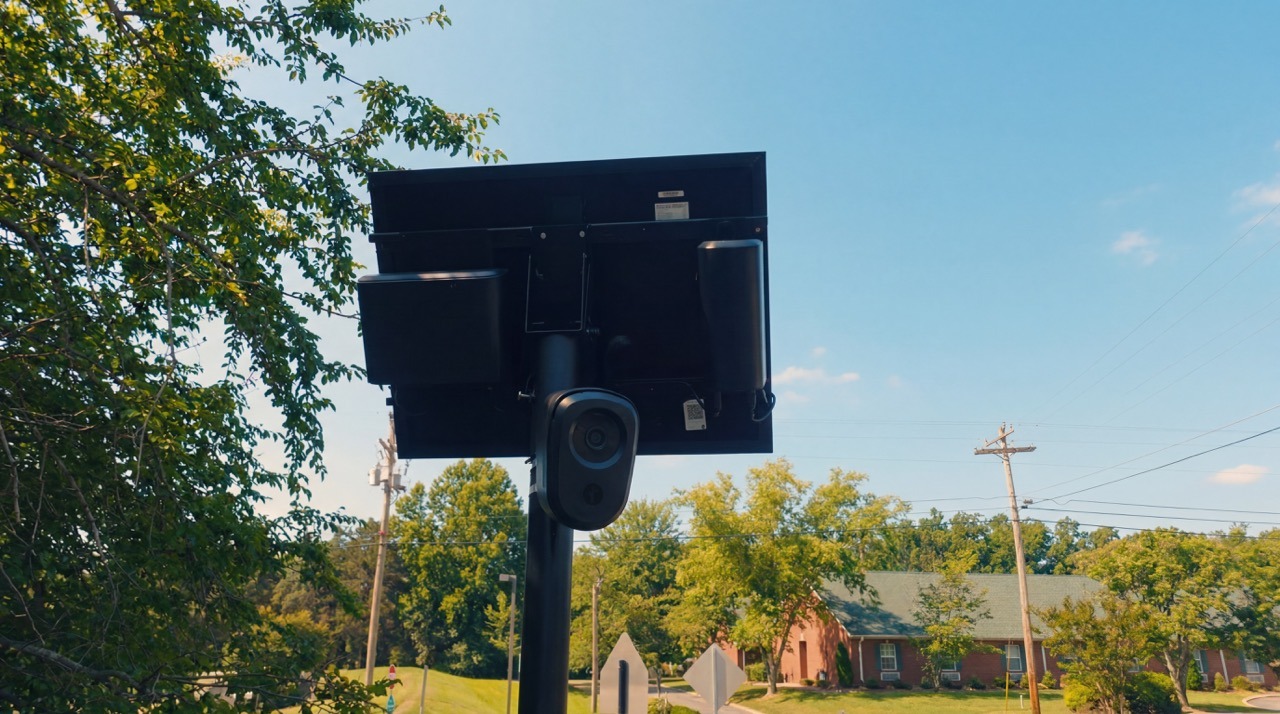
Part of the current panic comes from allowing several very different technologies to blur together under the word “surveillance.” A conventional Flock automatic license-plate reader captures a still, point-in-time observation of a vehicle visible from a public roadway and records information such as the plate, time, location, and visible vehicle characteristics. It does not know who is driving, why the vehicle is there, what its occupants are saying, or where the car goes after it leaves the camera’s field of view.
That is surveillance, but surveillance exists on a spectrum. A wiretap hears private conversations. A forensic cellphone extraction can expose years of messages, photographs, searches, contacts, and application data. Historical cell-site information can reconstruct substantial portions of someone’s movements, and a GPS tracker can report a vehicle’s location continuously. A fixed ALPR records something narrower: this vehicle appeared here at this time.
What makes Flock consequential is not the extraordinary depth of any one observation. It is scale, speed, and searchability. Before ALPR networks, detectives trying to reconstruct vehicle movement often had to canvass businesses, locate surveillance systems, find someone capable of retrieving the recordings, determine whether the cameras were functioning, and manually watch hours of video. Sometimes the critical recording was gone before investigators knew they needed it. Flock turns thousands of fleeting public observations into information that can still be searched when a detective finally understands which vehicle matters.
There is growing evidence that this usefulness extends beyond dramatic anecdotes. An August 2026 working paper by criminologists Scott Mourtgos and Ian Adams examined the staggered deployment of fixed ALPRs across 216 American law-enforcement agencies and found motor-vehicle theft (MVT) declined about 11 percent after deployment. Arrest clearances for MVT rose 15.9 percent, although the researchers appropriately warned that the clearance increase had begun shortly before the recorded deployments, making it impossible to attribute the entire gain to the cameras.
The real privacy issue is not the photograph
Defenders of Flock make a mistake when they answer every privacy concern by saying, “Your license plate is public.” Of course it is. Anyone standing beside the road can see it, a patrol officer can write it down, and countless commercial security cameras can record it. That does not answer the harder question of what happens when thousands of otherwise mundane observations are accumulated, searchable, and available to government employees.
One sighting reveals very little. Hundreds of observations retained for months can reveal substantially more. A car repeatedly seen near one residence overnight, another location during working hours, and a particular medical office every Thursday can create patterns from which human beings draw conclusions about home, employment, associations, medical treatment, religion, or politics. The camera does not inherently know any of those things, but aggregation can allow people to infer them.
That is the serious civil-liberties concern, and supporters of ALPRs should acknowledge it instead of waving it away. The answer lies in retention, purpose limitations, access controls, auditability, and consequences. A system that automatically deletes ordinary observations after days presents a very different privacy risk from one that retains a year of travel history. A system in which every user has an individually authenticated account and every query is associated with an investigative purpose is different from one with shared credentials and casual access.
Those differences are not arguments for abandoning the technology. They are the architecture of responsible use.
The Barker case should teach us the right lesson
I have a particular interest in the recent controversy in Athens-Clarke County because I previously worked in the same Crime Analysis Unit. On August 27, ACCPD received a complaint from the ex-wife of Criminal Intelligence Analyst Supervisor Nick Barker alleging that he had misused the department’s Flock system. According to the department’s initial investigation, Barker searched his ex-wife’s vehicle tag numerous times over several months in 2025 for purposes prohibited by policy. Chief Jerry Saulters fired him, the department opened a broader examination of its ALPR practices, and the matter was referred to the Georgia Bureau of Investigation for an independent criminal investigation.
If those findings are borne out, the damage extends well beyond Barker. His former wife is the obvious victim, but the analysts, investigators, dispatchers, officers, and supervisors who use these systems honorably are left to live with the institutional consequences. That is one of the cruelest effects of abusing public trust: the misconduct of one person spreads suspicion over thousands who did nothing wrong and tarnishes legitimate work performed on behalf of victims every day.
The department’s response once the allegation surfaced was appropriate. The audit records existed to test the complaint, the employee was removed, and potential criminal conduct was referred outside the agency for independent investigation. That standard should apply whether the person behind the keyboard is a patrol officer, a lieutenant, a chief, a dispatcher, or an analyst. Access is the issue, not the uniform, rank, or job title.
But the case also exposes the unfinished work. The complaint apparently came first. A surveillance system should not depend on the person being surveilled somehow discovering the abuse and asking the government to investigate itself. The next misuse should be caught by the audit before it is caught by the victim.
Recent reporting demonstrates how badly that improvement is needed. The Washington Post found at least 69 law-enforcement officials accused, charged, or convicted of misusing Flock or other ALPR systems, often to search for spouses, girlfriends, former partners, or other personal targets. In at least fifteen cases, someone outside the agency, including journalists, activists, or victims, identified the suspicious activity before the department did. Some departments admitted they were not regularly auditing their own users at all.
That should infuriate supporters of the technology every bit as much as it infuriates its critics. Audit logs nobody audits are not meaningful safeguards. Agencies should proactively examine query histories for repeated searches of the same vehicle, activity inconsistent with an employee’s duties, unusual off-hours searching, and queries that cannot be connected to legitimate law-enforcement work. Auditing protects the citizen from the dishonest employee, but it also protects the honest analyst and investigator from having years of legitimate work smeared by someone else’s misconduct.
Flock’s August 2026 changes move in the right direction. The company has announced a recommended default retention period, mandatory Audit Assistance for law-enforcement customers, case-code requirements, proactive lockouts for suspicious activity, stronger multifactor authentication, case-specific Evidence Mode, and more granular controls over interagency sharing. Those controls are welcome, but a software company cannot manufacture institutional integrity inside a police department. Chiefs, sheriffs, supervisors, prosecutors, legislators, and courts still have work to do.
Beware the logic of the mob
This is where parts of the current DeFlock movement risk losing the plot. There are thoughtful civil-libertarians asking serious questions about government surveillance, retention, interagency sharing, immigration enforcement, cybersecurity, and constitutional boundaries. They deserve serious answers, and some of the reforms now being implemented exist precisely because critics forced uncomfortable questions into public view.
Something less thoughtful is happening alongside that debate. Flock cameras have been shot, spray-painted, obstructed, smashed, and cut from their poles while videos circulate showing how to disable them and online audiences celebrate the destruction. Once public policy reaches the point where destruction is applauded more enthusiastically than reform is discussed, we are no longer dealing exclusively with principled civil-liberties advocacy.
History provides horrific examples of what happens when outrage overwhelms the distinction between guilt and association. The Salem witch trials and American lynch mobs were vastly more serious and morally catastrophic than a dispute over surveillance cameras, and I am not equating their historical gravity with modern anti-Flock activism. But there is resemblance in the logic of the mob: accusation becomes proof, association becomes guilt, nuance becomes suspicious, and punishment spreads from the wrongdoer to everything and everyone connected with the offense.
We should recognize that instinct when it appears. One analyst allegedly abuses Flock, therefore Flock must go. Several officers misuse a database, therefore thousands of legitimate investigators become suspect. Agencies fail to audit employees, therefore the camera that might identify tomorrow’s kidnapping vehicle should be cut from its pole. That is not accountability; it is collective punishment masquerading as reform.
The detective looking for a murderer did not stalk anyone’s former spouse. The analyst searching for a kidnapped child did not misuse the database. The deputy looking for an elderly dementia patient did not violate anyone’s trust. The mother watching her toddler disappear down the road had nothing to do with a rogue employee somewhere else abusing his login. Yet those are the people who ultimately lose when outrage convinces a community to blind its investigators rather than discipline the people who misused the tool.
That is throwing the baby out with the bathwater in unusually literal public-policy form.
Keep the tool. Fix the rules.
The responsible position is neither unrestricted surveillance nor reflexive abandonment. Keep routine retention short enough that the government does not quietly accumulate seasons of ordinary travel, while allowing specific records to be preserved when they become evidence in an actual investigation. Require individually authenticated accounts, multifactor authentication, documented cases or calls, and legitimate law-enforcement purposes. Prohibit shared credentials, control interagency sharing deliberately, require reasonable verification before an automated result becomes the basis for a high-risk police encounter, and audit use on a schedule rather than after a scandal.
When deliberate misuse is discovered, the response should be decisive. Preserve the evidence, terminate access, investigate the conduct, impose appropriate employment consequences, and, when the facts establish criminal behavior, refer it to independent investigators and prosecutors. The Constitution and the Bill of Rights are not impediments to effective policing; they establish the boundaries within which lawful policing derives its legitimacy. No badge, agency, rank, job title, or technology places a public servant beyond those boundaries.
Public confidence will never come from telling citizens simply to trust the government. It must be earned by demonstrating that extraordinary powers are exercised for legitimate purposes, that activity is recorded, that auditors actually examine those records, and that misuse produces consequences. Accountability is not a threat to good police work. It is one of its foundations, protecting both the liberties of citizens and the integrity of the overwhelming majority of public servants who honor the trust placed in them.
The strongest defense of Flock is therefore not to insist that abuse cannot happen. We already know that it can. The strongest defense is to build systems in which misuse is difficult, detectable, documented, and punished, while preserving the capability for the vastly larger universe of legitimate searches that never become newspaper stories because they simply helped an investigator do the job correctly.
The great mistake of the present backlash is losing sight of what is actually being discarded. At its core, a conventional license-plate reader records something fairly modest: a vehicle, a time, and a place. The network makes those modest observations powerful because investigators can search them rapidly when the need arises. Sometimes that need involves a stolen car or a fleeing homicide suspect; sometimes it is an elderly father sitting confused beside an empty gas tank, a teenage daughter missing with an armed man, or a toddler being driven away by someone who should not have custody.
And sometimes we discover the value of that information because it is not there. Nancy Guthrie’s family has now spent months waiting while investigators attempt to piece together scattered videos and unidentified vehicles from the night an 84-year-old woman vanished from her home. Jennifer Kesse’s parents have spent twenty years wondering what happened after their daughter disappeared and an unidentified person abandoned her car. We cannot know whether ALPR coverage would have solved either case, but we can know what investigators wish they could search today: which vehicles were there, when were they there, and where did they go next?
We should investigate every abuse of these systems, expose what we find, fire people who violate the public trust, prosecute criminal misconduct, shorten unreasonable retention periods, restrict unnecessary sharing, and audit aggressively. We can do all of that without deliberately making investigators less capable of finding the people who desperately need to be found. That is not a compromise between liberty and safety so much as the basic obligation of competent government: preserve useful power while placing enforceable boundaries around its exercise.
The old warning about throwing the baby out with the bathwater has an uncomfortable literal quality in this debate. In Colorado, the baby was fourteen months old, the stolen car was disappearing, and the clock was running; a license-plate reader helped police bring that child home. In Tucson and Orlando, families are still waiting for answers that a richer historical record of vehicle movements might, or might not, have provided.
That is the bargain worth making. Keep the cameras, write better rules, audit the people who use them, and punish those who abuse the privilege, because the next Flock search that matters may not concern a stranger whose story appears in tomorrow’s newspaper. It may be your child, your spouse, your parent, or your grandparent whom investigators are desperately trying to bring home.