
Congresswoman Mace,
On February 26, 2026, you introduced the Death Penalty for Child Rapists Act. You spoke with conviction about accountability and about having zero mercy for those who prey on children. In a season defined by outrage over sexual exploitation and renewed national anxiety about protecting the vulnerable, your bill landed with force. Many Americans heard it as moral clarity. If the crime is monstrous, the punishment must match.
I understand the instinct.
I am not writing to you as a policy theorist or a partisan critic. I am writing to you as a stepfather. My stepchildren, Callie and Wyatt Christian, lost their father, Senior Police Officer Elmer “Buddy” Christian III of the Athens-Clarke County Police Department, when he was murdered in the line of duty on March 22, 2011, in Athens, Georgia.
Buddy was the kind of officer whose smile filled a room and whose badge represented a servant’s heart. That morning began with violence at an apartment complex. Another officer was shot first. Buddy was next. The suspect fired through Buddy’s patrol car window and killed him.
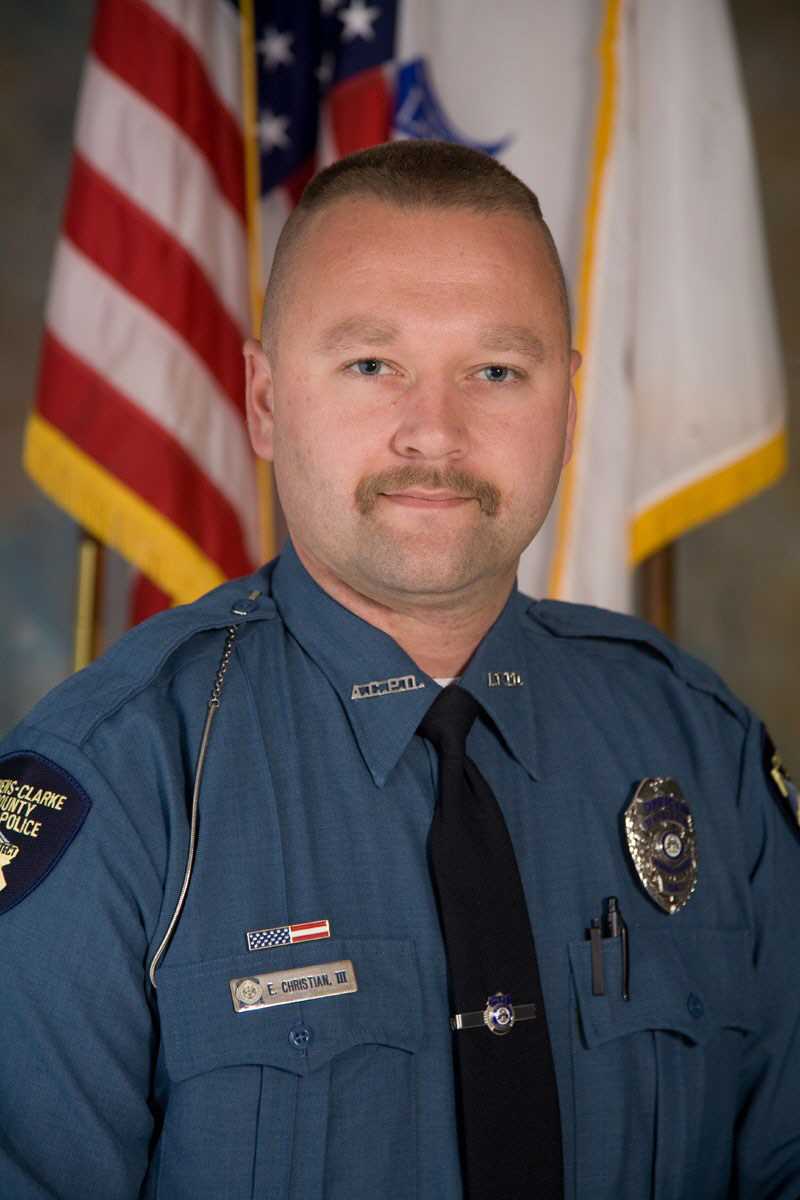
Callie was a little girl wrapping up her kindergarten school year. Wyatt was a toddler. Their childhood fractured into candlelight vigils and folded flags.
The state sought the death penalty. It was a capital case from the beginning. In 2015, after more than four years of courtroom antics and the reliving of every brutal detail, the jury convicted the killer on dozens of counts. Then came the sentencing phase, when twelve jurors were asked whether the man who executed a father in uniform should himself be executed by the state.
They chose life. Multiple life sentences, including life without the possibility of parole for Buddy’s murder.
I remember the moment the sentence was read. It was not triumph. There is no triumph in burying a father. It was an exhale. It was the first sense that this nightmare might actually end.
Had the jury imposed death, my stepchildren would have spent the majority of their childhoods and adulthoods tethered to appeals. Capital cases do not end at sentencing. They begin again. Automatic appeals. State habeas petitions. Federal habeas petitions. Claims of ineffective assistance of counsel. Allegations of juror misconduct. Constitutional challenges. Each filing would have dragged Callie and Wyatt back into courtrooms and headlines. Each hearing would have required them to revisit the worst day of their lives.
I have watched other families live that reality. Decades of litigation. Anniversaries interrupted by motions and hearings. Media coverage that resurfaces every time an execution date is set or stayed. Parents and children aging alongside a case that refuses to die.
The death penalty is often described as the ultimate punishment. For survivors of violence, it can become the ultimate burden.
Life without parole is different. It is quiet. It is final. There is no execution date to anticipate, no last minute appeals that reopen wounds. The offender wakes up every morning in a cell. He ages there. He eats there. He thinks there. He dies there. The door closes, and for the survivors, the case closes with it.
Buddy’s killer sits in a Georgia prison today with no possibility of parole. There are no cameras. No spectacle. No final act. He has forever to contemplate what he did.
That permanence gave Callie and Wyatt something priceless. They can grow old without preparing for the next appeal. They can pursue school, careers, and healing without the legal system constantly summoning them back. They can visit their father’s grave without wondering whether another court filing is about to resurrect the man who killed him into the news cycle again.

In Washington, the debate over expanding capital punishment will inevitably center on constitutional precedent. The Supreme Court’s decision in Kennedy v. Louisiana held that the death penalty is unconstitutional for the rape of a child where the victim does not die. Any expansion would collide with that ruling and invite years of litigation. Lawyers would argue. Courts would parse evolving standards of decency. The process would be lengthy and uncertain.
But beyond the constitutional questions lies a human one. Who is justice for?
It is natural to feel that some crimes are so vile that death is the only proportionate response. I do not minimize the horror of child rape or the devastation it leaves behind. Yet my family’s experience taught us something counterintuitive. Execution is swift in its final moment. Life without parole is slow. It is decades of confinement. Decades of aging behind concrete and steel. No parole board. No second act. No return.
For some survivors, that is the harsher sentence.
Execution gives the offender a finite ending. A final meal. A final statement. A final moment that, however grim, draws a line under the case. Life without parole gives him time. Endless time. And it gives the family what they need most: distance.

Congresswoman Mace, your bill is anchored by a desire to protect children and to express society’s absolute condemnation of those who harm them. I respect the seriousness of that aim. But I ask you to consider the families who will be required to live inside the system your legislation would create.
The death penalty is swift for the condemned. For survivors, it can be a life sentence of its own. Multiple life sentences without parole remove the offender permanently while allowing the living to move forward. They end the spectacle. They end the appeals. They end the constant reopening of trauma.
In our case, the system chose life without parole. It did not diminish Buddy Christian’s sacrifice. It honored his children by giving them an ending.
Sometimes the most severe justice is not the one that ends with a gurney, but the one that ends with a steel door closing and never opening again.
Respectfully,
David Griffeth