For centuries, warfare belonged almost exclusively to states and their organized militaries. Intelligence flowed through carefully controlled channels: clandestine human sources, intercepted communications, reconnaissance aircraft, and satellites orbiting silently overhead. Targets were selected inside secure command centers, analyzed by teams of specialists, and engaged by soldiers operating within rigid chains of command. Even in irregular conflicts, certain patterns held. Guerrillas could hide among civilian populations and draw sustenance or warnings from sympathetic communities, but the population itself rarely functioned as an operational intelligence network for a foreign military.
That longstanding structure is beginning to fracture.
During the current confrontation between Israel, the United States, and Iran, a striking new tactic has come into view. Reporting in The Wall Street Journal indicates that Israel has carried out some strikes inside Iran using targeting information supplied by ordinary Iranian citizens. According to a senior Israeli security official, individuals inside Iran transmit tips through Israeli social media accounts written in Persian. Israeli intelligence services then examine and verify the information before authorizing military action.
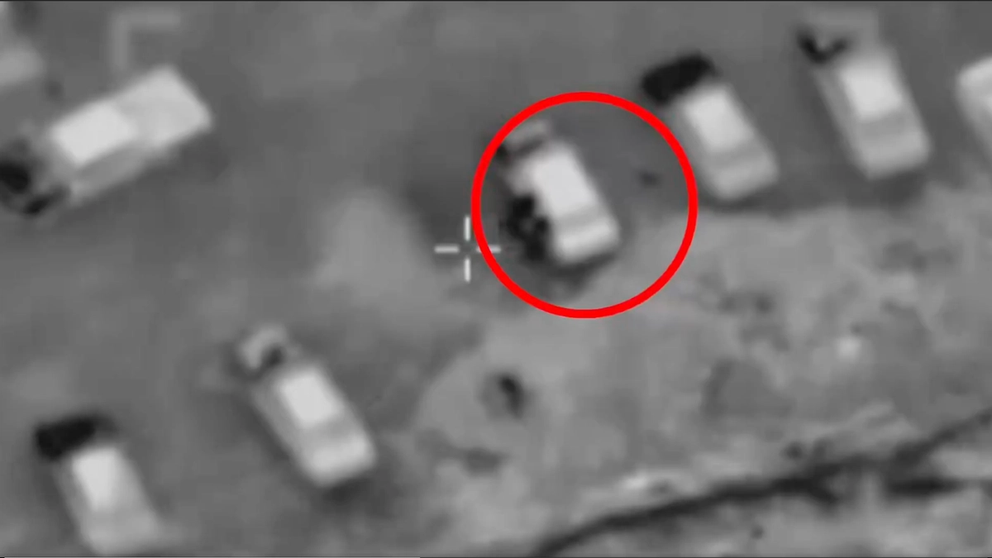
One reported example occurred when an Israeli Hermes 450 unmanned aerial vehicle struck Basij militia checkpoints in Tehran. According to the official cited in the reporting, the locations of those checkpoints were identified through tips provided by individuals on the ground. Iranian state media later confirmed that the drone attack occurred and acknowledged casualties among Basij personnel.
The implications reach far beyond a single strike. What is emerging is not merely a tactical adjustment in intelligence gathering but a deeper transformation in the structure of modern warfare. The battlefield is no longer defined solely by armies, borders, and airspace. It now extends into the hands of millions of connected civilians carrying smartphones.
In this environment, asymmetrical warfare is being redefined. States with advanced intelligence and strike capabilities can now harness information supplied by populations living under adversarial regimes.
From Resistance Networks to Crowdsourced Intelligence
Traditionally, asymmetrical warfare described conflicts in which weaker actors used unconventional tactics to offset the advantages of stronger militaries. Insurgencies relied on ambushes, sabotage, and concealment among civilian populations to frustrate technologically superior forces. Groups such as the Viet Cong in Vietnam or the Taliban in Afghanistan depended heavily on local populations for food, shelter, and information.
Information typically flowed in a single direction. Civilians warned insurgents about government patrols or military movements. The population functioned as an early warning system for guerrilla fighters attempting to survive against a stronger state.
The dynamic now unfolding in Iran reverses that relationship.
Instead of insurgents gathering information from civilians to strike a government, a foreign military is receiving information from civilians to strike the regime that governs them. In effect, the population becomes a decentralized intelligence network.
Every smartphone can serve as a reconnaissance tool. A photograph of a checkpoint, a brief description of security forces assembling at an intersection, or a short video clip of vehicles arriving at a facility can be transmitted across digital networks within seconds.
For intelligence agencies, the potential scale of such reporting is extraordinary. Traditional human intelligence operations depend on small numbers of carefully recruited sources who must be protected and managed over time. A voluntary flow of information from thousands or even millions of citizens dramatically expands the pool of potential observations.
At the same time, it introduces a new challenge: verification.
The Verification Problem
Intelligence professionals have long understood that raw information is unreliable until it is tested against other sources. Wartime environments produce rumors, exaggerations, and deliberate deception. Even well-meaning observers may misinterpret what they see.
Any military that accepts civilian reporting must therefore impose strict analytic discipline.
The Israeli official cited in the reporting emphasized that information from Iranian citizens is vetted before any action is taken. In practice, such verification likely involves the fusion of multiple intelligence streams. Satellite imagery may confirm the presence of structures or vehicles. Signals intelligence might reveal communications activity consistent with the reported site. Analysts studying patterns of activity may determine whether the location is regularly used by security forces.
Only after such corroboration would a target move from raw report to operational action.
This principle is fundamental to intelligence work. Information becomes intelligence only after analysis and confirmation.
What is new in the present conflict is the scale of the potential reporting environment. Iran has tens of millions of internet users and a vast number of connected devices. Despite government efforts to control the internet, many users continue to reach outside information networks through virtual private networks and encrypted messaging applications.
Within such an environment, even a small fraction of citizens sending observations could generate a significant intelligence flow.
The Networked Battlefield
The smartphone revolution has quietly created the largest distributed observation network in human history. In many societies, nearly every adult carries a device capable of recording high-resolution images, attaching geographic coordinates, and transmitting data instantly.
Even in countries where governments attempt to control online communication, technological workarounds often persist. Iranian authorities have repeatedly imposed restrictions on internet access during periods of unrest, including widespread outages during recent tensions. Yet digital communication has proven resilient, supported by circumvention tools and encrypted platforms.
For intelligence services, the implications are obvious. A Persian-language social media account that invites citizens to submit information about security forces could receive a constant stream of messages. Many would be useless or misleading. But within the volume of submissions, there may be accurate observations that complement other intelligence sources.
A passerby photographs a checkpoint.
A shopkeeper notices militia vehicles arriving at night.
A commuter records a convoy moving through an intersection.
Each fragment of information can be analyzed alongside satellite imagery, intercepted communications, and other data.
The result is a battlefield that exists not only in physical space but also in a vast digital ecosystem.
The Politics of Participation
Why would civilians assist a foreign military during wartime?
The answer may lie in the internal dynamics of Iranian society. Institutions such as the Basij militia and the Islamic Revolutionary Guard Corps function not only as military forces but also as instruments of domestic control. They play a central role in suppressing protests and enforcing political authority.
For segments of the population that oppose the regime, reporting the location of those forces may be seen as a form of resistance.
Participation in such activity does not necessarily reflect sympathy for Israel or the United States. It may instead express frustration with economic conditions, anger over political repression, or resentment toward security forces perceived as instruments of coercion.
In that sense, the intelligence pipeline reflects the internal divisions of the Iranian state. The government no longer holds an uncontested monopoly over the flow of information inside its borders.
Precision Strikes and Psychological Effects
This model of intelligence gathering produces effects that extend beyond the immediate destruction of a target.
When security forces suspect that their positions may be reported by the population they police, uncertainty grows rapidly. Every checkpoint may already be known to an external adversary. Every patrol might be observed. Every movement could be recorded and transmitted.
This uncertainty carries a psychological cost.
For decades, conventional militaries operating in insurgent environments faced the constant anxiety that civilians might be providing information to guerrilla fighters. The situation now appears to be reversing. Authoritarian security forces may confront the same unease, wondering whether the population around them is quietly transmitting their movements to foreign intelligence services.
Drones and the Compression of Time
The effectiveness of such intelligence flows is magnified by the rapid evolution of unmanned aerial systems. Platforms such as the Hermes 450 are capable of remaining airborne for extended periods while monitoring areas of interest. Once analysts confirm a target, precision weapons can be deployed quickly.
This dramatically compresses the time between information and action.
In earlier eras, intelligence gathered on the ground might take days or weeks to translate into a strike. Today the process can unfold within hours. Information arrives. Analysts verify the report. A drone is dispatched. The target disappears in a brief burst of light recorded by infrared sensors.
Modern conflict increasingly rewards those who can shorten the cycle between observation and decision.
Strategic Consequences
Israel and the United States may be pioneering a model that other states will study closely.
Governments that already worry about the political consequences of digital communication must now confront its military implications. A hostile or dissatisfied population connected to global networks becomes a strategic vulnerability.
Future conflicts may see states openly encouraging civilian reporting inside rival countries. Social media platforms may serve as informal intelligence channels. Encrypted messaging could allow information to flow across borders even when governments attempt to impose strict censorship.
For intelligence services, the challenge will be managing the enormous volume of incoming data while filtering out deception and error. For authoritarian regimes, the likely response will involve deeper digital surveillance, tighter internet controls, and increased suspicion toward their own populations.
The contest between centralized state power and decentralized information networks is likely to become a defining feature of twenty-first century geopolitics.
Warfare in the Information Age
The deeper shift underway concerns the role of information itself. Military power has traditionally been measured in divisions, aircraft, and missiles. Yet in modern conflicts the decisive advantage increasingly lies in the ability to acquire, process, and exploit information faster than an adversary.
Weapons remain essential, but they are guided by data. Increasingly that data may originate from civilians who never consider themselves participants in a war.
A person holding a smartphone may never carry a rifle or wear a uniform. Yet the information transmitted from that device can determine where a precision weapon lands.
The New Asymmetry
The emerging model of warfare combines the strengths of advanced states with the observational reach of ordinary populations. Sophisticated militaries provide analytic capability, surveillance systems, and precision strike platforms. Civilians provide local awareness and constant observation.
Together they form a hybrid structure that erodes the traditional advantages of secrecy and geography.
A regime can deploy soldiers, checkpoints, and surveillance cameras. It can attempt to control the internet and monitor communications. But it cannot easily prevent millions of citizens from observing the world around them.
Nor can it fully seal its society from the global networks through which information travels.
This is the new asymmetry.
It is the power of the state confronting the power of the crowd. In an age defined by smartphones and digital communication, the crowd may prove to be the most formidable intelligence network ever assembled.
References
Center for Human Rights in Iran. (2026, January 30). Unreported atrocities: Eyewitnesses detail massive and deadly state crackdown against protesters in Iran’s provincial cities. https://iranhumanrights.org/2026/01/unreported-atrocities-eyewitnesses-detail-massive-and-deadly-state-crackdown-against-protesters-in-irans-provincial-cities-2
CNN Staff. (2026, March 11). What we know on the 12th day of the US and Israel’s war with Iran. CNN. https://www.cnn.com/2026/03/11/middleeast/us-israel-iran-middle-east-war-what-we-know-intl-hnk
DataReportal. (2025, November 8). Digital 2026: Iran. https://datareportal.com/reports/digital-2026-iran
Elbit Systems. (n.d.). Hermes™ 450 tactical drone | Combat-proven multi-role drone. Retrieved March 12, 2026, from https://www.elbitsystems.com/autonomous/aerial/tactical-uas/hermes-450
Iran International. (2026, March 12). Israel using tips from Iranians to guide strikes inside Iran – WSJ. https://iranintl.com/en/202603128475
Jerusalem Post Staff. (2026, March 12). Iranian civilians sent Israel intel to strike Basij military sites in Tehran – WSJ. The Jerusalem Post. https://www.jpost.com/israel-news/defense-news/article-889833
U.S. Department of State. (2023). 2022 country reports on human rights practices: Iran. https://www.state.gov/reports/2022-country-reports-on-human-rights-practices/iran
Wall Street Journal. (2026, March 12). Israel Relying on Ordinary Iranians for Drone Strike Targets. https://www.wsj.com/livecoverage/us-israel-iran-war-2026/card/israel-relying-on-ordinary-iranians-for-drone-strike-targets-cG5TorYxcFvRCJlbFnDq
Wikipedia contributors. (2026). 2026 Internet blackout in Iran. In Wikipedia, The Free Encyclopedia. Retrieved March 12, 2026, from https://en.wikipedia.org/wiki/2026_Internet_blackout_in_Iran