


Tag: Selected

  • The War Nobody Declared

    The War Nobody Declared

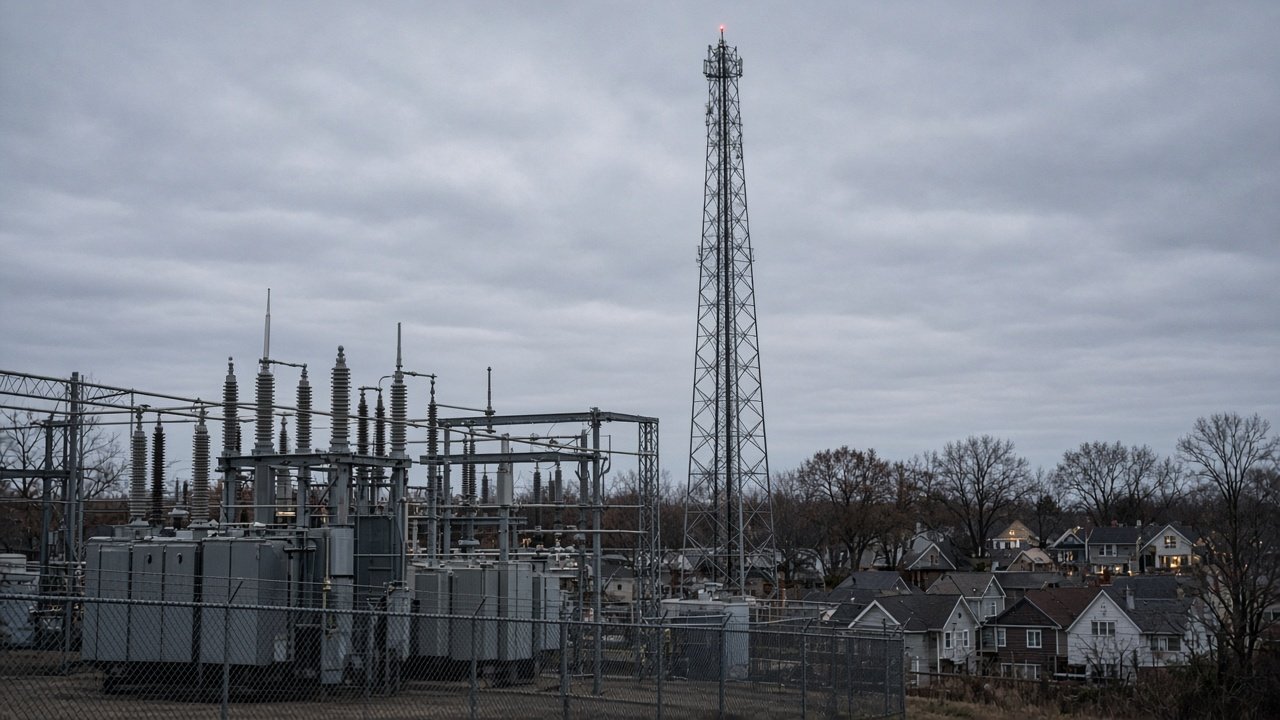
    Electrical substation transformers and a telecommunications tower silhouetted at dusk beside a quiet town's rooftops.

    On the night of October 11, 2026, an attack began against commercial facilities in France that required no bombers, no missiles, and no soldiers crossing a border. The targets were ordinary commercial refrigeration systems, the unremarkable controllers that keep food cold in supermarkets, warehouses, and processing plants. From beyond the reach of French police and military forces, remote operators manipulated controllers governing refrigeration temperatures and defrost cycles. Inside hundreds of businesses, equipment built to preserve food began doing the opposite. Temperatures climbed, frozen inventory thawed, refrigerated goods spoiled, and in at least 15 locations fires broke out.

    By morning, more than 700 commercial sites had been hit, with losses estimated in the tens of millions of euros. The same October campaign reached small butcher shops, a slaughterhouse, and cooperative food-processing facilities, and French investigators linked it to concurrent targeting of equipment at small hydroelectric installations. Three weeks later, on the night of November 1 and 2, a separate refrigeration attack struck cold rooms at three regional centers of France’s national blood service. Alarms and on-call staff prevented any loss of blood products, and French authorities have not linked that November incident to the October attackers.

    On November 9, France publicly attributed the October sabotage to Shahid Kaveh, an offensive cyber unit affiliated with Iran’s Islamic Revolutionary Guard Corps. Alongside its diplomatic declaration, France’s Cyber Crisis Coordination Centre released an unusually specific technical attribution report identifying infrastructure, techniques, online personas, and commanders tied to the unit. Iran denied responsibility.

    Eleven days later, across the English Channel, a senior British military commander addressed the other side of the ledger. In a November 20 Sky News interview following King Charles III’s opening of a new headquarters for Britain’s National Cyber Force in Samlesbury, Lancashire, General Sir Rob Magowan, commander of Cyber and Specialist Operations Command, confirmed that Britain conducts offensive cyber operations and pointed to Russia, China, Iran, and North Korea among the adversaries that must expect a cost in cyberspace. Asked whether Britain was at war digitally, Magowan answered carefully: “I wouldn’t say we’re at war, but we’re not at peace either.”

    That phrasing deserves close attention rather than quick dismissal. Governments insist these operations fall short of war, and in strict legal and diplomatic terms they have a point. The line separating covert disruption from armed conflict has held through years of espionage, theft, and sabotage. The danger lives inside the ungoverned gap below that line. States have learned they can penetrate critical networks, plant access for future crises, and inflict physical and financial damage on civilian businesses without formally crossing into war, paying wartime costs, or answering to the public. Neither the equipment being hijacked nor the communities relying on it are sheltered by the legal distinction.

    How the Sub-Threshold Arena Took Shape

    This contest did not begin in October 2026, or with Russia’s invasion of Ukraine. It grew out of the collision between military intelligence and an economy wired into shared networks. Electric utilities, telecommunications carriers, hospitals, banks, water authorities, transport hubs, emergency dispatch centers, and government agencies now run on tightly linked digital infrastructure. The efficiency gains are real, and so is the exposure. A municipal water plant relies on controllers serviced remotely by an outside vendor, and a hospital depends on electronic records, laboratory links, and supply chains far outside its walls. A breach in one shared vendor or carrier can ripple through unrelated organizations countries away.

    The strategic turning point arrived when states recognized those shared dependencies as tools of coercion. The landmark early example was Stuxnet, the computer worm discovered in 2010 targeting industrial controllers inside Iran’s uranium-enrichment facility at Natanz. Stuxnet crossed the barrier between software and physical machinery, spinning centrifuges to destruction while feeding false normal readings to plant operators. Reporting by The New York Times and The Washington Post, citing American officials, described a reported U.S. and Israeli collaboration code-named Olympic Games. Neither government formally acknowledged it. Whether or not formally acknowledged, the operation showed that malicious code could damage physical machinery without an airstrike, and that released malware rarely stays contained. Stuxnet escaped its intended target and was studied by researchers worldwide, handing rival governments a proof of concept they soon imitated.

    Russia demonstrated how destructive cyber tools operate inside active geopolitical conflict. In December 2015, attackers breached portions of Ukraine’s electric grid and caused blackouts, followed by a second industrial-control attack in December 2016. Then came NotPetya. On June 27, 2017, destructive malware disguised as ransomware spread out of Ukraine across global corporate networks, crippling hospitals, shipping companies, manufacturers, and pharmaceutical firms with no way to recover encrypted machines. In October 2020, the U.S. Department of Justice charged six officers of Russia’s GRU military intelligence service over NotPetya, the Ukrainian power attacks, and interference surrounding the 2018 Winter Olympics, citing nearly $1 billion in losses across just three identified NotPetya victims.

    Five years later, Russia folded cyber operations directly into a conventional invasion. Roughly an hour before troops crossed into Ukraine on February 24, 2022, an attack disabled modems across Viasat’s commercial KA-SAT satellite network. The European Union formally attributed the operation to Russia, noting spillover across European broadband customers and remote monitoring links for thousands of wind turbines in Germany. Other operations attributed to Russian intelligence deployed destructive wipers such as WhisperGate against Ukrainian government systems; in September 2024, U.S. prosecutors charged five additional GRU officers and a civilian associate in that campaign.

    Read plainly, Russia’s record shows both the hazard and the ceiling of cyber operations. Moscow’s heaviest destructive attacks occurred alongside a shooting war, and even during a full-scale invasion cyberattacks did not collapse Ukraine’s government, shatter its command structure, or halt Western support. Backed by allied partners and private cloud and security firms, Ukraine adapted and kept fighting. Cyber tools act as force multipliers rather than war-winning superweapons.

    Even within that ceiling, the arena has widened in a way that pulls ordinary citizens inside it. When militaries rely on commercial satellites, telecom carriers, and everyday software vendors, the boundary between military installations and civilian systems thins out. That same blurring of civilian networks and active targeting has made commercial infrastructure part of modern conflict, carrying collateral damage far beyond any front line.

    Three Adversary Playbooks, and Why They Are Not the Same

    Bundling every hostile cyber operation under the single label of “cyberwar” hides what is actually happening. Iran, China, and North Korea are exploiting three distinct seams below conventional war, with sharply different goals, tools, and boundaries.

    Iran: Retaliatory Sabotage and Exposed Commercial Gear

    France’s November 9 attribution stood out for the level of detail its investigators placed on the public record. France’s Cyber Crisis Coordination Centre, known as C4, brings together the national cybersecurity agency ANSSI, military cyber command, intelligence services, and defense procurement specialists. Its report attributed the October refrigeration sabotage to IRGC-affiliated unit Shahid Kaveh, named a second unit called Shahid Shoostari, and identified Mahdi Lashgarian and Reza Salarvand as commanders associated with Shahid Kaveh. Investigators built that finding on four converging indicators, including overlapping infrastructure, recognizable techniques, links to a propaganda channel, and Farsi artifacts in the attack code. As with most state attribution, the underlying raw telemetry was not published, and the report remains an interagency intelligence assessment rather than a court verdict.

    French investigators also tied Shahid Kaveh to hacktivist personas including CyberAveng3rs (also spelled CyberAv3ngers in U.S. advisories), Soldiers of Solomon, Mr. Soul, and Cyber Isnaad Front. Hiding behind activist labels gives a state plausible deniability while still producing disruption and publicity. Beyond the retail equipment struck in October, the French report documented Shahid Kaveh’s broader capabilities for scanning and interacting with industrial controllers made by major international manufacturers, including Schneider Electric, Siemens, and Rockwell. Concurrent targeting of Schneider Electric equipment at small French hydroelectric installations produced what French investigators described as moderate effects.

    The technical mechanics of the October sabotage call for sober analysis. Investigators traced the intrusions to internet-exposed commercial refrigeration controllers reachable over legacy, unauthenticated industrial protocols such as Modbus on port 502, compounded by outdated firmware and weak vendor credentials. In November, researchers at Palo Alto Networks’ Unit 42 reported finding more than 5,000 internet-exposed devices tied to the affected refrigeration ecosystem across multiple countries, cautioning that exposure alone did not prove compromise. Just as revealing, Unit 42’s figures showed how rapidly basic hygiene closes the door: as operators pulled controllers off the public internet, exposed units in France dropped by 83 percent in three weeks, from 1,853 in early October to 316 by early November. Exposed supermarket freezers do not prove Tehran can dismantle hardened Western infrastructure at will, yet they show how quickly an adversary can convert neglected commercial hardware into fires and commercial loss.

    Early November brought a wider wave of refrigeration incidents hitting more than 100 retail sites across at least 10 other European countries, coinciding with the separate, unattributed November 1 and 2 attack on three French national blood service centers. Pro-Russian Telegram channels, including NoName057(16) and Z-Pentest, posted unverified claims around parts of that early-November activity, and European investigators had not established common responsibility across those incidents. France’s attribution also linked Shahid Shoostari to earlier destabilization operations against Charlie Hebdo in January 2023 and a French digital-display firm before the 2024 Paris Olympics, caught before altered political imagery could appear.

    Iran’s reported operations in France unfolded alongside active conflict. On February 28, 2026, the United States and Israel launched military strikes against Iran; an uneasy April ceasefire fractured as the Revolutionary Guard tightened its grip on wartime operations, and clashes and diplomacy continued through the year. An August 2026 commentary by Center for Strategic and International Studies senior fellow Nikita Shah documented an intensification of Iranian cyber activity after hostilities began. Here too, the hot-war context cuts both ways. After direct military strikes on its territory, Tehran’s most visible attributed cyber response against a Western country struck exposed retail freezers rather than hardened military targets. Yet the targets in France were civilian businesses, not military posts. Like Tehran’s long-range missile test earlier in the year, the goal did not have to be battlefield victory; it could be to demonstrate reach, impose commercial pain, and show that everyday civilian life sits within range. Iran denies responsibility.

    China: Pre-Positioned Access and Telecom Espionage

    China’s documented operations illustrate two distinct missions that warrant careful separation: quiet pre-positioning inside critical infrastructure for a future crisis, and deep foreign intelligence collection inside commercial telecommunications networks.

    The pre-positioning campaign known as Volt Typhoon prompted an unusually blunt warning in February 2024, when CISA, the NSA, the FBI, and allied agencies reported that Chinese state-sponsored actors had compromised critical infrastructure across the United States and its territories, including communications, energy, transportation, and water and wastewater networks, with particular focus on Guam. Rather than routine intelligence gathering, investigators assessed that Volt Typhoon operators were planting concealed, long-term access inside utilities to disrupt power, logistics, and communications supporting American forces if a crisis over Taiwan or another Pacific flashpoint turned into conflict. Because bases and surrounding towns share the same grids and telecom lines, delaying military mobilization would inevitably strike civilian communities as well.

    A separate China-linked intrusion, Salt Typhoon, revealed a different exposure inside commercial telecommunications carriers. According to the FBI’s April 2025 public notice, the breach involved the theft of call data logs, a limited number of private communications involving identified victims, and the copying of select information subject to court-ordered U.S. law-enforcement requests. Reaching the systems carriers operate for lawful intercepts hands a rival service insight into both private conversations and whom American counterintelligence officers are watching.

    On November 19, 2026, a separate disclosure showed how slowly government and industry act even on documented risks. After a Freedom of Information Act lawsuit and pressure from lawmakers, the Electronic Privacy Information Center published a redacted version of a previously withheld 2022 CISA-commissioned study (report and accompanying disclosure) documenting serious flaws in American telecommunications networks. Technical accuracy matters here. The 2022 CISA report examined vulnerabilities in legacy signaling protocols, specifically SS7 and Diameter, whereas Salt Typhoon targeted core and edge network routers and carrier access infrastructure. Claiming the 2022 flaws caused Salt Typhoon, or that earlier release alone would have prevented it, would misread the technical record.

    The real parallel is institutional and regulatory. Federal officials knew shared telecommunications networks carried deep structural weaknesses, kept the unclassified assessment out of sight for years, and lacked the transparency or enforcement leverage to compel carriers to harden critical infrastructure while foreign intelligence services hunted for openings across those same networks. It follows a familiar pattern I traced in the declassified intelligence warnings before September 11: clear warnings rarely fail to arrive, yet large institutions struggle to act before a crisis forces change. Secrecy sometimes protects genuine national-security methods, but it can also insulate institutional inertia. Beijing has publicly denied American accusations over both Volt Typhoon and Salt Typhoon.

    North Korea: State-Directed Cybercrime as Regime Financing

    North Korea runs a distinct model: state-directed financial crime designed to fund a sanctioned regime rather than disrupt a battlefield. Pyongyang’s cyber units have been linked to bank heists, cryptocurrency thefts, and schemes placing fraudulent remote IT workers inside Western firms. On February 21, 2025, attackers stole roughly $1.5 billion in digital assets from the cryptocurrency exchange Bybit, an operation the FBI publicly attributed to North Korea under its TraderTraitor designation. Meanwhile, a joint U.S. Treasury, State Department, and FBI advisory detailed how North Korean IT workers secure remote jobs under stolen or fabricated identities, sending wages home to evade sanctions and finance weapons programs.

    Category discipline matters here. Stealing $1.5 billion to finance a sanctioned regime is a severe national-security threat, yet it is state-directed financial crime rather than conventional war. The same restraint applies outside North Korea. Some governments tolerate criminal hackers or look away when criminal disruptions suit state goals, but analysts should never assume every ransomware gang operating inside a hostile country acts on direct intelligence orders. Independent crime, state tolerance, and military command are different realities, and proving which one applies requires evidence before governments respond.

    The Western Mirror and the New Doctrine Below War

    Western commentary often settles into a comfortable myth, painting democratic states as passive defenders reacting to aggression invented elsewhere. The public record is more complicated. Alongside the reported Stuxnet collaboration, the United States has formally built offensive cyber operations into military strategy. In 2016, U.S. Cyber Command ran Operation Glowing Symphony against the Islamic State’s online media and communications networks; documents released through the Freedom of Information Act and published by George Washington University’s National Security Archive detailed both its reach and the intelligence coordination behind it. Britain followed a parallel path in 2020 by establishing the National Cyber Force, uniting personnel from GCHQ, the Ministry of Defence (including its defence science laboratory), and the Secret Intelligence Service.

    Candor also requires acknowledging intelligence collection. American and allied agencies conduct extensive foreign communications and network intelligence operations worldwide, just as rivals do. Criticizing Salt Typhoon honestly cannot pretend Western governments abstain from foreign telecom espionage. The meaningful ethical and legal line runs between foreign intelligence collection or targeted counterterrorism disruption on one side, and destructive sabotage against civilian infrastructure on the other. Democratic oversight, proportionality, and civilian protection still count even when adversaries ignore them.

    The sharpest shift in Western strategy has been abandoning Cold War deterrence assumptions. Nuclear deterrence depended on visible arsenals, clear attribution, and mutually understood retaliation. Cyberspace breaks all three: tools stay hidden, attribution takes time, and an adversary may never know whether a failure came from a covert intrusion, a criminal crew, or a flawed update. Western planners stopped relying on classic deterrence years ago. Since 2018, U.S. Cyber Command has pursued persistent engagement and “defend forward” operations to contest rivals continuously outside American networks. Britain’s National Cyber Force outlined a related doctrine in its 2023 publication, Responsible Cyber Power in Practice, focusing on shaping adversary decision-making and sowing operational doubt. General Magowan stated that logic plainly on November 20: “Sometimes we’re deterring. But other times it’s not possible to deter because a lot of our effects aren’t necessarily clear to our adversary. It’s about invoking cost in the sub-threshold zone.”

    That doctrine frames the live debate inside Western capitals. Supporters argue that continuous friction below the threshold of war checks adversaries who would otherwise probe unchecked. Critics warn that constant covert probing normalizes intrusion into shared networks and multiplies miscalculation risks. Even inside one government, goals collide: intelligence agencies want quiet long-term access to gather information, while military commanders want immediate disruption.

    Uncertainty cuts both ways, and restraint matters when evidence is absent. In mid-November 2026, a cluster of major disruptions struck American systems within days, including an outage on the National Security Agency’s internal network, an hours-long nationwide aviation ground stop, and major financial-system disruptions. Online rumors immediately blamed a coordinated foreign cyberattack. Yet as of mid-November 2026, American officials stated they had no evidence of foreign involvement, pointing to internal maintenance, a telecom router migration error, and a software bug. Treating every outage as sabotage breeds panic and invites reckless escalation.

    International agreements have yet to close this escalation seam. NATO has stated that a severe cyberattack, or cumulative malicious cyber effects, could trigger Article 5 on a case-by-case basis, and United Nations working groups have adopted voluntary norms against attacking critical civilian infrastructure. Yet broad norms leave the sharpest question unanswered: what happens when one government believes it is applying limited sub-threshold friction, while the target government sees physical harm to civilian life and treats it as crossing into armed retaliation?

    The Most Dangerous Targets Are Often the Least Glamorous

    When people hear about cyber conflict, they picture nuclear power plants, high-voltage grids, or fortified military bases. In practice, high-consequence industrial facilities are usually the hardest places to trigger catastrophic physical harm remotely. Nuclear stations, major refineries, and modern bulk electric plants rely on independent, hardwired physical safety controls, mechanical pressure and thermal cutoffs, and manual overrides engineered specifically so a hijacked software command cannot burn down the facility. Supermarket refrigeration systems caught fire in France because low-margin commercial controllers lacked independent hardwired safety cutoffs and sat exposed directly on the public internet.

    The most acute fragility lives in the long, unglamorous tail of everyday public and commercial infrastructure: municipal water authorities, small telecoms, county emergency communications centers, regional hospitals, local governments, commercial refrigeration contractors, and the third-party firms providing remote technical support to them. Many run aging operational equipment built before remote internet access became routine, staffed by tiny teams on tight budgets, supported by vendors who favor quick remote troubleshooting over strict security controls. Operators also hesitate to patch or reboot live production gear when downtime interrupts water pressure or dispatch consoles.

    That long tail has already been probed. In late November and December 2023, American and Israeli cybersecurity agencies warned that IRGC-affiliated actors using the CyberAv3ngers identity were compromising internet-exposed programmable controllers in water and wastewater facilities through weak remote access and default passwords. The warning showed that mundane equipment carrying daily community responsibility was reachable from anywhere on earth through elementary security failures.

    Foreign states are not the only force hitting these operators. Week in and week out, financially motivated ransomware crews and brittle legacy technology cause far more outages across community hospitals, county offices, and local utilities than foreign intelligence services do. The mid-November 2026 Federal Aviation Administration ground stop, traced to a contractor’s router replacement flooding legacy telecom lines during a copper-to-fiber transition, proved how quickly tightly coupled infrastructure can stall without a single hostile actor involved. Hardening local operations against ransomware and ordinary breakdowns fortifies the exact ground foreign saboteurs exploit.

    Blaming these gaps solely on vague bureaucratic inertia misses a basic market failure. Industrial-equipment makers and field integrators still ship controllers and remote-management tools with weak defaults, unauthenticated legacy protocols, and sparse patching because municipal and commercial buyers rarely price lifecycle security into bids, and vendors bear almost none of the downstream liability when exposed hardware is abused years later. Until incentives shift upstream, small operators will keep inheriting insecure devices they lack the staff or leverage to rebuild.

    Having spent nearly two decades in local law enforcement and years since helping small organizations keep essential systems running, I have seen how thin the margin really is. A rural emergency communications center or small municipal water authority rarely has a dedicated security engineering staff, yet its failure hits a community immediately. When a vendor leaves a remote-support doorway open for convenience, or an agency cannot revert to manual procedures during an outage, national resilience stops being an abstract policy phrase and becomes a local public-safety problem.

    Protecting this layer requires disciplined basics rather than shiny software: inventorying systems tied to life and safety, pulling controllers and management ports off the public internet, locking down vendor remote access, separating operational equipment from office email networks, keeping tested offline backups, and rehearsing manual operations when digital links go dark. Any essential service that cannot function safely without uninterrupted cloud or vendor connectivity carries a dependency that an accident, a criminal gang, or a foreign adversary will eventually test.

    What Artificial Intelligence Actually Changes

    For decades, complex cyber campaigns demanded scarce human talent and slow manual effort. Artificial intelligence is shifting those economics, though far more unevenly than alarmist commentary suggests.

    In November 2025, Anthropic disclosed a cyber-espionage campaign it assessed with high confidence to be linked to a Chinese state-sponsored group. According to the company, operators used an AI-assisted framework to probe roughly 30 targets, succeeding in a small number of cases, with AI performing an estimated 80 to 90 percent of tactical tasks under human direction.

    That disclosure merits skepticism alongside attention. Anthropic published no technical indicators that outside researchers could independently verify, and independent analysts noted the campaign relied largely on standard, detectable open-source tools with a modest hit rate. Anthropic’s own account acknowledged that the model frequently hallucinated credentials and fabricated technical findings, forcing human operators to verify its output. Commercial AI labs also have clear commercial reasons to spotlight frontier capabilities, and mass automated scanning of open ports predates modern language models by two decades; Iranian operators did not need frontier AI to find exposed Modbus ports in France.

    Nor does automation favor attackers alone. Well-resourced defenders hold major structural advantages that pair naturally with AI: they own their source code, standardize configurations, and control full internal telemetry. AI tools can audit code, spot misconfigurations, speed memory-safe rewrites, and triage alerts at machine scale, while attackers still face stubborn bottlenecks around stealth, messy real-world environments, and physical safety controls.

    Where AI genuinely changes the balance is exploitation speed against institutional friction. Its clearest immediate impact is compressing the window between when a software flaw is disclosed and when attackers scan and probe thousands of targets at minimal cost, while cutting the labor needed to sift stolen data or tailor phishing. Large enterprises with automated defenses can answer machine speed with machine speed. Small utilities, community hospitals, and municipal agencies whose updates wait on vendor approval, procurement rules, and rare maintenance windows cannot. Technology accelerates the attack faster than slow institutions can authorize the repair.

    Confronting the Gray Zone

    Operational secrecy has a valid role in national defense; agencies cannot expose active sources, methods, or sensitive targets without burning them. Yet Western governments have treated below-threshold cyber conflict as an insider’s domain managed behind closed doors while public messaging stayed narrowed to consumer phishing and retail breaches. Citizens have a direct stake in the rules governing offensive cyber operations, the safeguards against civilian collateral harm, and whether federal regulators are enforcing baseline security across the private carriers and utilities society relies on. Building capable offensive cyber commands does not substitute for defending domestic infrastructure.

    The most realistic danger facing modern societies is not a cinematic overnight blackout that collapses an entire country at once. Public evidence does not show any adversary can reliably pull off every catastrophic scenario imagined in fiction. The real danger is cumulative: normalized foreign access inside shared utilities and telecom networks, recurring economic pressure on ordinary businesses, neglected carrier and vendor flaws that persist because fixing them costs money, and the constant risk that a sub-threshold operation produces physical harm neither government intended.

    Closing that gap does not require waiting for an international cyber treaty. Five practical shifts would change the equation immediately:

    • End direct internet exposure for industrial controllers. As France’s 83 percent drop in exposed refrigeration units showed, taking management interfaces off the public internet eliminates a large share of opportunistic sabotage fast.
    • Shift baseline security obligations upstream to vendors and integrators. Controllers and remote-support tools should ship secure by default instead of passing weak passwords and open ports onto small operators.
    • Require tested manual fallbacks for essential local services. Water utilities, rural emergency dispatch centers, and community hospitals need practiced offline procedures when digital links fail from sabotage, ransomware, or bad upgrades.
    • Mandate transparency and deadlines for systemic sector flaws. Unclassified federal assessments of carrier and utility weaknesses should drive enforceable fixes instead of sitting buried for years.
    • Draw sharper lines between espionage and civilian sabotage. States will keep collecting intelligence, but democracies should direct coordinated sanctions, indictments, and allied responses squarely against operations causing physical harm to civilian systems.

    General Magowan’s admission that Britain is neither at war nor at peace captures the gray zone major powers now inhabit. Governments value that ambiguity because it lets them compete and impose costs without formally crossing into war. Ordinary citizens absorb the downside, because cyber conflict follows network dependencies rather than borders, moving through commercial software, telecommunications carriers, industrial controllers, and local utilities whose operators never expected to stand on an international front line. The contest inside our infrastructure has been underway for years. What remains uncertain is how much damage civilian systems will absorb before governments and the public stop treating that gray zone as somebody else’s secret.


    Reporting and verification note

    This feature synthesizes publicly available evidence as of November 23, 2026. It relies principally on official disclosures from French authorities (including the Cyber Crisis Coordination Centre and the Ministry for Europe and Foreign Affairs), the British government, U.S. federal agencies (including the Department of Justice, the FBI, CISA, the NSA, and the Treasury Department), European Union institutions, NATO, and the United Nations, supplemented by independent research and contemporary reporting.

    State-attribution claims are identified as government assessments, advisories, or criminal indictments rather than judicial verdicts. Press reporting on unacknowledged operations is distinguished from formally acknowledged government activity. The October 2026 French commercial sabotage attributed to Iran is separated from subsequent early-November incidents, including the attack on France’s national blood service and the wider European retail wave, for which common responsibility has not been established. No original interviews were conducted for this article.

  • Don’t Throw Out the Camera That Found the Baby

    Don’t Throw Out the Camera That Found the Baby

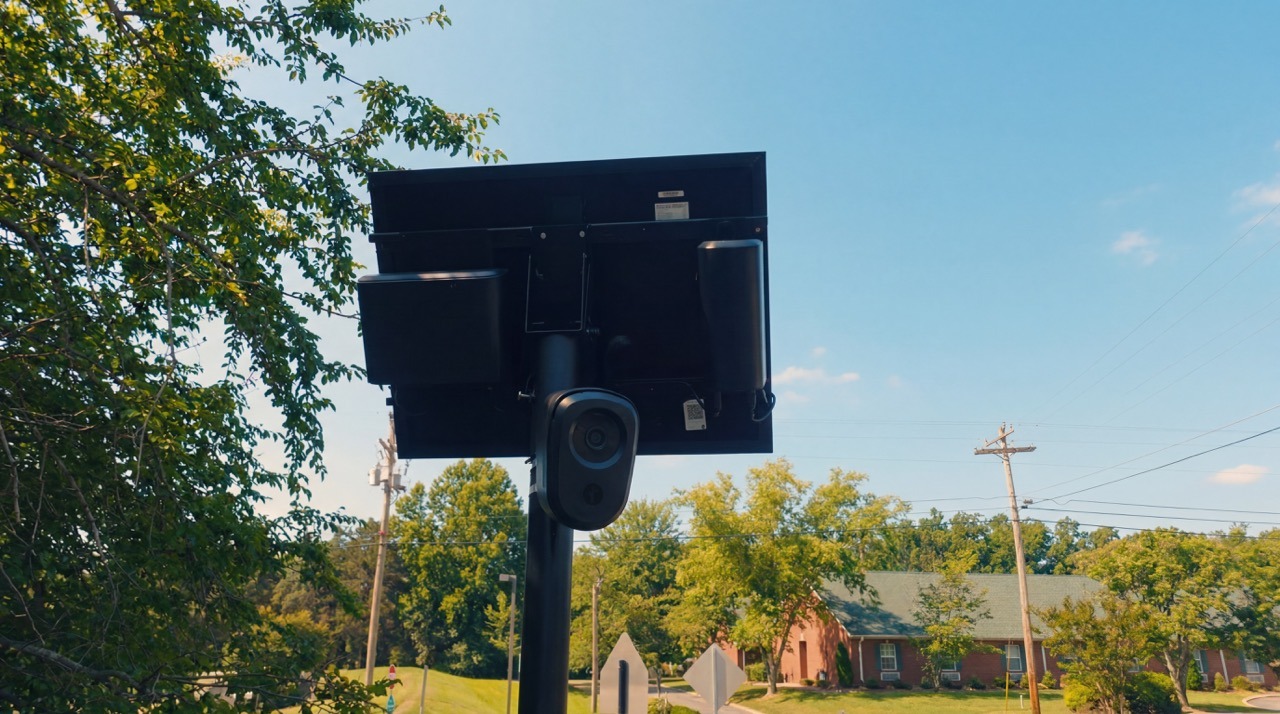
    A Flock Safety camera mounted on a pole beneath a rectangular solar panel, with trees and a suburban street behind it.
    A Flock Safety camera with solar panel, 2 December 2025. Photo by Julian Focareta, provided by Flock Safety, via Wikimedia Commons. Licensed under CC BY-SA 4.0.

    Flock cameras can be abused, and the people who abuse them should be held accountable. But before we dismantle a technology in a fit of moral panic, we ought to remember what else those cameras do, what happens when they are not there, and whose life may depend on one tomorrow.

    I spent the better part of two decades working in law-enforcement intelligence, first as a practitioner and later as an instructor training analysts from agencies across the country. I have worked alongside the people who sit behind the screens, build timelines, connect seemingly unrelated pieces of information, chase obscure leads, and spend long hours trying to answer questions that matter enormously to someone experiencing the worst day of his or her life. By and large, these are honorable, dedicated professionals who toil every day to find missing people, identify violent offenders, recover stolen property, and deliver some measure of justice to victims of crime.

    That perspective matters in the current debate over Flock cameras because a scandal has a way of narrowing our field of vision. After another story about an employee who allegedly misused access, it is easy to see only the potential for abuse and forget why these systems exist in the first place. You may not feel like it at this particular moment, but you want to live in a society where investigators have tools like Flock available when somebody you love disappears, when a child is abducted, or when a murderer flees in a car.

    Imagine watching your car disappear down the road with your 14-month-old baby still strapped inside. A mother in Colorado experienced exactly that nightmare in December 2025 after someone stole her idling vehicle. Aurora’s license-plate readers detected the stolen car shortly after it entered the city, alerting the department’s Real Time Information Center and helping officers track its movement. The vehicle was found abandoned with the baby still safely strapped into the car seat, and police said fewer than ten minutes elapsed between receiving the critical information and notifying Denver officers that the child was safe. Deputy Chief Phillip Rathbun said the report of a toddler inside the stolen vehicle sent RTIC personnel immediately to the department’s technology to help locate it. Aurora Police later summarized the stakes plainly: “Without this technology, this outcome could have looked very different.”

    Chief Todd Chamberlain made the larger point afterward in a public post crediting Aurora officers, the Real Time Information Center, license-plate readers, and camera technology with helping locate the car. His challenge to critics was simpler than any policy paper: “Ask the mother if these tools matter.”

    That story belongs near the beginning of every serious discussion about Flock because so much of the current conversation begins somewhere else. It begins with the latest case of misuse, the latest description of a “nationwide surveillance network,” or the latest video of someone cutting a camera from its pole and being celebrated online. Those stories matter. Some law-enforcement employees have abused ALPR systems in disgraceful ways, and some agencies have failed badly at supervising access. But misconduct is not proof that a technology is beyond redemption, any more than a technology’s usefulness excuses misconduct. A free society ought to be sophisticated enough to hold both propositions at once.

    Five families on the worst day of their lives

    The Colorado baby was not an isolated vendor anecdote. Across the country, Flock cameras have repeatedly been used in precisely the circumstances in which every parent, spouse, or child would desperately want police to have the fastest possible answer to a simple question: Which way did the car go?

    In Lavonia, Georgia, that question became urgent on March 25, 2026. Police said a father without custodial rights took his toddler during a domestic dispute and interfered when the mother tried to call 911. Officers issued a lookout and used Flock cameras to determine the vehicle’s direction of travel as it left the city. Hart County deputies found the Jeep in Bowersville, stopped it, and safely recovered the child about thirty minutes after the original call; the driver was subsequently charged with DUI and child endangerment, among other offenses.

    Put yourself in that mother’s place for those thirty minutes. Your child is gone, you do not know where the car is headed, and you do not know what condition the driver is in. In the pre-ALPR world, officers could broadcast a description, position patrol cars along likely routes, call neighboring counties, and hope somebody happened to see the right Jeep. In this case, a camera had already seen it. The technology did not replace good police work; it gave good police work somewhere to go.

    In Lucas County, Ohio, a deputy was looking for a teenage girl reported missing from another part of the state. Deputy David Noonan entered the vehicle’s plate into Flock and immediately found a pattern of recent sightings. While moving toward the area where the car had been appearing, he received another alert showing it northbound, found the vehicle at a traffic light, and stopped it. The missing girl was inside with an 18-year-old man who, according to the deputy, had a loaded 9mm handgun tucked into his waistband. The Flock-assisted search was over in minutes, not hours, days, months, or years. And the outcome was good. It could very well have ended badly.

    “License-plate data” sounds bloodless when discussed at a city council meeting. “Searchable location records” sounds ominous when written on a protest sign. A parent whose missing daughter is sitting in a car with an armed adult experiences that database rather differently. To that family, the relevant feature is not that government possessed information; it is that a deputy could turn a license plate into a direction of travel while there was still time to intervene.

    In Boulder, Colorado, police received a report in September 2025 that a 16-year-old girl had been threatened and forced into a vehicle. Detectives worked through the night, combining interviews, public tips, emergency alerts, and Flock data. Boulder Police said the system helped investigators retrace the vehicle’s movements on public roads, identify some of its last known locations, develop additional witnesses, and ultimately find the girl safe in Thornton.

    Notice what Flock did not do in that case. It did not predict a kidnapping, identify the suspect through some mysterious artificial-intelligence oracle, or replace witnesses and detectives. It provided breadcrumbs: a vehicle had been here, then there, then somewhere else. Human investigators followed those breadcrumbs until they found a child. That is considerably less sinister than the popular caricature and considerably more useful than a photograph sitting unseen on a convenience-store DVR.

    The stakes are not limited to children. In Roanoke, Virginia, a 75-year-old man with dementia left home in his car shortly before noon on April 16, 2026. His family did not report him missing until nearly four hours later, by which time he could have been almost anywhere. Roanoke’s Real Time Crime Center entered the vehicle into Flock, a crime analyst identified a recent location, and officers found him in his car after he had run out of gas and become disoriented.

    Anyone who has watched an aging parent or grandparent struggle with cognitive decline understands what that story might have become. An elderly driver can travel fifty miles in the wrong direction, wander into dangerous weather, crash, or spend a night stranded before traditional search methods catch up. Here the camera was not being used to hunt a criminal at all. It was being used to find somebody’s elderly father.

    Then return to the 14-month-old baby in Colorado, because that case strips away the abstraction entirely. The vehicle was disappearing, the child was inside, and the clock was running while police were still preparing the broader alert. A plate-reader network supplied an actionable location before the traditional process had even finished spinning up. That is what these systems are capable of doing when the right vehicle passes the right camera at the right moment.

    These cases do not prove that every camera is indispensable or every Flock search is justified. They prove something more modest and much harder to dismiss: real people are home with their families today after police rapidly located vehicles connected to life-threatening situations. Before we decide that the moral response to misuse is dismantling the technology, we should reckon honestly with the people who would have paid the price if the cameras had not been there.

    Now consider the cases where we wish the evidence existed

    There is another side to this argument that is harder to quantify because it concerns the cases that remain unsolved. We can point to a child recovered by Flock and know exactly what happened. We can never know with certainty which cold case would have been solved if a network of plate readers had existed at the right time and place. But some investigations make painfully clear what detectives are missing.

    Consider Nancy Guthrie, the 84-year-old mother of Today host Savannah Guthrie, who authorities say was abducted from her Tucson-area home in the early morning hours of February 1, 2026. A masked, armed man was captured by her doorbell camera tampering with the device before it went offline, and investigators later developed evidence suggesting the same masked person may have approached the home on an earlier occasion. More than six months later, Nancy remains missing, no suspect has been publicly identified, and her family continues to plead for someone to provide the information that breaks the case.

    Look closely at what investigators have spent months trying to reconstruct. Authorities asked residents around the Catalina Foothills to search private surveillance systems for every vehicle, pedestrian, and unusual event recorded during the relevant period. One homeowner 2.5 miles from Guthrie’s house later discovered that a street-facing Ring camera had captured twelve vehicles moving along a possible route out of the area during the critical early-morning hours, including a vehicle around 2:30 a.m., near the time investigators believe the abduction occurred. Whether any of those cars is connected to the crime remains unknown.

    There were Flock cameras elsewhere in the Tucson area, and South Tucson even shared its Flock data with the Pima County Sheriff’s Department during the Guthrie investigation. What investigators plainly did not have, however, was a complete, immediately searchable ALPR record covering every relevant route into and out of Guthrie’s Catalina Foothills neighborhood.

    Imagine if they had. Investigators might have been able to ask which unfamiliar vehicles entered the neighborhood before the masked man appeared, which left after Nancy disappeared, whether the same vehicle appeared near the house on the earlier occasion when the suspect may have been casing it, and where that vehicle was next observed. A blurry doorbell image of “a car” could potentially have become a plate, then a registered vehicle, then a route, then a person investigators could identify and either eliminate or pursue.

    None of us can honestly say that Flock would have solved the Nancy Guthrie case. Flock’s CEO has gone much further and publicly claimed that it would have, but that is a vendor talking about his own product, and certainty is cheap when the counterfactual can never be tested. The more defensible point is powerful enough: the Guthrie investigation has spent six months trying to reconstruct exactly the kind of vehicle history an ALPR network is designed to preserve for investigators. We do not know whether the missing observation would have solved the case. We know the family wishes somebody had seen more.

    The disappearance of Jennifer Kesse offers an even more haunting example. Jennifer was 24 years old when she vanished from Orlando in January 2006. Two days later, her black Chevrolet Malibu was found abandoned about a mile from her condominium. A surveillance camera captured an unidentified person driving her car into the parking lot, sitting briefly inside it, and then walking away. In one of the cruelest coincidences in modern missing-person cases, the camera recorded frames only every few seconds, and fence posts obscured the person’s face as he or she walked past. Twenty years later, Jennifer has never been found, no one has been charged, and the Florida Department of Law Enforcement is still actively working the case after more than 115 interviews and the review of tens of thousands of documents and pieces of evidence.

    Now imagine that disappearance occurring in a city with a mature ALPR network. Jennifer’s Malibu had a known plate. A modern system might have shown when it left the area around her condominium, which roads it traveled, when it reached the apartment complex where it was abandoned, and whether it had appeared anywhere else in between. Cameras elsewhere might have identified vehicles traveling with it or repeatedly appearing near the same locations. None of those possibilities guarantees an arrest, and hindsight should never be dressed up as certainty. But instead of twenty years of asking where Jennifer’s car traveled during the most important hours of the investigation, detectives might have begun with at least part of the answer.

    That is the pain on the other side of the surveillance debate. Evidence that was never collected cannot be recovered. A crime may not even be recognized as a crime until days after it occurred, when the witness who could have remembered the car has forgotten it and the convenience-store video has already been overwritten. Historical ALPR data preserves a small piece of an ordinary moment long enough for investigators to discover that the moment was not ordinary at all.

    What the camera actually sees

    Part of the current panic comes from allowing several very different technologies to blur together under the word “surveillance.” A conventional Flock automatic license-plate reader captures a still, point-in-time observation of a vehicle visible from a public roadway and records information such as the plate, time, location, and visible vehicle characteristics. It does not know who is driving, why the vehicle is there, what its occupants are saying, or where the car goes after it leaves the camera’s field of view.

    That is surveillance, but surveillance exists on a spectrum. A wiretap hears private conversations. A forensic cellphone extraction can expose years of messages, photographs, searches, contacts, and application data. Historical cell-site information can reconstruct substantial portions of someone’s movements, and a GPS tracker can report a vehicle’s location continuously. A fixed ALPR records something narrower: this vehicle appeared here at this time.

    What makes Flock consequential is not the extraordinary depth of any one observation. It is scale, speed, and searchability. Before ALPR networks, detectives trying to reconstruct vehicle movement often had to canvass businesses, locate surveillance systems, find someone capable of retrieving the recordings, determine whether the cameras were functioning, and manually watch hours of video. Sometimes the critical recording was gone before investigators knew they needed it. Flock turns thousands of fleeting public observations into information that can still be searched when a detective finally understands which vehicle matters.

    There is growing evidence that this usefulness extends beyond dramatic anecdotes. An August 2026 working paper by criminologists Scott Mourtgos and Ian Adams examined the staggered deployment of fixed ALPRs across 216 American law-enforcement agencies and found motor-vehicle theft (MVT) declined about 11 percent after deployment. Arrest clearances for MVT rose 15.9 percent, although the researchers appropriately warned that the clearance increase had begun shortly before the recorded deployments, making it impossible to attribute the entire gain to the cameras.

    The real privacy issue is not the photograph

    Defenders of Flock make a mistake when they answer every privacy concern by saying, “Your license plate is public.” Of course it is. Anyone standing beside the road can see it, a patrol officer can write it down, and countless commercial security cameras can record it. That does not answer the harder question of what happens when thousands of otherwise mundane observations are accumulated, searchable, and available to government employees.

    One sighting reveals very little. Hundreds of observations retained for months can reveal substantially more. A car repeatedly seen near one residence overnight, another location during working hours, and a particular medical office every Thursday can create patterns from which human beings draw conclusions about home, employment, associations, medical treatment, religion, or politics. The camera does not inherently know any of those things, but aggregation can allow people to infer them.

    That is the serious civil-liberties concern, and supporters of ALPRs should acknowledge it instead of waving it away. The answer lies in retention, purpose limitations, access controls, auditability, and consequences. A system that automatically deletes ordinary observations after days presents a very different privacy risk from one that retains a year of travel history. A system in which every user has an individually authenticated account and every query is associated with an investigative purpose is different from one with shared credentials and casual access.

    Those differences are not arguments for abandoning the technology. They are the architecture of responsible use.

    The Barker case should teach us the right lesson

    I have a particular interest in the recent controversy in Athens-Clarke County because I previously worked in the same Crime Analysis Unit. On August 27, ACCPD received a complaint from the ex-wife of Criminal Intelligence Analyst Supervisor Nick Barker alleging that he had misused the department’s Flock system. According to the department’s initial investigation, Barker searched his ex-wife’s vehicle tag numerous times over several months in 2025 for purposes prohibited by policy. Chief Jerry Saulters fired him, the department opened a broader examination of its ALPR practices, and the matter was referred to the Georgia Bureau of Investigation for an independent criminal investigation.

    If those findings are borne out, the damage extends well beyond Barker. His former wife is the obvious victim, but the analysts, investigators, dispatchers, officers, and supervisors who use these systems honorably are left to live with the institutional consequences. That is one of the cruelest effects of abusing public trust: the misconduct of one person spreads suspicion over thousands who did nothing wrong and tarnishes legitimate work performed on behalf of victims every day.

    The department’s response once the allegation surfaced was appropriate. The audit records existed to test the complaint, the employee was removed, and potential criminal conduct was referred outside the agency for independent investigation. That standard should apply whether the person behind the keyboard is a patrol officer, a lieutenant, a chief, a dispatcher, or an analyst. Access is the issue, not the uniform, rank, or job title.

    But the case also exposes the unfinished work. The complaint apparently came first. A surveillance system should not depend on the person being surveilled somehow discovering the abuse and asking the government to investigate itself. The next misuse should be caught by the audit before it is caught by the victim.

    Recent reporting demonstrates how badly that improvement is needed. The Washington Post found at least 69 law-enforcement officials accused, charged, or convicted of misusing Flock or other ALPR systems, often to search for spouses, girlfriends, former partners, or other personal targets. In at least fifteen cases, someone outside the agency, including journalists, activists, or victims, identified the suspicious activity before the department did. Some departments admitted they were not regularly auditing their own users at all.

    That should infuriate supporters of the technology every bit as much as it infuriates its critics. Audit logs nobody audits are not meaningful safeguards. Agencies should proactively examine query histories for repeated searches of the same vehicle, activity inconsistent with an employee’s duties, unusual off-hours searching, and queries that cannot be connected to legitimate law-enforcement work. Auditing protects the citizen from the dishonest employee, but it also protects the honest analyst and investigator from having years of legitimate work smeared by someone else’s misconduct.

    Flock’s August 2026 changes move in the right direction. The company has announced a recommended default retention period, mandatory Audit Assistance for law-enforcement customers, case-code requirements, proactive lockouts for suspicious activity, stronger multifactor authentication, case-specific Evidence Mode, and more granular controls over interagency sharing. Those controls are welcome, but a software company cannot manufacture institutional integrity inside a police department. Chiefs, sheriffs, supervisors, prosecutors, legislators, and courts still have work to do.

    Beware the logic of the mob

    This is where parts of the current DeFlock movement risk losing the plot. There are thoughtful civil-libertarians asking serious questions about government surveillance, retention, interagency sharing, immigration enforcement, cybersecurity, and constitutional boundaries. They deserve serious answers, and some of the reforms now being implemented exist precisely because critics forced uncomfortable questions into public view.

    Something less thoughtful is happening alongside that debate. Flock cameras have been shot, spray-painted, obstructed, smashed, and cut from their poles while videos circulate showing how to disable them and online audiences celebrate the destruction. Once public policy reaches the point where destruction is applauded more enthusiastically than reform is discussed, we are no longer dealing exclusively with principled civil-liberties advocacy.

    History provides horrific examples of what happens when outrage overwhelms the distinction between guilt and association. The Salem witch trials and American lynch mobs were vastly more serious and morally catastrophic than a dispute over surveillance cameras, and I am not equating their historical gravity with modern anti-Flock activism. But there is resemblance in the logic of the mob: accusation becomes proof, association becomes guilt, nuance becomes suspicious, and punishment spreads from the wrongdoer to everything and everyone connected with the offense.

    We should recognize that instinct when it appears. One analyst allegedly abuses Flock, therefore Flock must go. Several officers misuse a database, therefore thousands of legitimate investigators become suspect. Agencies fail to audit employees, therefore the camera that might identify tomorrow’s kidnapping vehicle should be cut from its pole. That is not accountability; it is collective punishment masquerading as reform.

    The detective looking for a murderer did not stalk anyone’s former spouse. The analyst searching for a kidnapped child did not misuse the database. The deputy looking for an elderly dementia patient did not violate anyone’s trust. The mother watching her toddler disappear down the road had nothing to do with a rogue employee somewhere else abusing his login. Yet those are the people who ultimately lose when outrage convinces a community to blind its investigators rather than discipline the people who misused the tool.

    That is throwing the baby out with the bathwater in unusually literal public-policy form.

    Keep the tool. Fix the rules.

    The responsible position is neither unrestricted surveillance nor reflexive abandonment. Keep routine retention short enough that the government does not quietly accumulate seasons of ordinary travel, while allowing specific records to be preserved when they become evidence in an actual investigation. Require individually authenticated accounts, multifactor authentication, documented cases or calls, and legitimate law-enforcement purposes. Prohibit shared credentials, control interagency sharing deliberately, require reasonable verification before an automated result becomes the basis for a high-risk police encounter, and audit use on a schedule rather than after a scandal.

    When deliberate misuse is discovered, the response should be decisive. Preserve the evidence, terminate access, investigate the conduct, impose appropriate employment consequences, and, when the facts establish criminal behavior, refer it to independent investigators and prosecutors. The Constitution and the Bill of Rights are not impediments to effective policing; they establish the boundaries within which lawful policing derives its legitimacy. No badge, agency, rank, job title, or technology places a public servant beyond those boundaries.

    Public confidence will never come from telling citizens simply to trust the government. It must be earned by demonstrating that extraordinary powers are exercised for legitimate purposes, that activity is recorded, that auditors actually examine those records, and that misuse produces consequences. Accountability is not a threat to good police work. It is one of its foundations, protecting both the liberties of citizens and the integrity of the overwhelming majority of public servants who honor the trust placed in them.

    The strongest defense of Flock is therefore not to insist that abuse cannot happen. We already know that it can. The strongest defense is to build systems in which misuse is difficult, detectable, documented, and punished, while preserving the capability for the vastly larger universe of legitimate searches that never become newspaper stories because they simply helped an investigator do the job correctly.

    The great mistake of the present backlash is losing sight of what is actually being discarded. At its core, a conventional license-plate reader records something fairly modest: a vehicle, a time, and a place. The network makes those modest observations powerful because investigators can search them rapidly when the need arises. Sometimes that need involves a stolen car or a fleeing homicide suspect; sometimes it is an elderly father sitting confused beside an empty gas tank, a teenage daughter missing with an armed man, or a toddler being driven away by someone who should not have custody.

    And sometimes we discover the value of that information because it is not there. Nancy Guthrie’s family has now spent months waiting while investigators attempt to piece together scattered videos and unidentified vehicles from the night an 84-year-old woman vanished from her home. Jennifer Kesse’s parents have spent twenty years wondering what happened after their daughter disappeared and an unidentified person abandoned her car. We cannot know whether ALPR coverage would have solved either case, but we can know what investigators wish they could search today: which vehicles were there, when were they there, and where did they go next?

    We should investigate every abuse of these systems, expose what we find, fire people who violate the public trust, prosecute criminal misconduct, shorten unreasonable retention periods, restrict unnecessary sharing, and audit aggressively. We can do all of that without deliberately making investigators less capable of finding the people who desperately need to be found. That is not a compromise between liberty and safety so much as the basic obligation of competent government: preserve useful power while placing enforceable boundaries around its exercise.

    The old warning about throwing the baby out with the bathwater has an uncomfortable literal quality in this debate. In Colorado, the baby was fourteen months old, the stolen car was disappearing, and the clock was running; a license-plate reader helped police bring that child home. In Tucson and Orlando, families are still waiting for answers that a richer historical record of vehicle movements might, or might not, have provided.

    That is the bargain worth making. Keep the cameras, write better rules, audit the people who use them, and punish those who abuse the privilege, because the next Flock search that matters may not concern a stranger whose story appears in tomorrow’s newspaper. It may be your child, your spouse, your parent, or your grandparent whom investigators are desperately trying to bring home.

  • Choose to be a Hero

    Choose to be a Hero

    A teenage boy in profile, with short dark hair and a gray hoodie, and a man in a suit standing behind him.

    In April 2013, in the small Romanian town of Segarcea in Dolj County, an ordinary family yard became the setting for a quiet catastrophe. A three-year-old boy, Gabriel Ruiu, had slipped and fallen nearly 50 feet into a narrow, covered well, a vertical shaft. What followed was not chaos, but something worse: a slow, grinding realization that the situation might be unsolvable.

    Firefighters and emergency crews arrived quickly. For more than eleven hours, they worked with relentless determination. They dug. They probed. They brought in heavy equipment. Every approach failed. The shaft was too tight, the soil too unstable, the margin for error too small. Time was running out. Hope followed.

    At one point, a firefighter said aloud what everyone was thinking. There was no more hope.

    Then, from the edge of the crowd, a 14-year-old boy stepped forward.

    His name was Cristian Marian Becheanu.

    He was slight, young, and unremarkable in the way most teenagers are. But he had something no one else did: the ability to fit where no adult could. More importantly, he had the willingness to try.

    The rescue team moved quickly. A headlamp was strapped to his forehead. A rope was secured to him. With coordination, they lowered him headfirst into the darkness.

    Inside that narrow shaft, deep below the surface, Cristian reached the child. Gabriel was still alive, standing in cold water at the bottom. In that confined space, with no room for hesitation, the teenager took hold of him.

    Above ground, the crowd waited in silence.

    Then the rope tightened. Slowly, carefully, both bodies began to rise.

    When Cristian emerged from the well with the child in his grasp, the tension broke. The crowd erupted. Gabriel was rushed to the hospital and made a full recovery.

    Romania embraced its unlikely hero. Cristian was celebrated as “the saving angel” and “the bravest Oltenian.” Officials honored him at the Dolj County Prefecture. He received awards, gifts, and public recognition. But the most meaningful promise came from local leaders, who pledged to support his dream of becoming a firefighter. He was even awarded the emblem of Romania’s General Inspectorate for Emergency Situations, an honor no civilian had ever received.

    Cristian did not let the moment define him. He let it direct him.

    More than a decade later, he serves as Sergeant Major Cristian Marian Becheanu, a professional firefighter and rescuer with ISU Dolj. He is married. He has children. The boy who once descended into darkness to save a life chose to spend his own life doing the same.

    What makes his story endure is not only the rescue itself, but what followed. A single act of courage became a pattern. A moment became a mission.

    In a world that often questions whether one person can make a difference, Cristian Becheanu answered with action. He did not just save a child. He showed what it looks like to choose courage, and then choose it again.

    Heroism as a Trait: Born, Made, or Both?

    Heroism is often treated as something rare, almost mythical, as if it belongs only to a select few. Psychology tells a different story. Heroism is not a superpower. It is a pattern of behavior shaped by personality, perception, and circumstance.

    At its core, heroism is simple to define and difficult to execute. It is the choice to act for others at personal risk, beyond what is expected.

    Is Heroism a Personality Trait?

    Research suggests that heroism is not driven by a single defining quality, but by a constellation of traits that tend to appear together.

    Psychologists have identified what is sometimes called the “Great Eight” of heroic personality:

    • Quick thinking under pressure

    • Physical or mental resilience

    • Selflessness

    • Emotional durability

    • Reliability in crisis

    • The ability to inspire trust

    • Deep empathy

    • Moral courage

    These traits overlap with broader personality frameworks, particularly the Big Five. Those who act heroically tend to score high in empathy, conscientiousness, and self-efficacy. They believe their actions matter, and that belief becomes decisive in moments where hesitation would otherwise prevail.

    Heroism itself exists on a spectrum. There is what researchers call Big H heroism, high-risk acts that involve immediate danger to life, like entering a burning building or descending into a narrow well. Then there is small h heroism, quieter but no less important acts such as standing up to injustice or consistently choosing service over self-interest.

    Both forms emerge from the same underlying traits. The difference is circumstance.

    Nature, Nurture, or Something More?

    The question of whether heroes are born or made does not yield a simple answer. Evidence points to both.

    Biology plays a role. Studies suggest that some individuals are neurologically more sensitive to the suffering of others. Their brains respond more intensely to distress, making inaction psychologically uncomfortable. There is also evidence that fearlessness, a trait sometimes associated with risk-taking behavior, can be redirected toward altruistic ends.

    But biology alone does not create heroes.

    Environment, experience, and training are equally powerful. Psychologist Philip Zimbardo, through the Heroic Imagination Project, demonstrated that ordinary people can be taught to act courageously. When individuals learn to recognize social pressures, reframe fear, and see themselves as agents rather than bystanders, their likelihood of acting increases significantly.

    Heroism, in this sense, is trainable.

    It can be practiced in small ways. It can be reinforced by culture and role models. Over time, it can become habitual.

    From a Moment to a Life

    Cristian Becheanu’s story illustrates this interplay with unusual clarity.

    At fourteen, he possessed certain advantages. His physical build allowed him to attempt the rescue. His instinctive courage pushed him forward. But those traits alone do not explain what came next.

    Many people experience a single defining moment and move on. Cristian did not. He converted that moment into identity.

    He became the thing he demonstrated.

    That transition, from action to identity, is where heroism shifts from event to trait. It becomes not something a person does once, but something they are prepared to do again.

    Why This Matters

    Understanding heroism in this way changes the conversation.

    If heroism were purely innate, it would be inaccessible. Reserved. Irrelevant to most people. But research suggests the opposite. The capacity for heroic action exists in far more people than we assume.

    What varies is activation.

    Situations matter. Training matters. Belief matters.

    In everyday life, this translates into something practical. Heroism is not only about dramatic rescues. It is about cultivating empathy, practicing courage in small decisions, and building the confidence to act when it counts.

    The lesson is not that everyone will face a moment like Cristian’s.

    It is that everyone is capable of responding to their own moment when it arrives.

    Cristian’s descent into that narrow well was a physical act. His ascent, and everything that followed, was something more enduring. It was the transformation of a single decision into a lifelong orientation toward service.

    That is the real story.

    Not that a boy saved a child.

    But that he chose to become the kind of person who would do it again.

    Choose to be a hero.

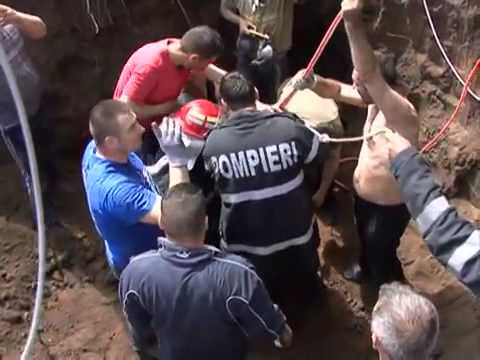
    Video still of rescuers, including a firefighter with POMPIERI on his jacket, gathered in a dirt pit with ropes.▶

    Video loads from YouTube when you click play.

    References

    Allison, S. T. (2014, May 14). How heroic is your personality? Psychology Today. https://www.psychologytoday.com/us/blog/why-we-need-heroes/201405/how-heroic-is-your-personality

    Allison, S. T., & Goethals, G. R. (2011). Heroes: What they do and why we need them. Oxford University Press.

    Franco, Z., & Zimbardo, P. G. (2006). The banality of heroism. Greater Good, 3(2), 30–35. https://greatergood.berkeley.edu/article/item/the_banality_of_heroism

    Glass, D. (2020, October 22). The bravest Oltenian. Doyle Glass Author. https://doyleglass.com/2020/10/22/the-bravest-oltenian/

    Heroic Imagination Project. (n.d.). About us. https://www.heroicimagination.org/about-us

    Keczer, Z., File, B., Orosz, G., & Zimbardo, P. G. (2016). Social representations of hero and everyday hero: A network study from representative samples. PLOS ONE, 11(8), Article e0159354. https://doi.org/10.1371/journal.pone.0159354

    Sonne, J. W. H., & Gash, D. M. (2018). Psychopathy to altruism: Neurobiology of the selfish–selfless spectrum. Frontiers in Psychology, 9, Article 575. https://doi.org/10.3389/fpsyg.2018.00575

    Verywell Mind. (2026, February 25). The psychology of heroism. https://www.verywellmind.com/the-psychology-of-heroism-2795905

    Zimbardo, P. G. (n.d.). The psychology of heroism. Stanford Magazine. https://stanfordmag.org/contents/the-psychology-of-heroism

  • The Precarious Line

    The Precarious Line

    Federal agents in tactical gear stand in a line on a snowy street, facing a crowd of bystanders behind yellow tape.

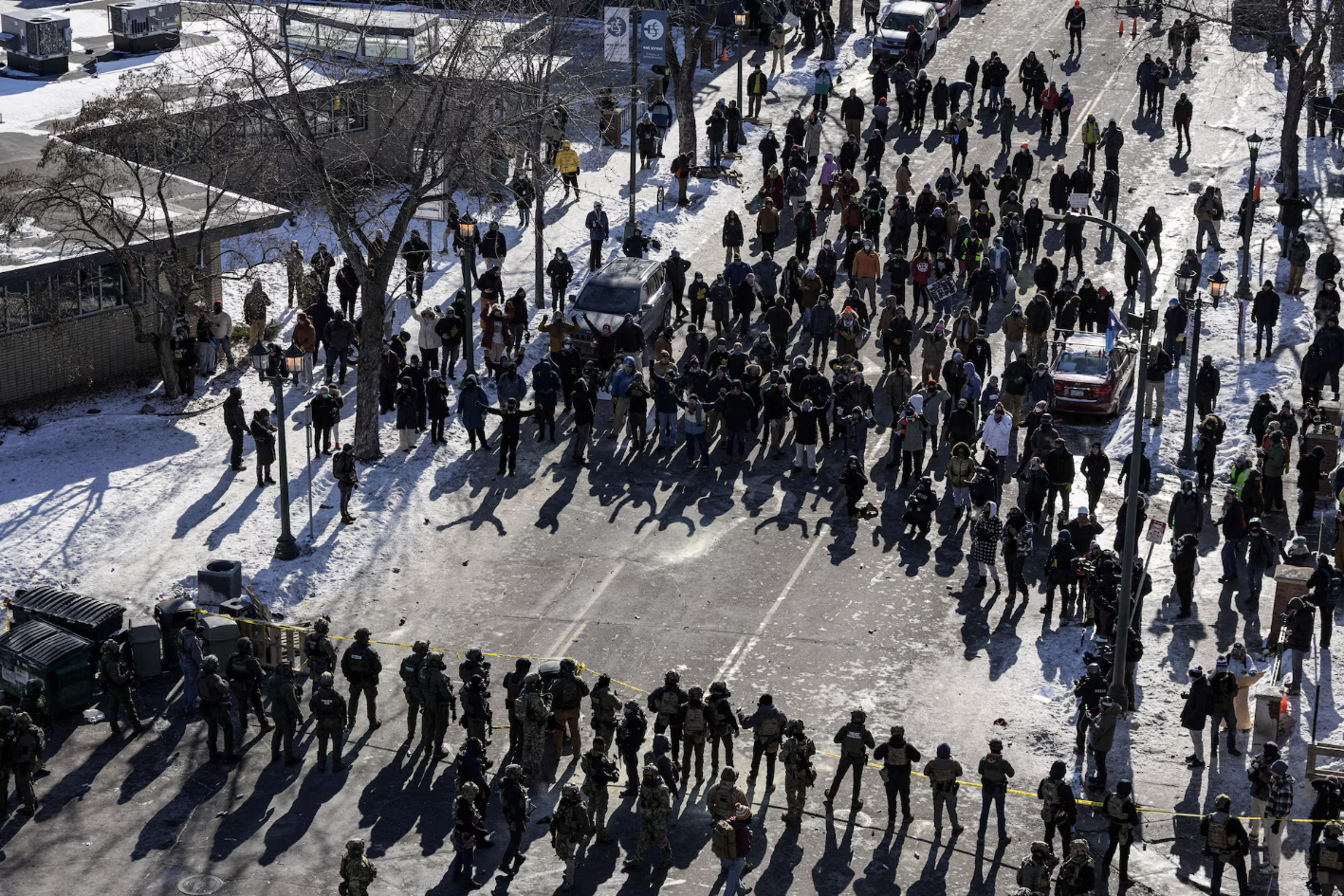
    Federal agents line up in front of community members at the scene where federal agents fatally shot Alex Pretti, January 24. REUTERS/Tim Evans

    Before any legal analysis, before doctrines and precedents, before arguments about authority or resistance, there is a simpler and more damning truth: two people are dead who did not need to be. Renee Nicole Good and Alex Pretti were not abstractions or case studies. Loved by family, friends, colleagues, and neighbors, their lives were cut short in encounters that should never have reached a lethal outcome. Their deaths are a shameful loss, not because accountability is unclear, but because prevention was entirely possible. In the greatest country in the world, one that prides itself on ordered liberty and the rule of law, these outcomes represent a failure of judgment and restraint on multiple levels. We are better than this, or at least we claim to be. A nation capable of resolving its deepest disputes through discourse or courts rather than violence should not accept that routine enforcement actions spiral into irreversible tragedy. The fact that these deaths occurred at all is not a testament to inevitability, but to a breakdown in the very safeguards meant to protect life.

    Having said that, there is a hard truth that most Americans do not want to hear, and fewer still are prepared to accept. In the realm of law enforcement use of force, responsibility is often shared. That statement is not a moral abdication by the state, nor is it an endorsement of unchecked police power. It is simply reality. Encounters that end in death are almost never the result of a single choice, a single actor, or a single failure. They are the cumulative consequence of cascading decisions, misjudgments, stress responses, institutional culture, and human frailty on both sides of the badge.

    I spent nearly two decades in law enforcement analyzing and studying use-of-force incidents. I have lived inside this uncomfortable space. I have watched legally justified use of force hollow out communities. I have seen officers cleared in investigations while privately acknowledging they would give anything to relive thirty seconds of their lives. I have also watched civilians make catastrophic decisions in moments where compliance, patience, or distance would almost certainly have preserved their lives. These truths coexist, even when it is politically inconvenient to say so.

    The recent ICE-involved killings of Renee Nicole Good and Alex Pretti in Minneapolis sit squarely in this moral gray zone. They are not simple stories of state violence, nor are they morality plays where only the deceased erred. They are cautionary tales about escalation, misplaced courage, institutional rigidity, and the peril of street-level confrontation with armed federal agents operating under expansive legal authority.

    How Force Is Actually Judged

    To understand why no ICE agents are likely to be prosecuted, the public must first understand how force is evaluated in American courts. Use of force is not judged by outcomes. It is judged by perception. The legal framework rests on the Fourth Amendment and a line of Supreme Court decisions that deliberately reject hindsight.

    The cornerstone is Graham v. Connor (1989), which established the “objective reasonableness” standard. The Court held that force must be evaluated from the perspective of a reasonable officer on the scene, not with the clarity of 20/20 hindsight. Judges and juries are instructed to consider that officers are forced to make split-second decisions in tense, uncertain, and rapidly evolving circumstances.

    Tennessee v. Garner (1985) narrowed when deadly force may be used, holding that an officer may not shoot a fleeing suspect unless there is probable cause to believe the person poses a significant threat of death or serious bodily harm. Importantly, Garner does not require that the threat be correct. It requires that the belief in the threat be reasonable.

    Subsequent cases have strengthened these protections. In Scott v. Harris (2007), the Court ruled that even lethal risks created by police during a pursuit can be reasonable if the suspect’s actions endanger the public. In Plumhoff v. Rickard (2014), officers were granted qualified immunity after firing fifteen shots into a fleeing vehicle, reinforcing that the number of rounds fired does not itself render force unreasonable. In Mullenix v. Luna (2015), the Court emphasized that clearly established law must be specific, not general, further insulating officers from criminal liability.

    Federal agents enjoy even broader protection. ICE officers operate under federal authority, and any criminal prosecution would require the Department of Justice to prove beyond a reasonable doubt that an agent willfully violated constitutional rights. That is an extraordinarily high bar. Absent explicit evidence of malicious intent or conduct far outside accepted training, prosecutions almost never succeed.

    This is why the public should not expect indictments. Not because the deaths do not matter, but because the legal system is designed to err on the side of officer discretion in violent encounters.

    The Missteps That Matter

    None of this absolves the agents involved. But it also does not erase the choices made by the deceased.

    In both Minneapolis incidents, available accounts suggest that the individuals killed placed themselves in proximity to an active federal enforcement operation. That decision alone dramatically increased risk. Federal agents conducting arrests are primed for resistance, interference, and ambush. They are armed, keyed up, and operating under rules that presume volatility.

    For Renee Nicole Good, reports indicate non-compliance and perceived advancement toward agents during a chaotic encounter. Even if her intentions were not violent, proximity, movement, and refusal to disengage can be interpreted as threat indicators under training models. Distance is safety. Compliance buys time. Time saves lives. These are not moral judgments. They are practical realities.

    Alex Pretti’s case reflects a common civic impulse that turns deadly. Witnesses say he was recording agents and intervening verbally or physically on behalf of another person. Many Americans believe, wrongly, that moral righteousness confers tactical immunity. It does not. Recording police is lawful. Interjecting oneself into an arrest is not. Attempting to assist the target of a law enforcement action, however well-intentioned, is indistinguishable from obstruction or assault in the moment.

    Citizens must understand this clearly. The street is not the venue for adjudicating law enforcement conduct. Courts are. Oversight bodies are. Civil litigation is. When civilians insert themselves physically into enforcement actions, they collapse the distinction between bystander and participant, and officers respond accordingly.

    This does not mean the deaths were deserved. It means they were avoidable.

    Where De-Escalation Failed

    Acknowledging civilian missteps does not excuse institutional failure. Federal agents may be trained in de-escalation, but training is only as effective as culture allows it to be. ICE operates under a mission structure that emphasizes enforcement efficiency and control. That culture often clashes with the patience de-escalation requires. That reality needs to change, and it needs to change quickly to preserve life.

    In both incidents, questions persist about whether agents created time and distance, whether clear commands were issued, and whether less-lethal options were realistically considered. De-escalation is not just talking calmly. It is repositioning, slowing the encounter, using barriers, and disengaging when the mission allows it.

    Federal agents are not beat cops. They are not responsible for maintaining immediate street order. In many circumstances, disengagement is an option. That option appears to have been foreclosed too quickly.

    De-escalation failures are rarely criminal. They are systemic. They reflect training that treats escalation as inevitability rather than risk. They reflect leadership that prioritizes operational dominance over public legitimacy. And they reflect a broader federal posture that has grown increasingly intolerant of civilian scrutiny.

    Why Accountability Feels Absent

    The refusal to allow state investigators immediate access to the scenes compounded public distrust. Transparency is not legally required, but it is morally necessary. Every barrier erected between the public and the truth reinforces the perception that federal agents operate above the law.

    Yet even here, expectations must be tempered. Federal self-investigation is not new. It is deeply embedded in American governance. Courts have repeatedly upheld it. That does not make it wise. It makes it lawful.

    Civil suits may follow. Policy changes may be proposed. But criminal prosecutions are unlikely because the law does not exist to punish bad outcomes. It exists to punish unlawful actions.

    The Shared Burden of Prevention

    The central lesson of Minneapolis is not that ICE is uniquely malevolent, nor that civilians should submit unquestioningly to state power. It is that prevention lives upstream.

    Citizens must understand that courage without strategy is not virtue. Do not crowd arrests. Do not insert yourself physically. Do not mistake filming for intervention. Preserve distance. Preserve life. Fight misconduct later, where it can actually be remedied.

    Law enforcement, especially federal agencies, must relearn restraint. De-escalation is not weakness. Disengagement is not surrender. Public trust is not an obstacle to enforcement. It is the condition that makes enforcement sustainable.

    Both sides failed here. Both could have chosen differently. Both contributed to outcomes that did not need to happen.

    The Courtroom, Not the Street

    America’s constitutional system is slow, frustrating, and imperfect. But it exists for a reason. The street rewards force and fear. The courtroom rewards evidence and deliberation.

    When citizens and law enforcement alike abandon that structure, tragedy fills the vacuum.

    Legal justification may shield the agents involved. It will not heal the nation. Moral reckoning demands something harder. It demands restraint, humility, and a shared commitment to keeping disputes out of the street and inside the institutions designed to resolve them.

    Until that lesson is absorbed, Minneapolis will not be the last place where use of force leaves a community morally undone.

    In the end, legality is not the same as righteousness. The law may conclude that force was justified, that policies were followed, and that no criminal threshold was crossed. But moral judgment asks a different question entirely: whether the outcome honored the value of human life it was meant to protect. A society that confuses legal clearance with moral vindication risks hollowing itself out, one cleared investigation at a time. Force can be justified under the law and still represent a profound moral failure. Recognizing that distinction is not anti–law enforcement; it is pro–civilization. If we are to call ourselves a nation governed by laws rather than fear, we must be willing to hold both truths at once, and demand better not only from our institutions, but from ourselves.

  • The Chart That Will Not Go Away

    The Chart That Will Not Go Away

    US price-change chart, January 2000 to June 2022: overall inflation 74.4%, hospital services up the most, TVs down the most.

    Every so often, a single graphic slices through years of policy debate and delivers a message with the force of a spotlight cutting through fog. For more than a decade, economist Mark Perry’s now-famous “Chart of the Century” has been that clarifying beam. It is a piece of visual evidence that refuses to be ignored, updated year after year, always telling the same unsettling story.

    Look closely at the diagram, with its red lines climbing relentlessly upward and its blue lines drifting downward as if pulled by gravity, and the pattern becomes impossible to miss. It is also impossible to honestly dismiss.

    The goods and services with the steepest price increases over the last two decades are the ones with the deepest level of government involvement. These sectors are shaped by subsidies, licensing mandates, compliance regimes, bureaucratic throttling of supply, and especially third-party payment systems that hide true prices from consumers. Hospital services. Medical care. College tuition. College textbooks. Childcare. Housing. Each one dominated by federal programs or regulatory structures, and each one racing far above the rate of overall inflation.

    Meanwhile, the sectors that show falling prices operate in a very different environment. These are markets where competition actually works and where producers must attract consumers directly. Computer software. Cellphone service. TVs. Toys. Electronics. Clothing. Even automobiles. These categories have become steadily more affordable and often dramatically cheaper. These results are not miracles. They are the predictable outcomes of open markets where suppliers cannot simply shift costs to a third party or lean on government support to mask inefficiency.

    The blue lines represent sectors that remain disciplined by market forces.
    The red lines represent sectors that are shielded from those forces.

    Food and beverages sit in a mixed zone because the sector contains both regulated and competitive elements. Agricultural subsidies, safety regulations, international trade, and modern logistics all play a role. As a result, the price path lands somewhere between the extremes.

    The pattern itself has not changed. It has actually strengthened.

    The Updated Chart, and Why It Is Even More Striking

    If you extend Perry’s original timeline to late 2025 using updated Bureau of Labor Statistics data, the message becomes louder.

    From January 2000 to the present:

    • Hospital services have risen roughly 250 percent.

    • College tuition and fees have risen roughly 200 percent.

    • College textbooks have risen roughly 180 percent.

    • Medical care services have risen roughly 160 percent.

    • Childcare has risen roughly 140 percent.

    • Overall inflation sits close to 90 percent.

    These gaps are not subtle. They are structural.

    Each high-cost sector is tied to federal programs or regulatory environments that distort incentives.

    • The healthcare system is shaped by Medicare, Medicaid, the Affordable Care Act, and employer-sponsored insurance. These programs insulate providers from competitive pricing.

    • Higher education is propped up by federal student loans, Pell Grants, accreditation rules, and public funding structures. Supply is restricted, while demand is artificially boosted.

    • Childcare is limited by licensing regimes, insurance requirements, staffing mandates, and federal block grants.

    • Housing is constrained by zoning restrictions, land-use rules, and complex permitting that limit new construction.

    These interventions are commonly justified as necessary for access, fairness, or safety. Although they do improve access in some ways, they also ignite price spirals. When government subsidizes demand without increasing supply, prices surge. When regulations lock newcomers out of the market, incumbents set the terms. When someone else pays the bill, the consumer becomes a spectator rather than a customer.

    The chart distills these consequences more clearly than any policy paper ever could.

    The Usual Counterargument, and Why It Does Not Match Reality

    Critics often argue that government involvement is essential for fairness, safety, and access. Without subsidies, low-income students could not attend college. Without Medicaid, families could not afford healthcare. Without licensing, childcare would be unsafe.

    There is a kernel of truth in these claims. Yet the economic reality is difficult to ignore.

    Healthcare now consumes nearly 18 percent of the national economy, which is double the average of many developed countries. Student debt sits at roughly 1.7 trillion dollars. Childcare costs now rival mortgage payments in many states. For decades, federal programs have attempted to improve affordability, but the long-term effect has been the opposite. Prices rise. Choices shrink. Dependence grows.

    In contrast, the sectors that experience the least government interference show an entirely different pattern. Electronics get better every year while becoming cheaper. Clothing prices remain remarkably stable. Telecommunications costs continue to fall while quality soars. Federal Trade Commission studies consistently show that global competition, transparent pricing, and the constant threat of losing customers push prices downward and force innovation.

    The blue lines behave exactly as market economics predicts.
    The red lines behave exactly as regulatory capture predicts.

    What the Chart Ultimately Asks Us to Consider

    The takeaway is unavoidable. If affordability, innovation, and consumer empowerment are the goals, expanding the role of government has a 25-year track record of delivering the opposite.

    The evidence stretches across the page in two colors. It spans healthcare, education, childcare, housing, technology, and consumer goods. It remains consistent through every revision and every update of the chart.

    So the next time someone claims that more government involvement or a shift toward a more socialist model will somehow reverse these long-term trends, it is worth asking a simple question:

    Why should we believe that claim, given the evidence in front of us?

    If policymakers genuinely want to tackle affordability, they should start with the obvious. Reduce unnecessary regulation. Encourage competition where it is possible. Use antitrust tools in areas where competition has been suppressed. Open the supply side of the economy rather than constricting it. Reward innovation instead of entrenching incumbents.

    The data is there, year after year, in red and blue. It is an open invitation to rethink the way we approach the most important sectors of American life. The question now is whether we will pay attention.

    The chart was originally published by Mark Perry, see it on his Carpe Diem blog.