Tag: David Talks

  • The Senators Who Shut Down the U.S. Government

    The Senators Who Shut Down the U.S. Government

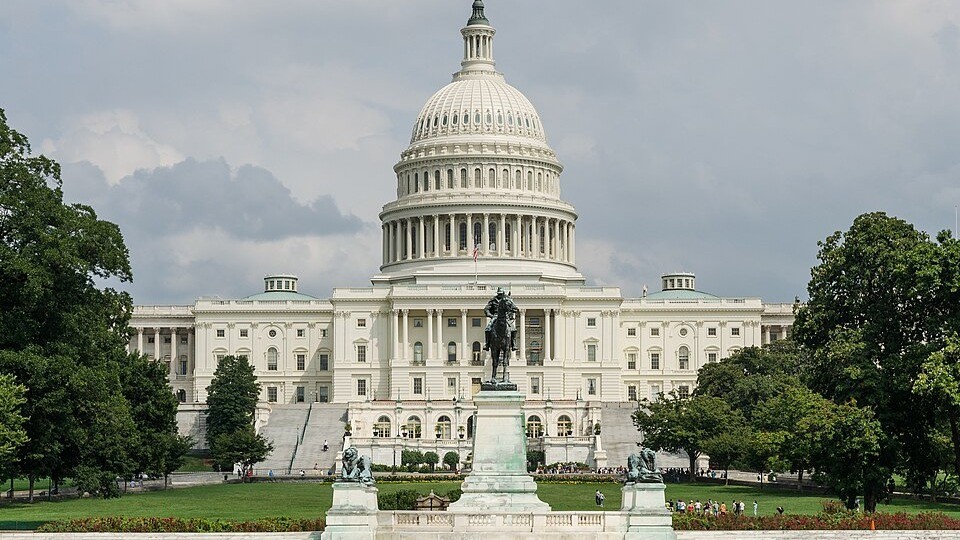
    If your flight is delayed, your paycheck frozen, your mortgage approval stalled, or your favorite national park closed, do not blame “Washington gridlock.” Blame the senators who voted “no” on H.R. 5371, the bill that would have kept the government open.

    They had the power to prevent this shutdown. They were warned of the consequences. They voted against funding the government anyway. Their obstruction has furloughed hundreds of thousands of workers, crippled essential services, and cost taxpayers billions, all for political leverage.

    The Bill They Killed

    H.R. 5371, the Continuing Appropriations and Extensions Act, 2026, was as straightforward as legislation gets. It was not a partisan wish list or a spending binge. It was a clean continuing resolution that extended 2025 funding levels through November 21, 2025, giving Congress time to finish full-year appropriations.

    The bill also extended vital programs for veterans, human services, healthcare, SNAP, hospitals that serve low-income communities, federal payrolls, etc. It was widely supported by business coalitions, local governments, and public-sector unions.

    The House passed it on September 19, 2025, by a 217–212 vote.  Then it went to the Senate, where 45 senators decided to kill it.

    How the Shutdown Happened

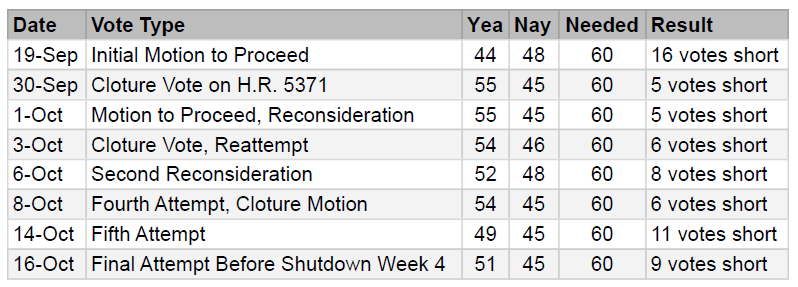
    From September 19 through October 16, the Senate held vote after vote on H.R. 5371. Each time, a bipartisan majority voted to fund the government. Each time, a block of at least 45 senators, mostly Democrats joined by two independents and a few Republicans, voted no and blocked progress.

    Under Senate rules, most major bills require 60 votes to advance. That means just 45 “no” votes are enough to halt the government. That is exactly what they did.

    They did not oppose the bill’s content; they opposed its simplicity. They wanted unrelated policy concessions, such as health insurance expansions and Medicaid changes, attached to the must-pass spending bill. When they did not get them, they pulled the plug on the entire federal government.

    Senate Shutdown Scoreboard: How Close We Came

    Bottom line: Every vote failed because of the “no” votes. Five changed minds could have kept the government open.

    The Cost of Their Obstruction

    The shutdown officially began at 12:01 a.m. on October 1, 2025, when funding expired. It is now entering its fourth week.

    The consequences are mounting:

    • 750,000 federal employees furloughed daily (CBO estimate)
    • $15 billion in lost GDP each week (White House analysis)
    • Delayed veterans’ benefits, food assistance, and federal aid
    • Strained airports, shuttered parks, and halted infrastructure projects

    This was not an accident. It was a deliberate political choice made by ~45 senators whose names you should remember.

    The Senators Who Shut It Down

    These are the senators who voted “no” on one or more H.R. 5371 votes, the ones who chose gridlock over governance, party over country, and ideology over paychecks.

    Each of these senators cast at least one “no” vote on a bill designed to prevent this shutdown. Together, their obstruction froze the government in its tracks.

    Five Votes Could End It Today

    This crisis was not inevitable. It was intentional. The House did its job. Fifty-five senators have already voted yes. The shutdown continues only because 45 others refuse to move.

    If five of them reversed course, the government could reopen within hours. There would be no need for new negotiations, only a new vote on H.R. 5371.

    Every furloughed worker, every missed paycheck, every closed park, and every delayed benefit traces back to these votes. The shutdown is not abstract. It is personal, and it is preventable.

    Hold Them Accountable

    If one of these senators represents you, you have leverage. Their offices track every call, every message, and every constituent complaint. Tell them:

    Vote YES on H.R. 5371. End the shutdown you caused.

    Click here for a list of the “No” Voting Senators

  • A Ballroom Cover-Up?

    A Ballroom Cover-Up?

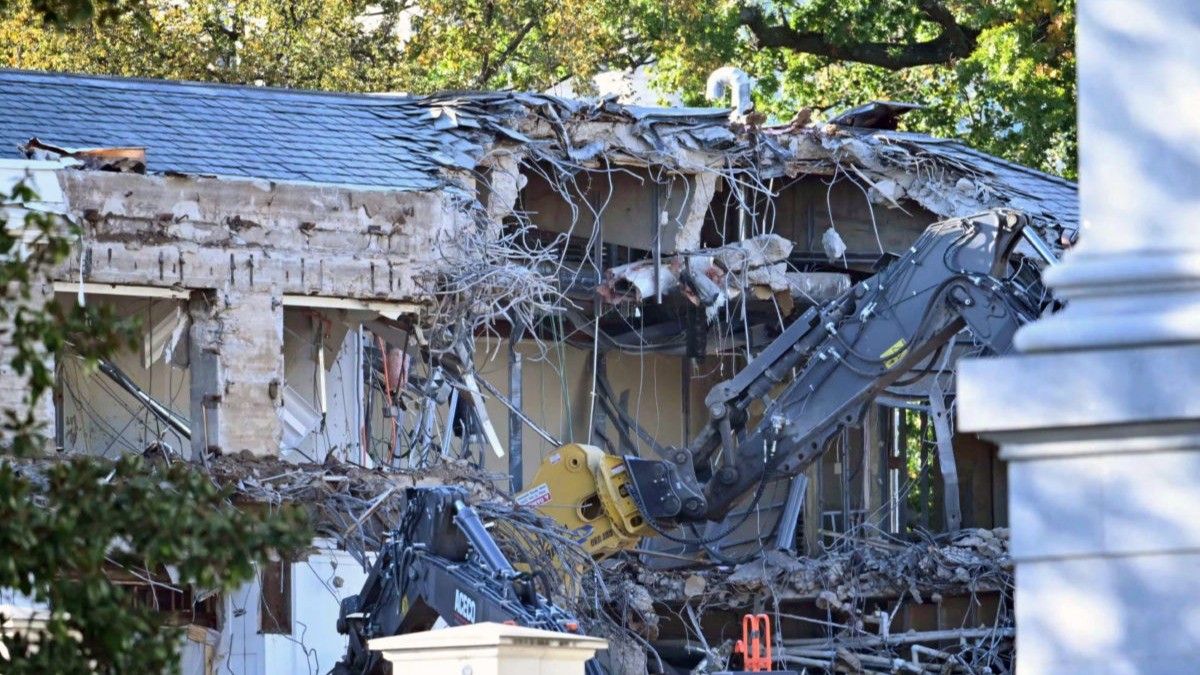
    In the crisp autumn air of Washington, D.C., where power brokers sip lattes and plot legacies, a symphony of demolition rattles the nation’s most scrutinized address. It is October 2025, and construction crews are tearing into the East Wing of the White House, long the home base for First Lady operations and social staff, as part of President Donald J. Trump’s grandest architectural flourish yet: a sprawling new ballroom. Estimated at roughly $300 million and said to span up to 90,000 square feet, the venue is designed to host as many as 999 guests in neoclassical opulence. The White House insists the funding is private, with major donors from the technology and defense worlds underwriting the project.

    Yet as the dust settles and the excavators growl, another question arises from beneath the marble. Could this glittering addition also conceal upgrades to the Presidential Emergency Operations Center, the White House’s subterranean command bunker built for the worst-case scenario? To answer that, one must descend through layers of history, secrecy, and power.

    Beneath the Columns: The Bunker Below

    The Presidential Emergency Operations Center, or PEOC (pronounced “pee-ock”), lies directly beneath the East Wing. It is a hardened, self-contained shelter and command center, its reinforced concrete walls built to withstand nuclear blasts. Inside are secure communications, television feeds, phones, and briefing rooms that allow the president, vice president, and senior staff to coordinate national response during crises. Around-the-clock military officers man its consoles. Basic living quarters with fold-out bunks, food and water storage, medical supplies, and independent power and air systems permit occupants to remain underground for extended periods.

    The PEOC’s origin dates to 1942, born of World War II panic after the attack on Pearl Harbor. President Franklin D. Roosevelt ordered the construction of a bomb-resistant shelter beneath the newly expanded East Wing, ostensibly built to house First Lady Eleanor Roosevelt’s staff. High fences hid the excavation while the public was told the work was merely an office renovation. The original bunker was modest: forty feet square, with seven-foot-thick walls, a diesel generator, and ramps to accommodate Roosevelt’s wheelchair. A tunnel linked it to a secondary shelter beneath the Treasury Building, providing an escape route. Though Roosevelt inspected it once, he never used it, preferring retreats such as the Maryland mountain camp later known as Camp David.

    Over the next decades, the bunker evolved in lockstep with America’s anxieties. During the Truman-era gut renovation of the White House from 1948 to 1952, the facility was enlarged and hardened. President Eisenhower’s Cold War modernization further reinforced it to endure nuclear threats. In 2010, under President Obama, a $376 million “utility upgrade” project, officially for plumbing and electrical work, ignited speculation of a vast underground expansion, possibly descending five stories deep and capable of housing the entire West Wing staff. As in 1942, towering fences surrounded the work, and nothing visible changed above ground.

    The PEOC in Action

    Public glimpses of the PEOC are rare and usually come in moments of crisis. In the early 1970s, during anti-war demonstrations, Nixon officials used it as a secure observation post. Its most famous use came on September 11, 2001, when Vice President Dick Cheney, National Security Advisor Condoleezza Rice, and other senior officials directed emergency responses from within its reinforced walls. Declassified photos later revealed a utilitarian room with exposed pipes, fluorescent lights, and snacks scattered on a cluttered table, where tense faces stared at glowing monitors.

    The bunker re-entered headlines in May 2020 when Secret Service agents escorted President Trump and his family there amid protests outside the White House. Trump later dismissed the incident as an “inspection” and demanded probes into leaks about his brief stay. Each episode reaffirmed the PEOC’s function as the last-resort nerve center of the presidency, invisible but indispensable.

    After more than eighty years, modernization would hardly be surprising. The world of cyberwarfare, hypersonic missiles, and next-generation communications demands upgrades far beyond 1940s concrete and copper. What remains unknown is whether any such work is happening now, and whether the ballroom project provides the perfect cover.

    The Ballroom Narrative Shifts

    When the ballroom plan first surfaced this summer, Trump described the structure as “near [it] but not touching [it],” suggesting the East Wing would remain intact. But demolition began in earnest this week, with officials now acknowledging a full teardown and rebuild of the wing. The cost estimate ballooned to $300 million. Trump has brushed off preservation concerns, calling the East Wing “not historically significant.”

    One persistent rumor, that Press Secretary Karoline Leavitt claimed “nothing will be torn down,” proved false. The Associated Press later corrected its reporting, noting the phrase came from a question, not from Leavitt herself.

    Still, the process has drawn intense scrutiny. The administration initiated demolition before obtaining approval from the National Capital Planning Commission, the body that normally reviews all federal construction in Washington. Officials now promise to submit plans retroactively, but preservationists and lawmakers warn the move sets a dangerous precedent for one of the country’s most symbolic buildings. The National Trust for Historic Preservation cautioned that the proposed ballroom could overwhelm the White House’s delicate classical proportions and urged an immediate pause.

    Meanwhile, questions swirl around the financing. Although labeled privately funded, the donor list reportedly includes corporate giants and wealthy individuals from the technology and defense sectors, raising concerns about influence, access, and the optics of remaking the People’s House through private patronage.

    Reading the Signals Without Overreading Them

    None of this definitively proves a secret PEOC renovation. Yet the convergence of factors, including the ballroom’s location directly above the bunker, the expanded scope of demolition, the procedural shortcuts, and the national security undertones, makes speculation unavoidable. The question is not whether something clandestine is happening, but whether the administration’s opacity invites public doubt.

    At stake is more than marble and parquet. It is the principle of transparency at America’s most iconic residence, and the precedent it sets for presidential power over national heritage. If the ballroom is exactly what it appears to be, a lavish new event hall, then sunlight will only strengthen its legitimacy. But if beneath the chandeliers lies a fortified command center, the line between necessity and deception must blur once again.

    When the curtain finally rises, will the nation see a monument to grandeur or a monument to secrecy, hidden beneath the dance floor?

  • The Truth Behind the US-Argentina $20 Billion Deal: It’s a Currency Swap, Not a Taxpayer Bailout

    The Truth Behind the US-Argentina $20 Billion Deal: It’s a Currency Swap, Not a Taxpayer Bailout

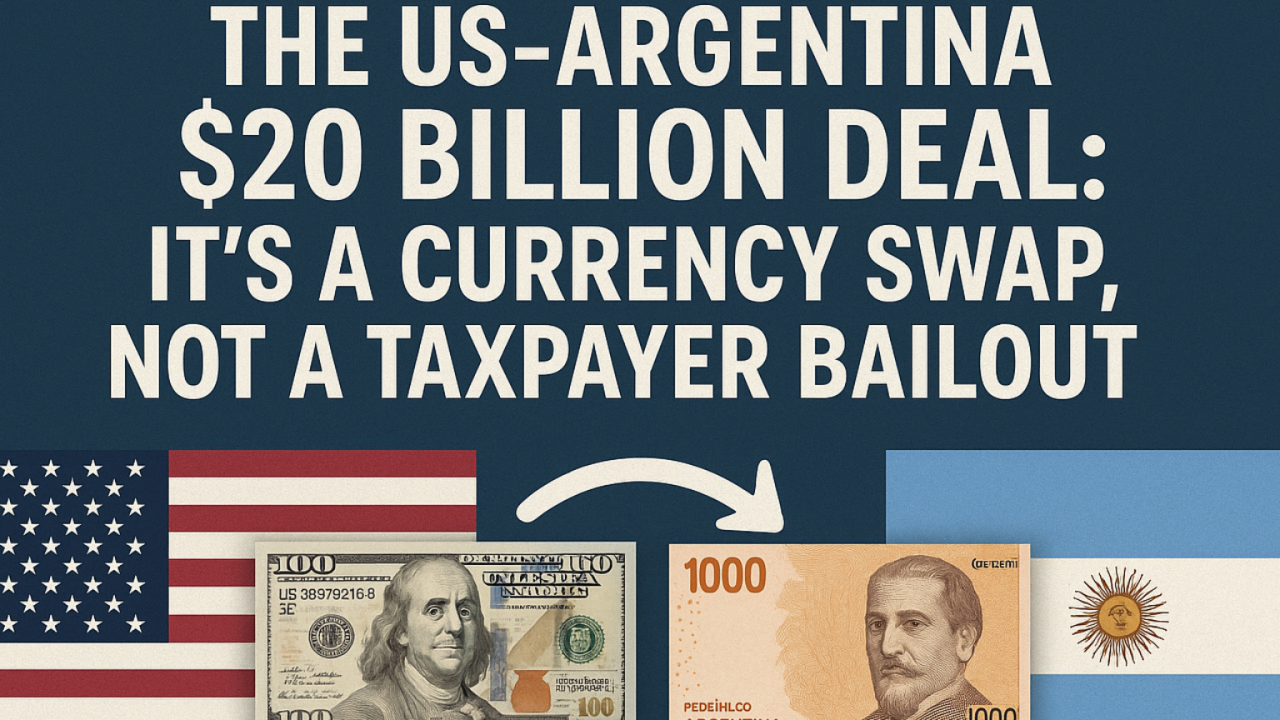
    In recent weeks, headlines have screamed about a “$20 billion bailout” from the United States to Argentina, painting a picture of President Donald Trump’s administration recklessly throwing American money at a foreign ally. But a closer look reveals this is far from the truth. What we’re dealing with is a structured currency swap, a financial tool designed to provide temporary stability without costing taxpayers a dime unless things go catastrophically wrong. As of October 16, 2025, this arrangement has been finalized to support Argentine President Javier Milei’s economic reforms amid his country’s midterm elections. Yet, major media outlets have sensationalized the story, calling it a “bailout” while burying the details that show it’s anything but. This isn’t just sloppy reporting; it’s a deliberate choice to mislead the public for clicks and controversy.

    What’s Really Happening?

    The deal stems from ongoing economic turmoil in Argentina, where hyperinflation exceeding 200% and a weakening peso have threatened President Milei’s libertarian agenda of deregulation and fiscal austerity. On October 9, 2025, U.S. Treasury Secretary Scott Bessent announced a $20 billion currency swap framework with Argentina’s central bank, allowing the exchange of U.S. dollars for Argentine pesos to bolster the latter’s value temporarily. This came ahead of Argentina’s October 26 midterm elections, with Trump explicitly tying further support to Milei’s political success, stating, “If he doesn’t win, we’re not going to waste our time.”

    The swap is coordinated through the U.S. Treasury’s Exchange Stabilization Fund (ESF), a tool historically used for such interventions without direct congressional approval. It’s not a handout; it’s a reciprocal agreement where Argentina gets access to dollars to pay debts and stabilize markets, while the U.S. holds pesos that are expected to be swapped back at maturity. Discussions have even floated doubling the aid to $40 billion by tapping private investors, but the core remains a government-to-government swap. This move aligns with Trump’s “America First” foreign policy by fostering alliances with like-minded leaders, but it has sparked domestic backlash, particularly from farmers hit by trade wars with China.

    What Exactly Is a Currency Swap?

    To cut through the noise, let’s define what this actually is. A currency swap is a contractual agreement between two parties (here, the U.S. Treasury and Argentina’s central bank) to exchange equivalent amounts of two different currencies for a set period, typically with interest payments along the way. It’s not a loan or a gift; it’s an exchange designed to provide liquidity without permanent transfer of funds.

    Here’s how it works in simple terms:

    • Initial Exchange: The U.S. provides $20 billion in dollars to Argentina, receiving an equivalent amount of pesos based on the current exchange rate.
    • Interest Phase: During the term (often months to years), each side pays interest on the currency they’ve received. The U.S. might earn a higher rate on pesos due to Argentina’s elevated interest environment, potentially profiting from the deal.
    • Reversal: At the end, the currencies are swapped back at the original rate, ensuring no net loss from exchange rate fluctuations.

    This mechanism protects against volatility; Argentina gets dollars to defend its peso without selling reserves at a loss, while the U.S. assumes minimal risk since the swap is collateralized and short-term. It’s a tool the Federal Reserve and Treasury have used globally, like during the 2008 financial crisis or COVID-19, to prevent economic contagion without taxpayer bailouts. In Bessent’s words, it’s “not putting money into Argentina” but a balanced transaction.

    Contrast this with a true bailout, like the IMF’s past loans to Argentina, which involve direct funding with strings attached and often lead to austerity measures. A swap doesn’t forgive debt or inject permanent capital; it’s a bridge to stability.

    Media Sensationalism: Calling It a “Bailout” Is Dishonest

    Now, to the elephant in the room: Why is the media insisting on labeling this a “bailout”? Outlets like CNBC, CNN, The Washington Post, Reuters, and The New York Times have all used the term prominently in headlines and articles. They know better; these are sophisticated financial journalists who understand the distinction. By framing it as a bailout, they’re sensationalizing the news to stir controversy, implying reckless spending of U.S. funds on a foreign crony. This isn’t journalism; it’s lying by omission, prioritizing drama over accuracy to fuel partisan outrage.

    For instance, CNN’s FAQ piece calls it a “$20 billion lifeline” and bailout, then admits it’s a swap allowing Argentina to “exchange its pesos for dollars” without explaining the nuance to their financially unsophisticated reader. Reuters and CNBC do the same, using “bailout” in titles while burying the mechanics below without explaining a currency swap. This tactic misleads readers, especially when critics like Democrats seize on it to claim “America Last” policies. The whole truth? It’s a low-risk swap that could even benefit the U.S. through interest earnings and stronger bilateral ties. Media should report that, not hype falsehoods.

    What Does This Cost American Taxpayers?

    The short answer: likely nothing, or close to it. The swap is funded through the ESF, a self-sustaining fund from past interventions, not direct taxpayer appropriations. Unlike a bailout, there’s no upfront cost; the U.S. exchanges dollars for pesos and gets them back, plus interest. Historical swaps have been profitable for the U.S., with negligible losses.

    That said, there’s inherent risk: If Argentina defaults or the peso collapses entirely, the U.S. could face losses on the pesos it holds. Analysts estimate this as a “calculated risk,” given Argentina’s history of defaults, but the short-term nature and Milei’s reforms mitigate it. Critics argue it indirectly uses taxpayer resources by exposing the ESF to potential hits, which could require future replenishment. However, no guardrails have been detailed yet, and Bessent has emphasized it’s not a subsidy. In worst-case scenarios, losses might total a fraction of the $20 billion (far less than sensational headlines suggest) but only if repayment fails.

    In essence, this is smart diplomacy with minimal downside. The real scandal isn’t the deal; it’s how the media has twisted it. Americans deserve the full story, not manufactured outrage.

  • Unmasking the Mirage of D.C.’s 30-Year Low Crime Numbers

    Unmasking the Mirage of D.C.’s 30-Year Low Crime Numbers

    The seat of American democracy is one of the most dangerous capitals on earth

    On a suffocating August afternoon, the U.S. Capitol gleams like it belongs on a postcard. Tourists cluster at crosswalks, snapping photos of marble domes that rise in crisp relief against a hazy sky. Few notice the heat rising off the streets, the kind that makes the asphalt shimmer and slows pedestrians to a languid shuffle. A jogger in Georgetown wipes sweat from his brow as he passes an idling Secret Service SUV. Out in Anacostia, far from the tourists’ lens, a police cruiser inches down a block of boarded-up row houses. Its siren is silent, but blue lights flicker faintly against peeling paint and broken windows, like a wordless warning.

    Between the postcard and the patrol car lies the real Washington. It is a city of monuments and political theater, yet also of neighborhoods that endure cycles of violence and neglect. And this summer, those competing realities are colliding in a fresh battle over perception and truth.

    Two Competing Visions

    President Trump stood before cameras this week and declared the nation’s capital a city in collapse. With a stroke of the pen, he signed an executive order to deploy the National Guard and assume federal control of the Metropolitan Police Department. He described Washington as bedlam and squalor, overrun by violent gangs and bloodthirsty criminals.

    National networks countered quickly. CNN anchors emphasized statistics showing a 35 percent decline in violent crime from 2023 to 2024, the sharpest fall in three decades. PBS noted that homicides fell again in 2025, framing the capital as a story of recovery and resilience rather than decline.

    Neither narrative tells the full truth. Trump’s version thrives on apocalyptic exaggeration, while the media’s framing is boosterish oversimplification. Washington is safer than it was, but it remains far more dangerous than almost any other wealthy-world capital. The reality lives not in slogans but in numbers that refuse to be wished away.

    “Washington is safer than it was, but it remains far more dangerous than almost any other wealthy-world capital.”

    It is true that Washington is no longer gripped by the carnage of 2023, when homicides peaked at 274 and violent crime surged in the unsettled years following the pandemic. By the end of 2024, homicides fell to 187—about 27 per 100,000 residents, a one-third drop from 2023’s total of 274. By mid-2025, Metropolitan Police Department data showed homicides down another 11 percent year-to-date and violent crime down 26 percent, with outside analyses estimating a 19 percent decline in killings compared to the same period in 2024.

    Fact-checkers dismantled Trump’s rhetoric line by line. Washington is not the most violent capital in the world. Youth crime, while real, has not swallowed entire neighborhoods. And yes, the numbers are moving in the right direction.

    Yet the counter-narrative that crime has “fallen enough” is equally false. Improvement from disaster is not victory, and Washington’s baseline remains appalling. The central question is not whether crime is falling, but whether the city is remotely safe compared to its peers. On that count, the answer is brutal.

    A Capital Outlier

    Even after celebrated declines, Washington’s homicide rate dwarfs that of nearly every other developed-world capital.

    • Washington, D.C. (2024): roughly 27 per 100,000 residents
    • London: 1.2
    • Montreal: 1.8
    • Berlin: 1.6
    • Tokyo: less than 0.3

    The numbers speak with unforgiving clarity. London, caricatured in American media for its “knife crime epidemic,” records a homicide rate twenty times lower. Berlin, diverse and sprawling, manages one under 2. Tokyo’s figure is so low it defies comprehension: homicide there is rarer than lightning strikes.

    “…the seat of American democracy is one of the most dangerous capitals on earth.”

    Nor does Washington look better when stacked against the capitals of the Global South, the very places invoked as parallels in Trump’s speeches. Bogotá’s 2024 homicide rate was 15.2 per 100,000 residents, significantly lower than Washington’s. Mexico City’s was about 10. Peru’s national homicide rate in 2024 was about 7.7 per 100,000, with Lima likely somewhat higher but still well below Washington’s. Brasília’s was roughly 6.8, and even Haiti’s national rate, estimated near 48 per 100,000, only narrowly eclipses D.C.’s—placing the U.S. capital disturbingly close to countries wracked by open gang warfare.

    Washington is not straddling two worlds. It is worse than almost every capital in the wealthy democracies of the West, and it is more violent than many of the capitals that Americans are taught to fear in Latin America. It is a grim anomaly, a city that in homicide rates stands closer to Port-au-Prince than Paris, closer to Bogotá than Berlin.

    The conclusion is unavoidable: the seat of American democracy is one of the most dangerous capitals on earth.

    The Domestic Mirror

    Nor does the comparison improve within the United States. By 2024, the national violent crime rate fell to 357 per 100,000 residents. Washington, even after its much-touted decline, still posted a violent crime rate of about 494 per 100,000 residents in 2024—well above the national average of 357.

    • New York City, once shorthand for urban danger, ended 2024 with 377 homicides—about 4.5 per 100,000 residents, barely one-sixth of Washington’s rate.
    • Los Angeles, meanwhile, is on pace in 2025 for its lowest homicide total in nearly 60 years—with 116 killings through late June, compared to 152 during the same stretch in 2024. Even at that pace, Los Angeles’s homicide rate will be only a fraction of Washington’s.

    These cities endured their own violent-crime crises, but they clawed their way back through sustained policing strategies, social investment, and data-driven interventions. CompStat data tracking, focused deterrence, gun interdiction, and community engagement were not magic bullets, but they were relentless. Washington has cycled through reform after reform without closing the gap.

    In 2018, the capital’s violent crime rate was nearly double the national average. Today the gap has narrowed, but not enough to matter: Washington still functions like a permanent outlier, a national embarrassment hiding behind selective statistics.

    The Media’s Blind Spot

    National outlets lean heavily on the headline that “crime is down.” TIME, Reuters, and PBS each framed the declines as proof that the crisis narrative is overstated. PBS and other outlets highlighted the steep declines while fact-checking Trump’s dire claims, pushing back on the idea of “collapse.” But their framing leaned heavily on the trend line, not the stubbornly high baseline that still leaves D.C. one of the most violent major capitals in the developed world.

    That framing ignores the stubborn baseline. Declines from catastrophic levels are welcome, but they do not mean the city is safe. Washington remains among the most violent cities in the developed world. To present the trend as the story is sleight of hand, a journalist’s trick that substitutes spin for reality.

    The boosterism is not new. Washington has been declared “revitalized” more than once, usually when crime dips for a few years or when development projects gentrify a handful of neighborhoods. Each time the headlines are premature, and each time residents in the city’s hardest-hit wards pay the price for the false sense of security.

    “Washington remains among the most violent cities in the developed world. To present the trend as the story is sleight of hand, a journalist’s trick that substitutes spin for reality.”

    More Than Numbers

    Behind every statistic are human costs that charts and graphs never capture. Each homicide represents a shattered family, a child growing up without a parent, a community losing another thread of stability. Carjackings, shootings, and assaults ripple outward, leaving scars that persist long after the police reports are filed. Trauma in Washington is not episodic; it is generational.

    The forces driving the violence are not mysteries. They are the same ones experts have identified for decades: lenient prosecution of repeat offenders, entrenched inequality, underperforming schools, and youth gang recruitment that thrives in unstable housing markets.

    • Youth Impact: Juvenile arrests may be down, but recruitment into gangs persists, fueled by poverty, social media bravado, and a lack of alternatives.
    • Socioeconomic Divide: Crime clusters along the poverty line, mapping neatly onto neighborhoods where housing is unstable and schools are chronically underfunded.
    • Policy Gaps: High recidivism and light sentencing keep dangerous offenders in circulation, perpetuating cycles of violence.
    • Neighborhood Reality: Tourists strolling the National Mall may feel secure, but east of the river some wards endure crime rates comparable to conflict zones.

    A Historical Cycle

    Washington’s violent swings are not new. In the 1990s, the city was branded the “murder capital of America,” with homicide rates topping 80 per 100,000 residents. By the mid-2000s, those numbers fell sharply, and headlines declared a “new Washington.” But the cycle repeated in the 2010s, again after the pandemic, and now once more with this uneasy “decline.” Each drop is followed by celebration. Each surge is met with panic. And through it all, the city fails to shake its place among the world’s most dangerous capitals.

    This cycle is not just about crime. It is about governance. Washington’s peculiar status—half local city, half federal ward—means its leaders have limited autonomy, while Congress uses it as a political chessboard. Local reforms often collide with federal oversight, and the result is paralysis. The city lurches from one policing philosophy to another, never sustaining change long enough to alter the trajectory.

    From Mirage to Reform

    Falling crime deserves recognition. Progress is real, and it reflects the work of police officers, community activists, and policymakers who fight daily to stabilize the city. But progress is not redemption. The essential question remains: why does the American capital continue to lag so far behind its peers, even after decades of reform?

    The choice for leaders is not between fearmongering and complacency. It is between political theater and sustained, evidence-based change. Real reform would mean confronting prosecutorial policies that recycle offenders through communities. It would mean investing in schools, housing, and youth services at a scale large enough to choke off gang recruitment. It would mean rethinking how a federal city governs itself, and whether perpetual half-measures can ever break the cycle.

    Until leaders embrace that challenge, Washington will remain trapped between illusion and reality. The crime story will continue to flicker like the police lights in Anacostia—half warning, half denial.

    Falling crime is progress. But progress without transformation is a mirage, shimmering in the summer heat while entire neighborhoods continue to bleed. Washington’s promise, like the postcard on the Mall, will remain visible yet always out of reach.


  • The Crushing Weight of America’s National Debt: A Legacy of Burden for Generations to Come

    The Crushing Weight of America’s National Debt: A Legacy of Burden for Generations to Come

    In the quiet corridors of the U.S. Treasury, numbers tell a story more harrowing than any thriller. As of August 12, 2025, the Daily Treasury Statement reveals a staggering total public debt outstanding of $37.07 trillion, a figure that eclipses the imagination and casts a long, ominous shadow over our nation’s future. Your share of the debt is ~$323,000.

    This isn’t just ink on a ledger; it’s a ticking time bomb of fiscal irresponsibility, a monument to decades of unchecked spending, ballooning entitlements, and political cowardice. We, as a society, have borrowed against tomorrow to fund today, and the bill is coming due. For the next two generations, those born today and their children, this debt isn’t abstract economics; it’s a thief in the night, stealing opportunities, stability, and prosperity.

    Let’s pause to lament this self-inflicted wound. The debt held by the public stands at $29.70 trillion, while intragovernmental holdings add another $7.37 trillion, pushing the grand total to levels that would have been unthinkable a generation ago. Adjusted for exemptions and discounts, the debt subject to the statutory limit hovers at $36.96 trillion, precariously close to the recently raised ceiling of $41.1 trillion. This limit, temporarily suspended and then hiked as of July 4, 2025, is no safeguard; it’s a rubber stamp on profligacy. We’ve normalized trillion-dollar deficits, treating them like routine budget line items rather than harbingers of decline. The Treasury’s latest report shows public debt cash issues outpacing redemptions by billions daily, with net changes swelling the outstanding debt by $65.6 billion in a single day. How did we get here? Through wars unfunded, tax cuts unpaired with spending restraint, and a pandemic response that, while necessary, opened floodgates that remain ajar. We lament not just the numbers, but the lost discipline, the eroded trust in institutions that once prided themselves on fiscal prudence.

    But lamentation alone won’t suffice; we must confront what this means for the millennials’ children and their grandchildren, the next two generations who will inherit this albatross. Prognostications aren’t mere speculation; they’re grounded in economic realities. First, consider the interest payments: Already, the Treasury reports hundreds of billions withdrawn annually just to service the debt, siphoning funds from productive investments. By the 2040s, projections suggest interest could consume a quarter of federal revenues, crowding out spending on education, infrastructure, and innovation. For a child born in 2025, this translates to a world where public schools crumble further, roads remain potholed, and R&D budgets shrink, stifling the technological leaps that defined previous American eras.

    Worse still, higher taxes loom as an inevitable specter. The report highlights massive withdrawals for programs like Social Security ($1.19 trillion fiscal year-to-date) and Medicare ($888 billion combined for hospital and supplemental insurance trusts). These entitlements, vital as they are, are actuarially insolvent without reform. Future generations will face payroll tax hikes or benefit cuts, eroding their take-home pay and retirement security. Imagine a 2050 workforce where FICA taxes climb to 20% or more, leaving young professionals with less disposable income for homes, families, or startups. The entrepreneurial spirit that built Silicon Valley could wither under this weight, as capital flees to less indebted shores.

    Inflation and economic volatility add another layer of foreboding. The Treasury’s data shows unclassified withdrawals and public debt redemptions fueling liquidity that, if mismanaged, could stoke inflationary fires. We’ve seen glimpses in recent years, supply chain shocks amplified by loose fiscal policy. For the next generations, persistent inflation might mean eroded purchasing power, where a college degree costs $500,000 in today’s dollars, and homeownership becomes a relic of the past. Currency devaluation could follow if foreign investors, holding trillions in U.S. debt, lose faith. China, Japan, and others might demand higher yields, spiking borrowing costs and potentially triggering a sovereign debt crisis by the 2060s. Picture a scenario akin to Greece’s 2010s turmoil, but on a superpower scale: austerity measures, slashed public services, and social unrest as inequality widens.

    Geopolitically, this debt weakens America’s hand. With $29.7 trillion held publicly, much by foreign entities, we’re beholden to creditors who could leverage holdings in trade wars or conflicts. Future generations might inherit a diminished global role, where military readiness suffers from budget constraints, emboldening adversaries. Domestically, the intergenerational inequity is stark: Boomers and Gen X enjoyed the spending spree; Gen Z and Alpha will pay the piper. Social mobility could stall, with wealth gaps entrenched as resources flow to debt servicing rather than upward ladders like affordable higher education or job training.

    Yet, in this dirge, a faint hope: Reform is possible. Capping spending growth, entitlement tweaks, and revenue enhancements could bend the curve. But without political will, the prognosis is grim. The Treasury’s report isn’t just data; it’s a warning. For the next two generations, unchecked debt means a harder scramble for the American Dream, a dream deferred or denied. We owe them better than this legacy of lament.

  • The Battle for D.C.’s Streets: Trump’s Plan to Federalize the Police

    The Battle for D.C.’s Streets: Trump’s Plan to Federalize the Police

    On a sweltering August morning in 2025, President Donald Trump stepped onto a stage just blocks from the Capitol, his signature red tie blazing against a backdrop of American flags. Before a sea of reporters, he painted a dystopian portrait of Washington, D.C: a city, he claimed, spiraling into chaos, overrun by bloodthirsty criminals and radical leftists. With a flourish, he signed an executive order that sent shockwaves through the nation’s capital: the Metropolitan Police Department (MPD), a 3,400-strong force, would now answer to Attorney General Pam Bondi and the Department of Justice. Eight hundred D.C. National Guard troops were mobilized to patrol neighborhoods, clear homeless encampments, and restore what Trump calls “law and order.” The move, rooted in a little-known provision of the 1973 District of Columbia Home Rule Act, marked a historic assertion of federal power over the city. But as cheers from Trump’s base clashed with cries of authoritarianism from Democrats, one question hung heavy: Is this legal? And what does it mean for the soul of America’s capital and its democracy?

    A City Under Siege, or a Political Ploy?

    Trump’s announcement on August 11, 2025, was billed as a response to a public safety emergency, sparked by the brutal assault of a Trump administration staffer during an attempted carjacking near Dupont Circle. The president leaned into familiar rhetoric, decrying D.C. as a national disgrace plagued by roving mobs and wild youth. His solution? Federalize the MPD, place it under DOJ control, and deploy the National Guard to take back the streets. He even hinted at expanding the model to other “Democrat-led” cities like Chicago and New York, framing D.C. as a test case for a broader law-and-order crusade.

    Yet, Trump’s haters say the crime numbers tell a different story. FBI and MPD data show D.C.’s violent crime plummeting, homicides down 32% in 2025, carjackings down 37% since 2024, and overall violent crime at a 30-year low, down 26% this year alone. Some law enforcement experts question the move, pointing to community policing reforms and post-pandemic economic recovery as drivers of the crime drop.

    But not everyone agrees. The D.C. Police Union, representing rank-and-file officers, threw its weight behind Trump, citing chronic understaffing, 3,400 officers against an authorized 4,000, and frustration with progressive policies they claim tie their hands. Meanwhile, Trump’s inner circle, including FBI Director Kash Patel, cheers the move as a chance to let good cops be cops, hinting at a purge of perceived liberal biases in law enforcement.

    I don’t want to get too wrapped up in the metrics; we’ll delve into the crime numbers later this week. Let’s talk about the legalities of Trump’s plan.

    The Legal Tightrope: Can Trump Do This?

    At the heart of Trump’s gambit lies Section 740 of the 1973 D.C. Home Rule Act, a provision never before invoked. Passed during the Watergate era to grant D.C. limited self-governance, the Act allows the president to take control of the MPD for “federal purposes” during “special conditions of an emergency nature.” The takeover lasts 48 hours initially, extendable to 30 days with congressional notification, and longer only with a joint resolution. As a federal enclave under Congress’s “exclusive legislation” (Article I, Section 8), D.C. lacks the sovereignty of a state, giving the president near-unchecked authority to intervene. The D.C. National Guard, uniquely under direct presidential control, further bolsters his power.

    Legal scholars largely agree: On paper, Trump’s move is permissible. The Home Rule Act’s language is clear. The president has wide latitude to define an emergency, and D.C.’s non-state status limits local recourse. But legality doesn’t equal legitimacy. The Act’s vague “emergency” threshold invites scrutiny. With crime rates falling and no widespread unrest, critics argue Trump’s declaration rests on shaky ground, a single staffer’s assault hardly justifies federalizing an entire police force. Lawsuits are already brewing, with groups like the ACLU of D.C. preparing to challenge whether the emergency is arbitrary or capricious. Yet, with a Republican-leaning Supreme Court and a potentially GOP-controlled Congress, such challenges face an uphill climb.

    Echoes of History: Federal Power and Its Perils

    To understand the stakes, one must look to history, where federal interventions in domestic law enforcement have often been as political as they are practical. The story begins at the nation’s founding, when the Framers carved out D.C. as a federal district to insulate it from state influence. In 1861, Abraham Lincoln established the MPD to secure the capital during the Civil War, a pragmatic move to counter Confederate threats. But federal control has often carried a darker edge, particularly in moments of racial unrest.

    In 1957, Dwight D. Eisenhower sent the 101st Airborne to Little Rock, Arkansas, to enforce school desegregation under the Insurrection Act of 1807, a law that allows presidents to deploy troops when local authorities cannot maintain order. In 1968, Lyndon B. Johnson flooded D.C. with 13,000 federal troops during riots following Martin Luther King Jr.’s assassination, leaving scars on neighborhoods like Shaw and Anacostia. The Insurrection Act, invoked some 30 times since its inception, by George Washington against the Whiskey Rebellion, by Andrew Jackson against Nat Turner’s slave revolt, and by George H.W. Bush during the 1992 Los Angeles riots, has a storied history of serving executive agendas, often at the expense of marginalized communities.

    Trump himself tested these waters in 2020, deploying the D.C. National Guard to Lafayette Square during Black Lives Matter protests, culminating in the infamous tear-gassing of peaceful demonstrators for a photo op. His 2025 move, while grounded in the Home Rule Act rather than the Insurrection Act, carries similar echoes: a show of force in a Democratic stronghold, framed as law enforcement but steeped in political theater.

    The View from the Streets

    On D.C.’s streets, the mood is tense. At a Shaw community meeting, residents voice fears of over-policing. Civil rights groups warn of potential abuses, particularly in Black and brown neighborhoods, where heavy-handed federal tactics could inflame tensions. Protests are already forming, with organizers like Black Lives Matter D.C. planning rallies against what they call “Trump’s occupation.” Yet, some residents welcome the increased presence.

    The D.C. Police Union’s support adds a layer of complexity. Officers, stretched thin by vacancies and rising retirements, see federal resources as a potential lifeline. But others fear the loss of local control could erode trust built through years of community policing reforms.

    What’s Next for D.C.?

    As the 30-day clock ticks down, D.C. braces for a transformed reality. By mid-September, Trump must either relinquish control, seek congressional approval for an extension, or declare a new emergency, a move that could spark fresh legal battles. Short-term, expect a surge in arrests, particularly for low-level offenses, as federal agents and National Guard troops flood the streets. Civil liberties groups are on high alert, monitoring for excessive force or targeted enforcement in minority communities.

    If Trump’s experiment succeeds, say, with a visible drop in crime, even if driven by aggressive tactics, it could embolden him to push further, testing federal authority in blue cities like Chicago or New York, where state sovereignty raises higher legal barriers. A California judge’s recent ruling against National Guard overreach in state jurisdiction suggests such expansions would face stiffer resistance. In D.C., however, the lack of statehood leaves residents with little leverage, fueling renewed calls for full congressional representation.

    A Nation Watching

    Trump’s federalization of D.C.’s police is more than a policy, it’s a Rorschach test for a polarized nation. To his supporters, it’s a bold stand against urban decay, a promise kept to restore order. To critics, it’s a power grab, a step toward authoritarianism cloaked in law-and-order rhetoric. The courts may uphold its legality, but the court of public opinion is less predictable. As protests swell and lawsuits loom, the next 30 days could redefine not just D.C.’s streets but the balance of power in America’s democracy. History teaches that federal interventions rarely heal divisions, they deepen them, leaving scars that linger for generations. In the age of Trump 2.0, the line between law enforcement and political enforcement has never been thinner.

  • Shadows in the Wires

    Shadows in the Wires

    How a Chinese hacking group breached a U.S. National Guard network and exposed the fragility of America's digital defenses

    In the sterile hum of a server room somewhere in America’s heartland, an enemy hid in plain sight.

    For nine months—from March through December of 2024—an elite Chinese cyber unit operated undetected inside the digital infrastructure of a U.S. Army National Guard network. They didn’t deface files or demand ransom. They didn’t announce themselves with a signature. They listened. They learned. And by the time the Department of Homeland Security issued a warning in June of the following year, the damage had long since been done.

    The attackers weren’t unknown to the intelligence community. They are known as Salt Typhoon, a quiet but formidable hacking group believed to be linked to China’s Ministry of State Security, or MSS. Cybersecurity firms and U.S. officials now describe Salt Typhoon as part of a larger constellation of Chinese cyber operators who blend state espionage with long-term strategic infiltration. Unlike ransomware gangs or so-called hacktivists, they do not operate for profit or visibility. Their objective is persistence—occupying high-value systems for as long as possible, in as many places as possible, without being noticed.

    The breach of a National Guard network offered them exactly that.

    The full scope of the intrusion has not been publicly disclosed, but according to internal sources familiar with the forensic investigation, the hackers accessed detailed architectural schematics of Guard facilities, personnel records, credentials used in secure field communications, and inter-state coordination platforms used for disaster response and military mobilization. Worse still, they moved laterally, exploiting federated trust relationships between state systems to pivot into adjacent Guard networks.

    They didn’t just compromise a state—they created a template.

    One source involved in the joint response effort described the breach as “the most sobering failure of cyber hygiene in a decade.” In one instance, Salt Typhoon reportedly accessed live camera feeds from a Guard logistics hub. In another, they downloaded over 1,400 configuration files from networking devices used to manage secure comms during statewide emergencies.

    The hackers remained present and active from spring to winter—essentially squatting inside U.S. military infrastructure, watching from within.

    Salt Typhoon had surfaced before

    Salt Typhoon had surfaced before. Traces of their code, their command-and-control servers, and their malware signatures had appeared in prior investigations tied to telecom intrusions as early as 2022. In those incidents, the group exploited unpatched vulnerabilities in enterprise-grade routers and firewalls to gain access to some of the largest telecommunications networks in the United States.

    By mid-2023, they had quietly infiltrated at least eight major carriers—AT&T, Verizon, Lumen Technologies, and several regional providers. The scope of that surveillance shocked even veteran intelligence officers. Salt Typhoon didn’t just gather metadata—they monitored live traffic. Texts, call logs, user authentication data. In some cases, they gained access to communications linked to high-level political figures, including then-presidential candidates and senior U.S. Senators.

    One White House official, speaking off the record, described the effort as “the most significant compromise of the U.S. telecom backbone in our country’s history.” And it wasn’t over. By December 2024, a ninth telecom had been breached. Some networks remained infected well into the first quarter of 2025.

    The group’s methods were as elegant as they were disturbing. They exploited unpatched software vulnerabilities—sometimes years old—in widely deployed hardware. They avoided detection by using what cybersecurity professionals call “living off the land” techniques: leveraging tools already present in the operating system to blend into routine traffic. They installed backdoors that mimicked legitimate network services and used stolen credentials to move between systems undetected.

    In one case, they exploited a zero-day vulnerability—a flaw unknown to the vendor at the time—in Wi-Fi controllers used by both universities and military contractors. That gave them a foothold not only in commercial networks but in defense-adjacent environments.

    Once inside, they didn’t smash and grab. They stayed. For months. Sometimes for years.

    More than an act of espionage

    The Salt Typhoon intrusion into the National Guard’s systems wasn’t just an act of espionage—it was a test. A proof of concept. And a warning.

    Cybersecurity analysts are increasingly describing China’s strategy not in terms of theft, but in terms of pre-positioning. In other words, the goal is not necessarily to exploit a breach today, but to be ready to exploit it tomorrow. If conflict breaks out over Taiwan or another Pacific flashpoint, China’s cyber units will already be inside the systems needed for American military coordination, civilian mobilization, and infrastructure resilience.

    They won’t need to breach anything. They’ll just activate what’s already in place.

    Salt Typhoon is not the only player in this strategy. Another Chinese unit, Volt Typhoon, has been tied to attacks on U.S. critical infrastructure, including water treatment facilities, ports, and electric grids. In 2023 and 2024, Volt Typhoon was found burrowed inside the operational systems of American utility companies, reportedly using the same low-noise infiltration techniques as Salt Typhoon. Officials from the Department of Defense and the Cybersecurity and Infrastructure Security Agency have issued public warnings about the scope and intent of these campaigns, describing them as “preparation for potential disruption in the event of geopolitical escalation.”

    This is not hypothetical. It is not theory. It is strategy in motion.

    The U.S. Government response

    In response, the U.S. government has made some moves—public and otherwise. In January 2025, the Treasury Department imposed sanctions on a Chinese technology firm and an individual tied to MSS-affiliated operations. Several affected telecoms have issued brief statements asserting that the intrusions have been contained. But behind closed doors, officials acknowledge that total eradication is difficult to verify—especially when attackers use native system tools and privileged credentials to maintain access.

    The state affected by the National Guard breach has not been named. That opacity, while perhaps necessary to protect ongoing investigations, has bred confusion and frustration within the broader cybersecurity community. If one state can be breached for nine months, others may already be compromised—and not know it.

    China’s foreign ministry, for its part, has denied any involvement in the intrusions, calling the accusations “baseless” and “politically motivated.” Its embassies have pointed to the lack of publicly released technical evidence, accusing the U.S. of waging an information campaign. Yet experts across the cybersecurity field—from government contractors to private sector researchers—widely agree: Salt Typhoon is real, and its operations bear all the hallmarks of a state-backed offensive campaign.

    An unnerving approach

    What makes Salt Typhoon’s approach especially unnerving is not its complexity, but its patience. These are not chaotic smash-and-leave attacks. They are silent occupations. The adversary does not want to break things—they want to learn how they work.

    It is not difficult to imagine the consequences of escalation. With enough time and access, the same actors who harvested data could disable communications during a natural disaster, compromise logistics chains during a military deployment, or quietly sabotage infrastructure when it’s needed most.

    And the truth is, they don’t need to do any of that to win. The mere knowledge that they could is enough to sow distrust, discredit systems, and fracture confidence in American resilience.

    This is what makes nation-state hacking so corrosive. It is not just a crime—it is a strategic act of power.

    The breach that should have been a watershed moment

    The Salt Typhoon breach should have been a watershed moment. A full-scale alert. A public reckoning with the porousness of our digital perimeter. But it has largely passed without national debate. No congressional hearings. No primetime addresses. Just a footnote in the accelerating saga of modern cyberwarfare.

    And that silence is its own kind of vulnerability.

    Because if a group of state-sponsored hackers can quietly sit inside a U.S. National Guard network for nearly a year—harvesting data, mapping systems, and preparing for whatever comes next—what else might they already be inside?

    We are entering an era in which wars may begin not with missiles, but with malware, and power may be projected not through fleets, but through fiber. Salt Typhoon is not an outlier. It is a preview.

    The battlefield is already here. It just doesn’t look like one yet.

  • Safeguarding Mission-Critical Public Safety Systems

    Safeguarding Mission-Critical Public Safety Systems

    In an era where cyber threats are evolving at an unprecedented pace, the public safety sector faces unique challenges in protecting its mission-critical systems. A joint study released by the Public Safety Threat Alliance (PSTA) and the Multi-State Information Sharing & Analysis Center (MS-ISAC) reveals a sharp rise in cyberattacks targeting essential services like public safety radio, computer-aided dispatch (CAD), and public safety answering points (PSAPs). This advisory is a critical call to action for technology leaders to strengthen cybersecurity defenses and ensure the resilience of systems that first responders and communities depend on.

    Key Findings

    The advisory highlights a 60% increase in cyberattacks targeting mission-critical technologies in 2024, despite a 12% overall decrease in attacks on public safety entities. This shift underscores how cyber threat actors (CTAs) are honing their focus on disrupting vital systems. In 2024, 24 successful attacks rendered emergency communications completely unavailable, with ransomware emerging as the dominant threat. These incidents caused significant downtime and hampered first responder efficiency, amplifying the urgency for robust security measures.

    Threat Landscape

    CTAs are leveraging a range of tactics to exploit vulnerabilities in public safety systems:

    • Ransomware: The leading attack type, ransomware has caused prolonged outages and financial strain. For example, a municipality paid $1.5 million to recover encrypted CAD, IT, and jail systems in 2024.
    • Credential Abuse: Stolen or weak passwords enable attackers to infiltrate networks, escalate privileges, and access mission-critical systems via tools like VPNs or Remote Desktop Protocol (RDP).
    • Vulnerability Exploitation: Unpatched systems are prime targets. Incidents like the exploitation of “Zerologon” (CVE-2020-1472) highlight the risks of neglecting updates.
    • Targeting Remote Services: Poorly secured VPNs and remote access tools have been entry points for attacks, such as a Kansas ransomware incident that disrupted all first responder communications for a day.

    These attacks often stem from improper security configurations—unpatched systems, unsecured remote access, and inadequate network segmentation—making prevention a top priority.

    Recommendations

    The advisory offers actionable steps to bolster defenses:

    • Multi-Factor Authentication (MFA): Require MFA for all IT accounts, especially those accessing mission-critical systems, to thwart unauthorized entry.
    • Patching Vulnerabilities: Regularly update systems to close exploitable gaps, prioritizing vulnerabilities that enable remote code execution.
    • Changing Default Passwords: Mandate replacing default passwords on all hardware, software, and firmware to block easy access.
    • Network Segmentation: Isolate mission-critical networks from other IT systems using firewalls or demilitarized zones to contain breaches.
    • Limiting Internet Exposure: Keep critical assets off the public internet unless essential, and enforce additional protections like MFA for exceptions.
    • Managed Detection and Response (MDR): Deploy MDR solutions to monitor and respond to suspicious activity in real time.

    Implementation Strategies

    Technology leaders can put these recommendations into practice with a structured approach:

    1. Asset Inventory: Map out all mission-critical systems and their dependencies to understand the attack surface.
    2. Security Assessment: Review current configurations—remote access, passwords, and network design—to identify weaknesses.
    3. Patch Management: Establish a schedule to prioritize and apply updates, including to legacy systems.
    4. MFA Rollout: Begin with high-risk accounts and expand MFA organization-wide.
    5. Network Segmentation: Use firewalls and access controls to create isolated segments for critical systems.
    6. Monitoring Enhancement: Invest in MDR tailored to public safety, tracking indicators like failed logins or unusual traffic.
    7. Staff Training: Educate employees on cybersecurity best practices, such as spotting phishing emails and managing passwords.

    Conclusion

    With cyber threats growing more sophisticated, technology leaders bear the responsibility of safeguarding public safety systems. The PSTA and MS-ISAC advisory provides a roadmap to counter these risks, emphasizing proactive measures to protect mission-critical services. By implementing these strategies, organizations can defend against current threats and build lasting resilience, ensuring the safety of both their systems and the communities they serve.

    For a deeper dive into the threats and recommendations, download the full advisory and Neatoware’s Cybersecurity Essentials.

    Disclosure: I am the owner and founder of Neatoware LLC, the managed IT and cybersecurity company mentioned in this article.

  • The Silent Siege: How China Compromised America’s Tech Supply Chain—and What We Must Do Now

    The Silent Siege: How China Compromised America’s Tech Supply Chain—and What We Must Do Now

    In the annals of modern espionage, few stories rival the audacity and scale of what has come to be known as “The Big Hack” in cybersecurity circles. Unfortunately, the general public, for the most part, does not know it happened.

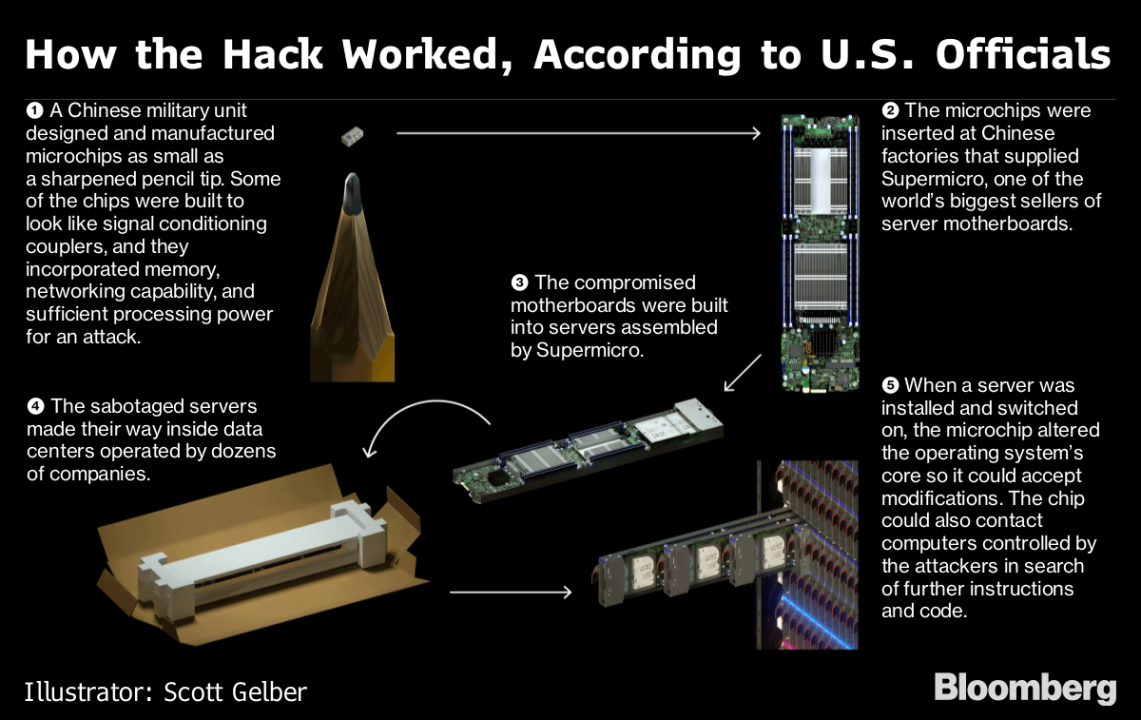
    In 2018, a Bloomberg Businessweek investigation exposed the fact that Chinese spies infiltrated nearly 30 U.S. companies—including titans like Amazon and Apple—by planting tiny microchips, no larger than a grain of rice, into the heart of America’s technology supply chain. These covert devices, embedded in server motherboards manufactured by Super Micro Computer Inc. (Supermicro), one of the world’s leading suppliers, allegedly gave China unprecedented access to sensitive data, from corporate trade secrets to government intelligence. The revelation sent shockwaves through the tech industry and the halls of Washington, exposing a vulnerability that many had feared but few had fully grasped: the global supply chain, once a marvel of efficiency, had become a gaping backdoor for espionage.

    U.S. business leaders and government officials oversee the engines of innovation and security that power our nation. Yet, this incident—and the broader pattern of Chinese supply chain manipulation it represents—demands a reckoning. How did this happen? What does it mean for the future? And most critically, how can we safeguard our economic and national security against such silent sieges? This exposé dives into the mechanics of China’s infiltration, the evolving threat it poses, and the bold steps America must take to fortify its supply chains.

    The Anatomy of the Breach

    The story begins in 2015, when Amazon, eyeing an expansion of its Amazon Web Services (AWS) cloud empire, began evaluating Elemental Technologies, a Portland-based startup specializing in video compression software. Elemental’s servers, built by Supermicro, were critical to its appeal, serving clients from the CIA to the Department of Defense. During due diligence, AWS commissioned a third-party security audit of Elemental’s hardware. What they found was chilling: a minuscule microchip, not part of the original design, nestled on Supermicro motherboards. This wasn’t a manufacturing fluke—it was a deliberate implant.

    According to Bloomberg’s sources, the chip—allegedly designed by a unit of China’s People’s Liberation Army (PLA)—was a marvel of miniaturization, capable of altering a server’s operating system to accept external commands. Once activated, it could phone home to Chinese-controlled systems, potentially siphoning off intellectual property, customer data, or classified information. The compromised servers had already spread across America, infiltrating data centers of major corporations, government contractors, and even naval warships. Apple, too, reportedly discovered similar chips in its systems that year, prompting a swift severance of ties with Supermicro in 2016.


    The denials came fast and furious. Amazon, Apple, and Supermicro issued statements disputing Bloomberg’s claims, asserting no evidence of malicious chips or compromised systems existed. The U.S. Department of Homeland Security and the U.K.’s National Cyber Security Centre found no reason to doubt these rebuttals. Yet, the story didn’t collapse under scrutiny—it grew murkier. Classified intelligence documents, later referenced by The Intercept, confirmed that U.S. spy agencies had long warned of China’s ability to corrupt hardware supply chains, even if the specifics of Bloomberg’s account remain contested. Whether “The Big Hack” unfolded exactly as reported or not, the vulnerability it exposed is undeniable.

    A Pattern of Exploitation

    This wasn’t an isolated incident but part of a broader Chinese strategy to dominate global technology through supply chain manipulation. China’s “Made in China 2025” initiative, launched in 2015, aims to make the country self-sufficient in critical industries like semiconductors, often through aggressive state-backed tactics. The U.S. Trade Representative (USTR) has accused China of using cyber intrusions, forced technology transfers, and predatory pricing—selling chips 30% to 50% below cost—to corner markets like legacy semiconductors, which power everything from cars to medical devices.

    Take Huawei, the Chinese telecom giant blacklisted by the U.S. in 2019 for national security risks. Despite export controls, Huawei has continued to advance its chip capabilities, often through shadowy third-party networks and shell companies that dodge sanctions. Similarly, Semiconductor Manufacturing International Corp. (SMIC), China’s leading chipmaker, has been accused of leveraging state subsidies to undercut competitors, even as it invests in startups like SEIDA, which aims to replicate Western chip design tools. These efforts illustrate a chilling reality: China doesn’t just want to compete—it wants to control.

    The stakes are staggering. Semiconductors are the lifeblood of modern economies, underpinning artificial intelligence, military systems, and consumer goods. The U.S., which once produced 40% of the world’s chips in 1990, now accounts for just 12%, with none of the most advanced varieties. Taiwan, home to industry leader TSMC, manufactures over 90% of cutting-edge chips—a dependency that becomes a liability amid rising tensions with China. The COVID-19 pandemic exposed this fragility, as chip shortages crippled industries from automotive to defense. A Chinese supply chain attack, whether through hardware tampering or market dominance, could be catastrophic.

    The Fallout and the Fightback

    The Big Hack’s aftermath saw the Trump administration slap trade sanctions on Chinese hardware, hoping to push companies to diversify supply chains. The Biden administration has doubled down, with the 2022 CHIPS and Science Act funneling $52 billion to boost domestic semiconductor production. Companies like Intel and TSMC have announced massive U.S. factory investments, aiming to produce 30% of the world’s leading-edge chips by 2032. Yet, progress is slow, and China’s adaptability—evading export controls through smuggling or front companies—keeps it ahead of the curve.

    Meanwhile, the private sector remains a weak link. Many firms, lured by China’s low costs, have been slow to audit their supply chains for security risks. The complexity of these networks—often involving tens of thousands of vendors across multiple layers—makes transparency elusive. Even when threats are detected, the cost of relocating manufacturing to the U.S. or allied nations can be prohibitive, especially without government support.

    Fortifying the Future: A Blueprint for Resilience

    For U.S. business leaders and government officials, the path forward demands a blend of vigilance, investment, and collaboration. Here’s how we can protect our supply chains:

    1. Audit and Diversify: Companies must conduct end-to-end supply chain audits, identifying choke points and Chinese dependencies. Partnering with cybersecurity firms to scan hardware for anomalies—like those tiny chips—should be standard practice. Diversifying suppliers to trusted nations (e.g., Japan, South Korea, or the EU) reduces risk, even if it raises costs short-term.
    2. Invest in Domestic Capacity: The CHIPS Act is a start, but more public-private partnerships are needed to accelerate U.S. chip production. Tax incentives and subsidies can offset the high cost of building factories, while workforce training programs ensure a steady pipeline of skilled labor. Business leaders should lobby for sustained funding beyond 2032.
    3. Strengthen Export Controls: The U.S. must tighten loopholes that allow China to acquire sensitive tech through intermediaries. AI-driven tracking of global trade flows can help identify shell companies, while harsher penalties for violations deter circumvention. Coordination with allies—already underway with Japan and the EU—amplifies impact.
    4. Embrace Transparency: Government and industry should establish a shared database of supply chain threats, anonymized to protect proprietary data but detailed enough to flag risks. Think of it as a national security TripAdvisor for vendors—ratings based on security, not just price.
    5. Innovate Security: Hardware verification technologies, like X-ray scans for hidden chips or blockchain to track component origins, need investment. Firms that pioneer these tools could gain a competitive edge while bolstering national resilience.

    The Road Ahead

    China’s supply chain gambit is a wake-up call—a reminder that economic efficiency must never trump security. The Big Hack, whether fully verified or not, crystallized a truth we can’t ignore: our reliance on foreign manufacturing has left us exposed. For U.S. business leaders, the challenge is to balance profit with protection; for government officials, it’s to wield policy as a shield. Together, you can rewrite the narrative, turning a tale of infiltration into one of fortitude.

    The global tech race isn’t slowing down, and neither can we. By acting decisively—auditing today, investing tomorrow, and innovating always—we can reclaim control of our supply chains. The tiny chip that shook America need not define our future; it can instead mark the moment we fought back.

  • The Race Against Cyber Threats: Why Speed Is the Last Line of Defense

    The Race Against Cyber Threats: Why Speed Is the Last Line of Defense

    Cyber Threats Are Evolving Faster Than Ever—Can Your Organization Keep Up?

    In 2023 alone, reported losses from ransomware attacks surged by 74%, according to the FBI. Attackers are no longer lone hackers operating in isolation; they are part of well-funded, highly organized crime syndicates that specialize in exploiting vulnerabilities faster than organizations can patch them. Even with industry-leading cybersecurity defenses, organizations remain at risk. The real question is: How fast can you respond?

    Sophos reports that 59% of organizations surveyed were hit by ransomware in 2024, with severity and financial demands escalating. The average ransom payment increased fivefold from 2023 to 2024, with 63% of demands exceeding $1 million and 30% surpassing $5 million. (Source: Sophos, “2024 Ransomware Report,” published April 30, 2024, https://www.sophos.com)

    The Need for Speed in Cybersecurity Response

    Despite best efforts—fully updated systems, next-generation firewalls, endpoint detection solutions, and AI-driven email security—cyberattacks still break through. When that happens, speed becomes the last line of defense. The Mean Time to Respond (MTTR)—the time it takes to detect, investigate, and contain a cybersecurity incident—directly determines the severity of an attack’s impact.

    Take ransomware, for example: some strains can move from initial breach to full encryption in under four hours. Organizations with an MTTR measured in minutes—not hours or days—stand the best chance of stopping an attack before it escalates into a full-blown crisis.

    The Role of a SOC in Rapid Threat Response

    At the heart of any effective cyber defense strategy is a Security Operations Center (SOC)—a 24/7 command center for detecting and neutralizing threats. The best SOCs leverage cutting-edge tools like Endpoint Detection and Response (EDR) and Security Information and Event Management (SIEM) systems to flag suspicious activity in real time.

    But technology alone isn’t enough. Cybercriminals are increasingly using tactics that mimic normal behavior, making it difficult for automated defenses to detect malicious activity. This is where experienced threat hunters—human analysts trained to spot subtle anomalies—make the difference. A SOC that combines automation with expert analysis is the key to achieving rapid response times that stop cyberattacks in their tracks.

    Real-World Cases: Why Speed Matters

    To illustrate the power of a fast-acting SOC, here are two real-world cases where Neatoware’s SOC successfully defended critical infrastructure from cyberattacks. In both cases, the targeted organizations had implemented strong cybersecurity measures—yet, sophisticated attackers still found ways in. The difference between a minor incident and a catastrophe was the speed of response.

    Case 1: Spear-Phishing Attack on a Sheriff’s Department

    A Sheriff’s Department fell victim to a spear-phishing attack, in which a command staff employee received a seemingly legitimate email containing a malicious link. The link triggered the GootLoader malware, which is known for delivering additional payloads like IcedID, capable of stealing sensitive law enforcement data or deploying ransomware.

    Despite robust security measures, the phishing email bypassed traditional defenses. But Neatoware’s SOC detected the malicious activity and stopped the intrusion in less than 25 minutes. Approval to remediate came in under 8 minutes, and the SOC acted immediately:

    ✅ Isolated the affected host from the network, preventing malware spread.

    ✅ Deleted the malicious file and terminated active processes.

    ✅ Blocked the associated IP address and domain at the firewall.

    ✅ Conducted deep forensic analysis to confirm the threat was neutralized.

    Thanks to rapid containment, no data was stolen, and operations continued without disruption. Had the attack lingered undetected, it could have compromised sensitive case files, investigations, and public safety efforts.

    Case 2: Remote Access Trojan Attack on a Water Authority

    In another incident, a Water Authority employee was tricked into downloading a malicious version of ScreenConnect, a legitimate remote access tool. This allowed an attacker to gain control of the host and attempt to deploy a Remote Access Trojan (RAT), which could have stolen confidential infrastructure data or disrupted operations.

    Despite strong security protections, the phishing attack succeeded. But Neatoware’s SOC detected the unauthorized remote access and isolated the laptop within 30 minutes of the attacker’s first move:

    ✅ Isolated the compromised host, cutting off the attacker’s control.

    ✅ Eliminated the RAT by terminating associated processes and deleting malicious files.

    ✅ Ran system repair scripts to restore OS integrity.

    ✅ Leveraged Microsoft Defender to detect and block further malware attempts.

    Because of this swift response, the attacker lost access before they could exfiltrate data or cause service disruptions. The community’s water supply remained secure—without intervention, this attack could have had severe consequences for public health and safety.

    Key Lessons from These Cases

    Both incidents highlight critical takeaways for organizations:

    🚀 Rapid Detection is Everything: Identifying threats within minutes minimizes the attacker’s window of opportunity.

    🔒 Isolation Stops the Spread: Immediate containment prevents lateral movement and additional damage.

    🛠 Complete Remediation Matters: Removing threats entirely supports long-term security.

    📡 Continuous Monitoring Helps Prevent Recurrence: Post-incident tracking helps catch an attacker who tries to get back in.

    Why This Matters for Critical Infrastructure

    Critical infrastructure—such as law enforcement agencies, utility providers, and emergency services—is a prime target for cybercriminals. A ransomware attack on a Sheriff’s Department could compromise confidential investigations and put officers at risk. A breach at a Water Authority could cut off water supply, disrupting everything from drinking water to firefighting capabilities.

    Cybersecurity is no longer just an IT issue—it’s a public safety issue. Organizations that fail to respond quickly put entire communities at risk.

    Speed Wins the Cybersecurity Breach

    The next cyberattack is not a matter of if, but when. And when it happens, the speed of your response will determine the outcome. Even the best-prepared organizations can be breached—but those with an MTTR measured in minutes stand the best chance of containing threats before they become disasters.

    Neatoware’s SOC exemplifies the gold standard of cybersecurity defense. By combining advanced threat detection with expert human intervention, Neatoware helps organizations stop cyberattacks before they cause harm.

    If you want to protect your organization and the communities you serve, partnering with a technology partner that offers a rapid-response SOC isn’t just a smart choice—it’s a necessity. The difference between containment and catastrophe is measured in minutes. Will your organization be ready?

    Disclosure: I am the owner and founder of Neatoware LLC, the managed IT and cybersecurity company mentioned in this article.